


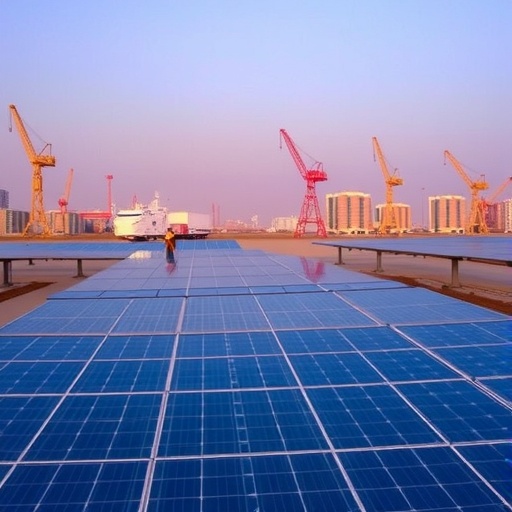
In recent years, the conversation around climate change and global emissions has intensified, illuminating the necessity for innovative solutions to combat environmental degradation. A new study presents a crucial discussion on the intersection of renewable energy, green technology, and natural resource management, particularly within the Gulf Cooperation Council (GCC) countries. This research dissects how these regions, known for their substantial oil wealth, can pivot towards sustainable practices to reduce emissions and safeguard their natural surroundings.
The study underscores that GCC nations, which include Saudi Arabia, the United Arab Emirates, Qatar, Oman, Kuwait, and Bahrain, are at a crossroads. With their economies heavily reliant on fossil fuels, there is an inherent challenge in transitioning towards greener pathways. However, the stakes are high, as the effects of climate change become increasingly evident. Rising sea levels, extreme heat, and water scarcity are not mere forecasts but are current realities impacting these nations. The importance of shifting towards renewable energy resources cannot be overstated.
A notable point raised in the study is the role of renewable energy technologies in decoupling economic growth from carbon emissions. The researchers argue that investments in solar, wind, and other renewable infrastructures can catalyze a transformative shift for GCC countries. By harnessing their abundant solar energy, these nations could not only meet domestic energy needs but also position themselves as leaders in a global energy market rapidly evolving towards sustainability.
Furthermore, green technology aims to optimize resource efficiency, reducing waste while maximizing productivity. Innovations in sectors such as agriculture, water management, and transportation are critical. For example, vertical farming technologies can help transform the agricultural landscape in arid regions, providing food security while drastically cutting down the carbon footprint associated with traditional farming and water-intensive practices.
The study also highlights the concept of natural resource rents, emphasizing that GCC nations need to rethink their economic models which traditionally prioritize extraction and export. By redefining their relationship with natural resources, these countries can explore alternative revenue streams. The proposition is to utilize the wealth generated through fossil fuels to invest in green technologies and renewable energy projects. This approach does not signal an abandonment of traditional industries, but rather an evolution of economic strategy towards sustainable practices.
Transitioning to a green economy involves tackling multiple challenges. It requires not only technological advancements but also policy shifts that promote sustainability. The governmental frameworks within GCC countries need to incentivize clean energy investments and research in green technologies. Such initiatives could include subsidies for renewable energy projects, tax incentives for companies adopting sustainable practices, and financial support for startups innovating in the green technology sector.
Moreover, public awareness and education play a fundamental role in fostering a sustainable mindset among citizens. The study stresses the importance of community engagement in environmental sustainability. Programs that encourage energy conservation, proper waste management, and sustainability in daily life can create a culture of environmental responsibility. By empowering the next generation with knowledge and tools to tackle environmental issues, GCC states can cultivate a workforce that is adept in green technologies.
International collaboration presents another avenue for GCC countries to enhance their sustainability efforts. By partnering with global leaders in renewable energy and environmental stewardship, these nations can share expertise and resources. Joint ventures in research and development can lead to the introduction of innovative solutions tailor-fit for local challenges. Additionally, participating in international coalitions focused on climate action can elevate the GCC’s commitment to emission reduction on a global scale.
The implications of this research are not limited to policy and technology; they extend to socio-economic dynamics as well. A successful transition to a green economy bears the potential to create jobs in emerging sectors, contributing to economic diversification. For instance, the development of renewable energy projects generates employment opportunities in construction, maintenance, and technology. Such a paradigm shift provides a safeguard against market volatility that traditional oil-based economies often face.
As GCC countries explore pathways to sustainability, the vital question remains: how swiftly can they implement these changes before the consequences of inaction become too dire? The urgency of the situation calls for immediate, decisive measures. Procrastination or hesitance could lead to catastrophic environmental repercussions not just for the region, but for the planet.
In conclusion, the study serves as a clarion call for GCC nations to reimagine their futures in the light of environmental challenges. Embracing renewable energy and green technologies is not merely a choice but a necessity. The strategies outlined within the research offer a hopeful pathway towards a sustainable future, a legacy worth pursuing for generations to come. Just as fossil fuel has powered the region for decades, a new, greener energy paradigm could lead to a prosperous and sustainable future, one where economic growth and environmental protection can coexist.
Empowering this transformation, the study emphasizes the need for concerted efforts from all stakeholders, from governments and private sectors to individuals and communities. Only through cooperative engagement can the GCC nations achieve their emission reduction goals while fostering economic resilience in a rapidly changing world.
As we move forward, the collaboration between diverse sectors and the integration of innovative green technologies will be pivotal in shaping not just the environment within these regions, but also the global landscape of sustainability.
Sani, A.A., Sadriwala, K.F., Pantamee, A.A. et al. Renewable energy, green technology, and natural resource rents in GCC emission mitigation.
Discov Sustain (2025). https://doi.org/10.1007/s43621-025-02502-0
Cite Scienmag News
Faith Mcneil. (December 24, 2025). GCC Emission Reduction: Harnessing Renewable Energy and Tech. Scienmag. https://scienmag.com/gcc-emission-reduction-harnessing-renewable-energy-and-tech/
Faith Mcneil. "GCC Emission Reduction: Harnessing Renewable Energy and Tech." Scienmag, 24 December 2025, https://scienmag.com/gcc-emission-reduction-harnessing-renewable-energy-and-tech/. Accessed 1 September 2026.
Faith Mcneil. "GCC Emission Reduction: Harnessing Renewable Energy and Tech." Scienmag. December 24, 2025. https://scienmag.com/gcc-emission-reduction-harnessing-renewable-energy-and-tech/


