


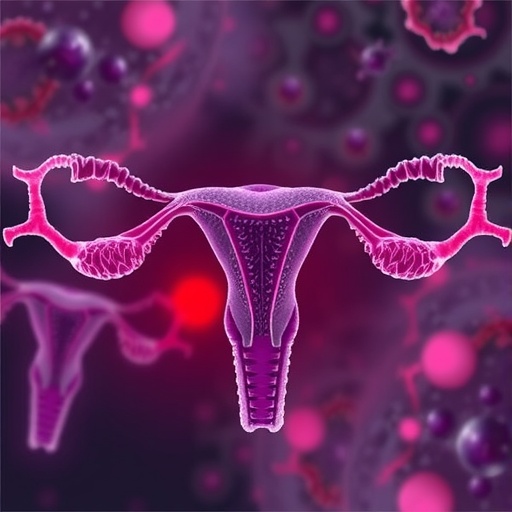
In a groundbreaking study published in the Journal of Ovarian Research, researchers Ma and Sun reveal significant insights into the mechanisms underlying premature ovarian insufficiency (POI), a condition affecting a notable percentage of women globally. This condition, characterized by a significant decline in ovarian function before the age of 40, poses important challenges not only for fertility but also for overall health and well-being. The investigative team delves into the complexities of mitochondrial functioning and PANoptosis, a regulated form of cell death, thereby mapping potential biomarkers for POI.
Mitochondria, often referred to as the powerhouse of the cell, play crucial roles beyond mere energy production; they are involved in various metabolic processes and cellular signaling. The study emphasizes the significance of mitochondrial health in ovarian function, indicating that mitochondrial dysfunction may contribute to the pathogenesis of POI. This connection is particularly alarming given the rising levels of environmental pollutants and lifestyle factors leading to increased oxidative stress, which can impair mitochondrial function and, subsequently, ovarian health.
PANoptosis is a relatively novel concept in the realm of immunology and cell death, combining features of apoptosis, pyroptosis, and necroptosis into a single pathway. The researchers explore how this mode of cell death may be linked to ovarian follicular atresia, a process where developing ovarian follicles undergo degeneration. By investigating the interplay between mitochondrial dysfunction and PANoptosis, the study unpacks a complex web of interactions that may elucidate the pathophysiology of POI, providing new avenues for therapeutic intervention.
The implication of biomarkers in the context of POI is gained through a comprehensive analysis of clinical samples from women diagnosed with the condition. The researchers meticulously analyze these samples to identify characteristics associated with mitochondrial health and PANoptosis markers. Their findings provide compelling evidence that certain molecular indicators can serve as predictive tools for clinicians, enabling early intervention and tailored management strategies for affected women.
As the study highlights the potential impact of environmental factors on mitochondrial health, it calls for urgent comprehensive research that investigates how lifestyle interventions may mitigate the risks associated with developing POI. Diet, exercise, and stress management are integral components that can modify body responses and enhance mitochondrial function. By advocating for a holistic approach, the authors emphasize the necessity for lifestyle modifications as a conduit to improve outcomes for women facing this debilitating condition.
Furthermore, the authors discuss the possible therapeutic implications of their findings, posing that future treatments could target the mitochondrial dynamics and the PANoptosis pathway. Concepts such as mitochondrial replacement therapy and pharmacological interventions designed to enhance mitochondrial function could radically transform how POI is approached. By shedding light on the interconnectedness of these biological pathways, they set the stage for an innovative paradigm shift in ovarian health research.
The research is not only timely but also necessary, as the incidence of POI continues to rise globally. Medical practitioners and researchers alike should heed the conclusions drawn from this study, which underscore the urgent need for preventive strategies. Such measures can range from routine screening for mitochondrial dysfunction in high-risk populations to personalized treatment modalities incorporating nutritional and lifestyle counseling.
Incorporating findings from this study into clinical practice could translate into a significant reduction in the prevalence of POI, fostering a proactive rather than reactive approach to reproductive health. As awareness grows, it is essential for both healthcare providers and patients to engage in dialogue about the importance of understanding the multifaceted origins of this condition.
One of the pivotal takeaways from this research is the call for interdisciplinary collaboration among scientists, clinicians, and public health officials. Addressing the complexity of POI requires a concerted effort that encompasses genetic, environmental, and lifestyle factors. The integration of knowledge across these disciplines will be invaluable for advancing our understanding and treatment of POI.
As the scientific community grapples with the implications of this study, it may also ignite a pioneering push towards global health initiatives targeting women’s reproductive health. By advocating for further investigation into the nexus of mitochondrial dysfunction and cellular death pathways, the researchers lay the groundwork to unraveling one of reproductive medicine’s most pressing challenges.
In summary, Ma and Sun’s research provides a comprehensive look into the enigmatic realms of mitochondrial biology and PANoptosis, revealing their potential roles as biomarkers for premature ovarian insufficiency. Their findings hold promise for reshaping clinical practices and enhancing therapies aimed at preserving fertility in women who may be at risk. The validation of these biomolecular pathways could lead to innovative preventative measures and treatments, supporting women worldwide as they navigate the complexities of reproductive health.
As this research unfolds, it is expected to inspire further studies that explore the genetic underpinnings associated with POI and its relation to mitochondrial health. The study opens new avenues for investigating how maternal health and environmental influences may contribute to reproductive outcomes across generations. This focus on sustainability and holistic health approaches is vital as we move forward in our understanding of reproductive endocrinology and genetics.
In conclusion, this enlightening research stands as a clarion call to the scientific community, advocating for a renewed focus on early detection and intervention strategies that address the root causes of premature ovarian insufficiency. Collaboration and innovation will be paramount as we strive to change the narrative surrounding women’s health, and this research undoubtedly paves the way for a future where informed, empowered choices lead to healthier outcomes for all women.
Ma, Z., Sun, H. Unveiling mitochondrial and PANoptosis-related biomarkers for premature ovarian insufficiency.
J Ovarian Res 18, 297 (2025). https://doi.org/10.1186/s13048-025-01839-4
Cite Scienmag News
Ophelia Keating. (December 22, 2025). New Biomarkers for Premature Ovarian Insufficiency Revealed. Scienmag. https://scienmag.com/new-biomarkers-for-premature-ovarian-insufficiency-revealed/
Ophelia Keating. "New Biomarkers for Premature Ovarian Insufficiency Revealed." Scienmag, 22 December 2025, https://scienmag.com/new-biomarkers-for-premature-ovarian-insufficiency-revealed/. Accessed 1 September 2026.
Ophelia Keating. "New Biomarkers for Premature Ovarian Insufficiency Revealed." Scienmag. December 22, 2025. https://scienmag.com/new-biomarkers-for-premature-ovarian-insufficiency-revealed/


