


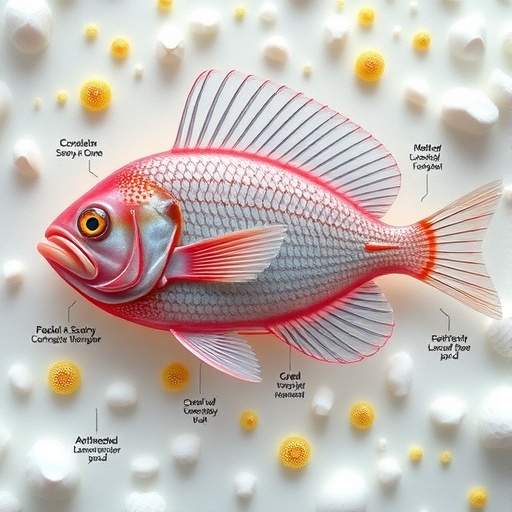
Recent research has illuminated the profound impact that dietary choices have on the intestinal microbiota of aquatic species. A pivotal study conducted by Peralta-Sánchez et al. explored this complex relationship through the lens of gilthead seabream (Sparus aurata) fry. The researchers focused on the effects of incorporating either crude or hydrolyzed Arthrospira platensis, commonly referred to as spirulina, into the fish’s diet. As the aquaculture industry seeks sustainable practices to enhance fish health and growth, such studies become critical.
Intestinal microbiota plays an essential role in the overall health of fish, influencing nutrient absorption, immune function, and resistance to diseases. In the context of aquaculture, optimizing these microbial communities is vital for producing robust fish that can thrive in a variety of conditions. The findings of this study shed light not only on the interplay between nutrition and microbiota but also on potential innovations in fish farming practices.
The incorporation of Arthrospira platensis, a blue-green algae known for its nutrient density, was hypothesized to optimize gut health in gilthead seabream. The aquatic environment presents unique challenges for maintaining healthy intestinal flora, making the addition of beneficial dietary components paramount. Spirulina’s bioactive compounds, including proteins, vitamins, and antioxidants, could contribute to enriching the gut microbiome, offering a more resilient defense against pathogenic invaders.
The researchers conducted a series of controlled feeding trials, meticulously designing experiments that would replicate typical aquaculture conditions. By assessing both crude and hydrolyzed forms of spirulina, they aimed to determine which mode of incorporation would more effectively influence microbial diversity. The hydrolysis process, which breaks down proteins into smaller peptides, may enhance bioavailability. This aspect of the study emphasized the importance of not just what is fed to fish but also how those feed ingredients are prepared and digested.
In analyzing the resultant microbiota profiles, the team utilized advanced genomic sequencing techniques. This cutting-edge methodology permitted a detailed understanding of microbial composition changes resulting from diet modification. By correlating these changes with fish health parameters, the study provided qualitative and quantitative insights into how dietary spirulina could enhance immune responses through its effects on gut microorganisms.
Furthermore, the study took into account the broader implications of enhancing gut health through dietary modification in aquaculture. As the demand for sustainable food sources continues to grow worldwide, the aquaculture segment is under pressure to improve yield without compromising environmental integrity or fish welfare. The potential of spirulina to provide a natural and effective dietary supplement holds promise in minimizing reliance on antibiotic treatments, a critical factor in creating healthier fish populations.
An intriguing aspect of this research was the assessment of how the inclusion of spirulina affects fish growth rates and overall performance. The appropriate gut microbiota is tied closely to optimal digestion and absorption of nutrients, which directly translates to better growth outcomes. Thus, understanding these dynamics is vital for producers aiming to maximize efficiency while ensuring fish health.
Moreover, the research team recognized the challenges faced by the aquaculture industry, including disease outbreaks and environmental stressors that can compromise fish health. Insights gained from this study could serve as a guiding framework for aquaculture producers seeking to implement more effective and natural feeding strategies. Innovations stemming from gut health optimization may redefine best practices, leading to healthier fish populations and sustainable production systems.
As aquaculture continues to evolve, integrating findings such as those from Peralta-Sánchez et al. will be key. Not only do these studies contribute to scientific literature, but they also inform practical applications that can be adopted by producers worldwide. In essence, the path to sustainable aquaculture may very well lie in understanding and enhancing the delicate balance of gut microbiota through informed dietary strategies.
The results of this study have implications beyond just the aesthetics of fish farming. They align with a global goal of promoting healthy diets and sustainable food sources. Fish, being a primary protein source for millions of people, necessitate a focus on enhanced aquaculture practices that support both human health and the health of aquatic ecosystems. The continuous exploration of dietary inclusions like Arthrospira platensis thus remains a promising avenue for future research and application.
Additionally, the environmental aspects of aquaculture cannot be overlooked. As the industry works to reduce its ecological footprint, strategies that enhance fish health naturally could lead to less resource-intensive production practices. Spirulina, being a renewable and nutrient-rich component, can aid in this regard by supporting fish welfare while aligning with eco-friendly aquaculture practices.
In conclusion, the findings of Peralta-Sánchez et al. signify a meaningful advancement in our understanding of fish nutrition and gut health. By examining the interplay between dietary components and intestinal microbiota, this research underscores the necessity of innovative approaches in aquaculture. As the industry strives to meet growing demands sustainably, studies like these pave the way for improved practices that prioritize health, efficiency, and environmental stewardship.
The hope is that as the aquaculture field embraces these innovations, we will see a transformation in how fish are raised, leading to better health outcomes not only for the fish themselves but also for the humans who rely on them as a food source.
Cite Scienmag News
Morgan Morrow. (December 21, 2025). Impact of Arthrospira on Gilthead Seabream Gut Microbiota. Scienmag. https://scienmag.com/impact-of-arthrospira-on-gilthead-seabream-gut-microbiota/
Morgan Morrow. "Impact of Arthrospira on Gilthead Seabream Gut Microbiota." Scienmag, 21 December 2025, https://scienmag.com/impact-of-arthrospira-on-gilthead-seabream-gut-microbiota/. Accessed 5 September 2026.
Morgan Morrow. "Impact of Arthrospira on Gilthead Seabream Gut Microbiota." Scienmag. December 21, 2025. https://scienmag.com/impact-of-arthrospira-on-gilthead-seabream-gut-microbiota/


