


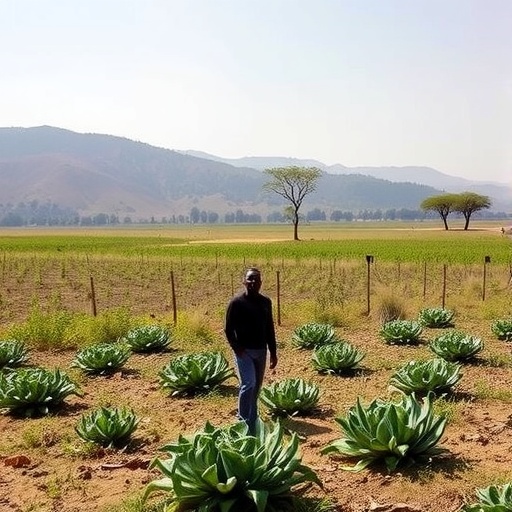
In a pioneering agricultural advance that is set to transform farming in Ethiopia, researchers have conducted a large-scale demonstration of a novel tef variety in the midlands of the East Guji zone in the Oromia region. This remarkable initiative, spearheaded by Kebede, Amare, and Korji, aims to showcase the potential of this traditional grain, particularly in a region where food security and agricultural resilience are critical. The findings from this study will have broader implications not just for Ethiopia, but also for other nations grappling with similar agricultural challenges.
Tef, a staple grain indigenous to Ethiopia, has long been recognized for its nutritional value and adaptability to arid climates. However, its cultivation has not fully tapped into its potential due to limited farming practices and genetic improvements. This research project seeks to address these issues head-on by introducing a new variety of tef that boasts higher yield potentials and improved resistance to local pests and diseases. By demonstrating this variety across various plots, the researchers aim to provide data that could lead to enhanced adoption rates among local farmers.
The project’s experimental design includes multiple field trials that not only assess the yield but also examine the agronomic traits of this new tef variety under diverse environmental conditions. By closely monitoring factors such as soil quality, moisture levels, and local climate variations, the team is able to draw comprehensive conclusions about the crop’s performance. These detailed evaluations are expected to guide future agricultural policies and practices aimed at improving food security in the region.
One of the main goals of the demonstration project is to engage local farmers directly. By involving them in the process, the researchers hope to foster a better understanding of the benefits of the new tef variety. Farmers are provided with hands-on experience, learning not only about the cultivation techniques but also about the technological innovations that can enhance productivity. This participatory approach is essential for successful knowledge transfer and could lead to more sustainable farming practices.
Moreover, the significance of tef goes beyond its immediate nutritional benefits. As a drought-resistant crop, tef has the potential to contribute significantly to climate change adaptation strategies in Ethiopia. With increasing variability in weather patterns, crops that can withstand drought and poor soil conditions are vital for the livelihoods of farmers and the overall economy. The introduction of this high-performance tef variety could serve as a model for similar innovations in other staple crops across sub-Saharan Africa.
As the researchers continue to collect data from their field trials, they are also focusing on the economic implications of adopting this new tef variety. By conducting cost-benefit analyses, the team aims to present clear evidence to farmers and local agricultural officials about the long-term advantages of switching to this improved variety. Such analyses will help to dispel any hesitations farmers might have regarding the adoption of new agricultural technologies and practices.
The project also emphasizes the significance of gender inclusion in agricultural innovation. Female farmers play a crucial role in Ethiopian agriculture, yet they often have limited access to new technologies and resources. By ensuring that women are equally represented in the demonstrations and training workshops, the researchers are paving the way for a more inclusive agricultural landscape. This focus on gender equity not only enhances the efficacy of the project but also promotes community-wide benefits that can uplift entire families and households.
Community involvement is a linchpin of this demonstration project. By rallying support from local farmer cooperatives and agricultural organizations, the researchers are ensuring that their findings reach the broadest audience possible. Information sessions, workshops, and field days allow for real-time feedback and discussions, creating an environment where local knowledge and scientific research can merge effectively. This collaborative approach is expected to accelerate the adoption of the improved tef variety and encourage further research initiatives in the future.
The researchers are also keen to document the challenges encountered during the demonstration project. By understanding the barriers faced by farmers, whether they be related to socio-economic factors, access to resources, or knowledge gaps, targeted interventions can be designed. Addressing these challenges proactively will help to create a more enabling environment for agricultural innovation.
As the study proceeds, there are plans for future research that could enhance our understanding of tef genetics further. Future studies may look into developing even more resilient varieties of tef through cross-breeding techniques, leveraging modern agricultural science while honoring traditional cultivation methods. Such advancements could boost the diversity of available tef varieties and further strengthen food security efforts across Ethiopia.
Another important aspect of this research lies in its potential to influence policy decisions at higher levels. By compiling solid evidence on the agronomic and economic benefits of this new tef variety, the research team aims to advocate for increased investment in agricultural research and development. Engaging with policymakers and stakeholders will be integral to ensuring that the findings from this demonstration project resonate beyond its immediate scope.
As this groundbreaking project unfolds, its impacts could be felt well beyond the borders of Ethiopia, especially in regions with similar climatic and agricultural conditions. The research conducted in East Guji zone may serve as a template for other countries searching for sustainable solutions to food production. The lessons learned here could resonate across the African continent and beyond, highlighting the essential role that local agricultural innovations can play in addressing global challenges.
Overall, the large-scale demonstration of the new tef variety marks a significant step forward for agricultural resilience, community engagement, and food security in Ethiopia. As the researchers focus on both scientific and practical aspects of this innovation, the hope is that it will not only elevate the status of tef as a superfood but also inspire future generations of farmers and researchers alike. The outcomes of this study may well propel Ethiopia into a new era of agricultural prosperity and food sovereignty.
This initiative encapsulates the essence of sustainable development in agriculture—merging cutting-edge science with the wisdom of traditional farming practices. As the world watches, this demonstration project could spark a new wave of agricultural transformations, making it a pivotal moment in the quest for sustainable food production systems in Ethiopia and beyond.
Kebede, B., Amare, G. & Korji, D. Large-scale demonstration of tef variety in midlands of east Guji zone, Oromia region, Ethiopia.
Discov Agric 3, 280 (2025). https://doi.org/10.1007/s44279-025-00464-5
Cite Scienmag News
Alan Morgan. (December 18, 2025). Tef Variety Showcase in East Guji, Ethiopia. Scienmag. https://scienmag.com/tef-variety-showcase-in-east-guji-ethiopia/
Alan Morgan. "Tef Variety Showcase in East Guji, Ethiopia." Scienmag, 18 December 2025, https://scienmag.com/tef-variety-showcase-in-east-guji-ethiopia/. Accessed 4 September 2026.
Alan Morgan. "Tef Variety Showcase in East Guji, Ethiopia." Scienmag. December 18, 2025. https://scienmag.com/tef-variety-showcase-in-east-guji-ethiopia/


