


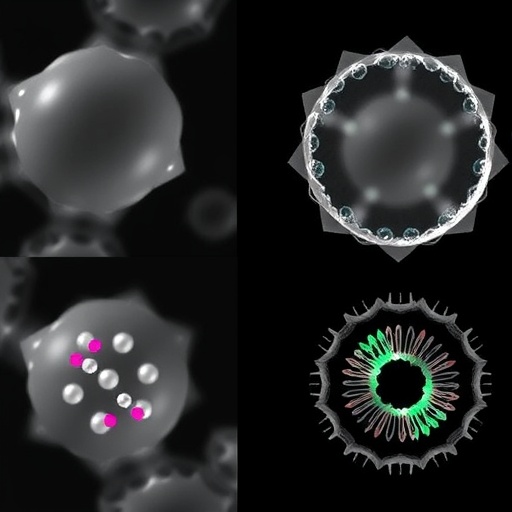
In the realm of nanotechnology and drug delivery, the quest for effective carriers has long been at the forefront of scientific research. Recent advancements have brought into sharp focus the potential of thermoresponsive polymers, particularly poly(N-isopropylacrylamide) or pNIPAM, when grafted onto biocompatible materials like hyaluronic acid. This innovative approach has provided a novel pathway towards the development of smart nanogels capable of responding to physiological changes, thereby enhancing drug delivery systems.
A groundbreaking study by Umar et al. explores the mechanistic underpinnings of self-assembly and cellular uptake of these pNIPAM-grafted hyaluronic acid nanogels. The incorporation of pNIPAM, a polymer with a unique lower critical solution temperature, allows these nanogels to transition from a soluble state to a gel-like state in response to temperature variations. This property is especially significant as it can be leveraged to create targeted drug delivery systems that release their therapeutic payloads at specific temperatures, such as those found within disease-affected tissues.
The authors meticulously detail the design and synthesis of these nanogels, emphasizing the polymerization techniques employed to graft pNIPAM onto hyaluronic acid. By utilizing a simple yet effective radical polymerization method, they have managed to maintain the intrinsic properties of hyaluronic acid, such as its biocompatibility and biodegradability, while endowing the resulting polymer with thermoresponsive characteristics. The synergy between these two polymers creates a versatile platform for various biomedical applications, particularly in the realm of targeted therapy.
These nanogels showcase an intriguing self-assembly process. When subjected to physiological temperatures, the pNIPAM chains collapse, leading to the formation of nanostructures that encapsulate therapeutic agents. This self-assembly is driven by hydrophobic interactions that become prominent as the temperature rises, highlighting how physical conditions can dictate molecular behavior. Such insights are pivotal for anticipating how these nanogels will behave in biological environments where temperature variations are prevalent.
Umar et al. further delve into the cellular uptake mechanisms of these thermoresponsive nanogels. The study provides compelling evidence that the temperature-sensitive nature of these polymers also influences how cells internalize these nanostructures. By optimizing the temperature conditions during in vitro experiments, the researchers observed enhanced cellular uptake, which is vital for ensuring that therapeutic agents are effectively delivered to target cells. This finding is particularly noteworthy in cancer therapy, where precise delivery of chemotherapeutic drugs is essential for minimizing side effects on healthy tissues.
Additionally, the study highlights the importance of characterizing these nanogels through advanced techniques such as dynamic light scattering (DLS) and transmission electron microscopy (TEM). These characterization methods enable researchers to ascertain the size distribution, morphology, and stability of the nanogels, ensuring that they meet the stringent requirements for drug delivery applications. Such thorough characterization provides insights into how physical properties correlate with biological performance, guiding future optimization efforts.
Another key aspect explored by Umar et al. is the potential for these thermoresponsive nanogels to be engineered for dual or multi-modal therapeutic applications. By integrating multiple therapeutic agents within a single nanocarrier, it becomes feasible to target various disease pathways simultaneously, thus improving efficacy while reducing the likelihood of resistance development. This capability could revolutionize treatment paradigms in complex diseases such as cancer, where multifactorial approaches are often necessary.
Moreover, the research underlines the significance of controlled release mechanisms afforded by these nanogels. By fine-tuning the degree of pNIPAM grafting, the release profiles of encapsulated drugs can be modulated, providing a means to achieve sustained release and reducing the frequency of dosing. This aspect not only improves patient adherence to treatment regimens but also enhances therapeutic outcomes by maintaining drug levels within optimal ranges for extended periods.
In the context of translational research, the scalability of synthesizing these thermoresponsive nanogels is an essential consideration. Umar et al. emphasize that the methodologies employed in their study are not just confined to the laboratory. The techniques can be optimized for larger production scales, paving the way for potential industrial applications. This aspect highlights the study’s broad significance, bridging the gap between basic research and practical biomedical solutions.
Umar et al.’s findings contribute significantly to the understanding of the intricate behaviors of thermoresponsive polymers in a biological milieu. With the growing recognition of personalized medicine, the ability to design nanogels that can adapt to individual physiological conditions aligns perfectly with the future of targeted therapy. As such, this research holds promise not just for the development of innovative drug delivery systems but also for enhancing the overall quality of patient care.
In conclusion, the study by Umar and colleagues presents a compelling narrative around the development of pNIPAM-grafted hyaluronic acid nanogels. By elucidating the mechanisms behind their self-assembly and cellular uptake, this research offers profound insights that could drive the evolution of smart drug delivery systems. As the field of nanomedicine continues to progress, the potential applications of such thermoresponsive platforms will undoubtedly broaden, bringing with it new hope for patients facing challenging health conditions.
This cutting-edge research stands as a cornerstone for future explorations into smart materials and their applications in medicine, potentially heralding a new era of treatment methodologies that prioritize patient-specific strategies. The pursuit of understanding and innovating in this domain is paramount, as the dynamics of health and disease increasingly necessitate a tailored approach to therapeutics.
The implications of this work extend beyond academia, engaging a broader audience of researchers and clinicians alike. With continued investigation, these findings may inspire the next generation of clinical applications and therapeutic agents, thereby advancing the goals of precision medicine and improving health outcomes on a global scale.
As the world embraces the intricacies of biocompatible polymers and their thermoresponsive characteristics, the potential to unlock new avenues for treatment becomes exceedingly clear. As this study illustrates, the ability to manipulate material properties at the nanoscale is not only scientifically fascinating but can also lead to impactful advancements in patient care and medical interventions.
Umar, A.K., Laomeephol, C., Pannarai, N. et al. Mechanistic insights into the self-assembly and cellular uptake of thermoresponsive pNIPAM-grafted hyaluronic acid nanogels. J. Pharm. Investig. (2025). https://doi.org/10.1007/s40005-025-00787-x
Cite Scienmag News
Hazel Monroe. (December 15, 2025). Understanding Thermoresponsive Nanogel Assembly and Uptake. Scienmag. https://scienmag.com/understanding-thermoresponsive-nanogel-assembly-and-uptake/
Hazel Monroe. "Understanding Thermoresponsive Nanogel Assembly and Uptake." Scienmag, 15 December 2025, https://scienmag.com/understanding-thermoresponsive-nanogel-assembly-and-uptake/. Accessed 3 September 2026.
Hazel Monroe. "Understanding Thermoresponsive Nanogel Assembly and Uptake." Scienmag. December 15, 2025. https://scienmag.com/understanding-thermoresponsive-nanogel-assembly-and-uptake/


