


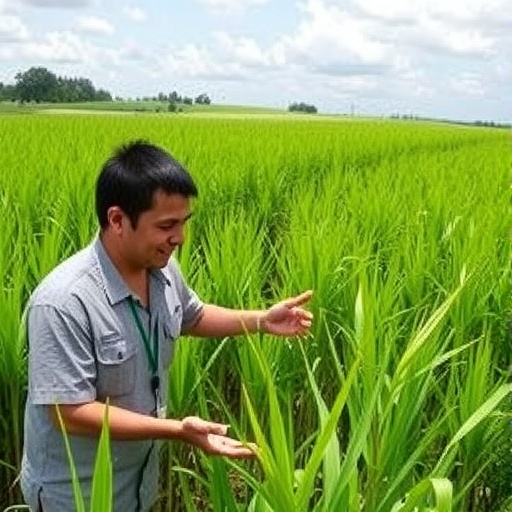
In a groundbreaking study, researchers have undertaken a comprehensive characterization of non-retroviral endogenous viral elements (NREVEs) found within the genomes of the rice pest Chilo suppressalis, commonly known as the Asian rice borer. This significant work, led by Lu, J.B., Qi, Y.H., and Tian, Y., delves into the interactions between viral elements and their host organisms, offering a new perspective on the evolutionary dynamics of these elements.
Chilo suppressalis is notorious for its destructive impact on rice crops, making it a key target for entomologists and agricultural scientists alike. The pest not only causes severe damage to rice plants but also threatens food security in rice-dependent economies. Understanding the genetic composition of such pests is crucial for developing effective biocontrol strategies and improving crop resilience. This study’s focus on NREVEs adds a fascinating dimension to the ongoing research in agricultural genomics.
NREVEs represent a class of viral sequences that have integrated into the host genome and have persisted through generations. Unlike retroviral sequences, which replicate through reverse transcription, NREVEs typically integrate into their host’s DNA without the retrotranscription process. Their persistence raises questions about their role in the plant’s biology and how they affect interactions with pathogens and pests. The comprehensive analysis conducted by the researchers reveals the complex interplay between these endogenous viral elements and their host.
In the study, the researchers employed cutting-edge genomic sequencing technologies to identify and characterize these viral elements within the C. suppressalis genome. Their findings indicate a rich diversity of NREVEs that may have evolved in response to various environmental pressures, including viral infections and other ecological interactions. By uncovering this genetic diversity, the research provides insights into how these endogenous elements might contribute to the pest’s adaptability and survival.
The implications of NREVEs in the context of pest management are profound. The study suggests that understanding the evolutionary dynamics of these elements could facilitate the development of novel approaches to crop protection. For instance, if certain NREVEs confer resistance to specific viral infections, it may be possible to utilize this knowledge to engineer resistant rice varieties. This form of genomic manipulation has the potential to reduce reliance on chemical pesticides, thus aligning with sustainable agricultural practices.
Furthermore, the researchers highlight that these viral elements could serve as a source of genetic innovation. Over evolutionary time scales, NREVEs may provide advantages such as new functional traits that enhance fitness or adaptive capabilities in changing environments. As climatic conditions continue to fluctuate, the ability of pests like C. suppressalis to harness such genetic material could significantly influence the dynamics of pest populations and their interactions with crop species.
The methodological rigor of this study sets a precedent for future research into NREVEs across other pest species. By applying similar sequencing techniques and bioinformatics approaches, the scientific community can expand its understanding of how these endogenous viral sequences influence pest behavior and fitness. This research not only enriches the knowledge base around Chilo suppressalis but also opens avenues for exploring NREVEs in other agricultural pests and even beneficial organisms.
In conclusion, the investigation into the non-retroviral endogenous viral elements of C. suppressalis is a significant contribution to both entomology and agricultural science. By shedding light on the genetic complexities of this infamous rice pest, the researchers provide valuable insights that could inform future pest management strategies. As agriculture faces unprecedented challenges from both biotic and abiotic stresses, such research becomes increasingly vital, enabling scientists to develop sustainable solutions for food production amid evolving environmental pressures.
This study not only advances our understanding of Chilo suppressalis but also serves as a call to action for further exploration into the role of NREVEs across the biological spectrum. As researchers continue to uncover the implications of these viral elements, we may be closer to unraveling the mysteries of plant-insect interactions and enhancing global food security.
Chilo suppressalis, with its intricate relationship with NREVEs, epitomizes the delicate balance of ecosystems and the evolutionary processes that shape them. The findings presented in this study provide a crucial building block for developing innovative pest management strategies that are not only effective but also sustainable and environmentally friendly. As the global agricultural community faces mounting pressure to produce more food with fewer resources, research such as this will undoubtedly play a pivotal role in shaping the future of agriculture.
The characterization and understanding of endogenous viral elements could also inspire new avenues of research into gene editing technologies. By leveraging the knowledge gained from studying C. suppressalis and its NREVEs, scientists may be able to enhance crop resilience at a molecular level, leading to the creation of smart crops that can withstand pest pressures and environmental stresses.
As the implications of this research unfold, it is likely to inspire a new wave of inquiry into the relationship between viruses and their hosts, particularly in economically important species. The interplay between viral and host genomes is a complex narrative that offers endless possibilities for scientific discovery and agricultural innovation.
The research team’s meticulous endeavors in the field of genomics are not just academic exercises; they represent a proactive step towards addressing real-world challenges in agriculture. The implications of their findings will resonate throughout the scientific community, driving future investigations into the viral components of other key agricultural pests and potentially leading to groundbreaking advancements in pest management strategies.
In summary, the research article written by Lu, J.B., Qi, Y.H., and Tian, Y. conveys the critical need to explore the intricate genetic dynamics of pests such as Chilo suppressalis. The findings presented offer a compelling narrative about the integration of viral elements into host genomes, which could provide significant advantages in pest management and crop resilience strategies. The study stands as a testament to the power of modern genomics in uncovering the mysteries of nature and developing innovative solutions for sustainable agriculture.
Lu, JB., Qi, YH., Tian, Y. et al. Comprehensive characterization of non-retroviral endogenous viral elements in the rice pest Chilo suppressalis.
BMC Genomics (2025). https://doi.org/10.1186/s12864-025-12426-8
Cite Scienmag News
Alan Morgan. (December 14, 2025). Exploring Endogenous Viral Elements in Rice Pest Chilo. Scienmag. https://scienmag.com/exploring-endogenous-viral-elements-in-rice-pest-chilo/
Alan Morgan. "Exploring Endogenous Viral Elements in Rice Pest Chilo." Scienmag, 14 December 2025, https://scienmag.com/exploring-endogenous-viral-elements-in-rice-pest-chilo/. Accessed 4 September 2026.
Alan Morgan. "Exploring Endogenous Viral Elements in Rice Pest Chilo." Scienmag. December 14, 2025. https://scienmag.com/exploring-endogenous-viral-elements-in-rice-pest-chilo/


