


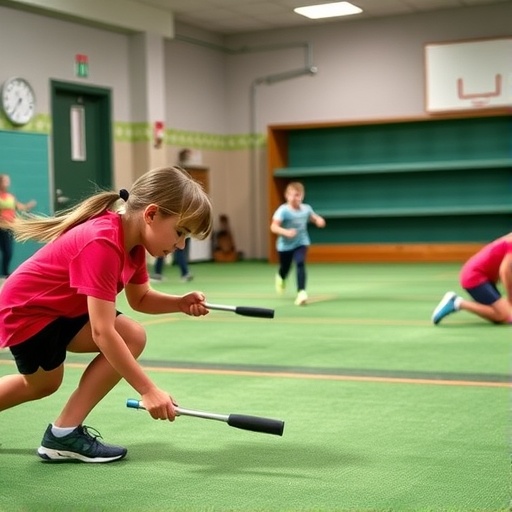
In an era defined by rapid technological advancements, the field of education continually adapts to meet emerging challenges and needs. A fascinating recent study exemplifies this adaptability, focusing specifically on physical education. The research conducted by scholars Li and Li explores the optimization of teacher teaching paths using Graph Convolutional Networks (GCN), a revolutionary approach that employs cutting-edge artificial intelligence methods to enhance pedagogical effectiveness in physical education settings.
The study provides a comprehensive look at how GCN can be utilized to assess and improve instructional strategies. By analyzing large sets of data related to teaching practices, student engagement, and physical activity outcomes, the authors aim to establish optimized paths for educators. These paths are designed to not only enhance the learning experience for students but also improve the overall efficacy of physical education programs.
Graph Convolutional Networks are particularly well-suited for this type of analysis due to their ability to process and analyze data that is structured as graphs. In physical education, elements such as student interactions, teaching methodologies, and learning outcomes can be effectively represented in a network format. This allows for intricate relationships and patterns within the data to be visualized and understood. Li and Li’s application of GCN to educational pathways marks a significant step forward in the use of AI in teaching and learning.
Li and Li detailed their methodology in the study, highlighting the process of data collection and preparation. They utilized various sources of data, including student performance metrics, teacher assessment reviews, and classroom interaction logs. The intricate nature of this data necessitated a robust framework for analysis; hence, the authors employed GCN to process this information efficiently. The optimization process involved the identification of effective teaching paths that could lead to improved student engagement and performance in physical education.
One of the key findings of the study is the identification of specific educational paths that significantly correlate with positive outcomes in student learning. For example, the research details how certain teaching strategies—when followed consistently—result in students showing higher levels of physical activity and greater enthusiasm for engaging in sports. This insight not only benefits educators by providing them with evidence-based practices but also empowers students to achieve higher levels of success in their physical education coursework.
Moreover, the implications of this research extend beyond individual classrooms. As schools and educational institutions grapple with the effective integration of technology into curricula, the findings advocate for a more data-driven approach to curriculum design in physical education. Educators are encouraged to embrace the tools and insights provided by GCN to create a more engaging and effective learning environment. Innovation in teaching methodologies has potential ripple effects, leading to broader changes in how physical education is perceived and implemented across various educational settings.
With the continuous emphasis on health and wellness education, the findings of this study are particularly timely. The optimization of teaching methods in physical education can lead to an engaging platform for students to develop lifelong healthy habits. As the authors point out, enhanced physical education offerings influence not only students’ physical capabilities but also their social engagement and mental well-being. By understanding and optimizing the routes teachers take in their instructional paths, a more profound impact on student health can be achieved.
Furthermore, the study presents a holistic view of how technology can revolutionize educational practices. The insights offered by this research not only accommodate current pedagogical needs but also pave the way for future explorations in education technology. As innovations emerge, there is an urgent need for educational professionals to remain informed and flexible, adapting to new methodologies that empower both teachers and students.
Li and Li’s work represents a significant milestone in the intersection of AI and education. It emphasizes the necessity for educators to be equipped with the knowledge and tools to navigate the evolving landscape of learning and teaching. Their approach advocates for a shift in how educators assess their teaching strategies, highlighting the importance of data analytics in the decision-making process.
In conclusion, the application of Graph Convolutional Networks to optimize teaching paths in physical education presents an exciting frontier in educational technology. As schools face new challenges in delivering effective education, the ability to harness AI for real-time analysis and improvement of teaching strategies proves invaluable. The implications of this research have the potential to influence curricula around the world, fostering a culture of data-driven decisions in education. The hope is that this will not only enhance teaching effectiveness but also inspire a new generation of students to actively engage in their physical education and overall wellness.
The findings of this study will continue to resonate as educators implement these data-driven strategies in their classrooms. As the educational landscape evolves, ongoing research and exploration will be essential in effectively marrying technology with traditional teaching methodologies. This transformative approach in physical education could serve as a model for other disciplines, demonstrating the profound impact that AI can have on shaping the future of education.
Li, L., Li, H. Application of optimization of teacher teaching paths in physical education based on GCN.
Discov Artif Intell 5, 384 (2025). https://doi.org/10.1007/s44163-025-00617-x
Cite Scienmag News
Courtney Benton. (December 12, 2025). Optimizing Physical Education with GCN Teaching Paths. Scienmag. https://scienmag.com/optimizing-physical-education-with-gcn-teaching-paths/
Courtney Benton. "Optimizing Physical Education with GCN Teaching Paths." Scienmag, 12 December 2025, https://scienmag.com/optimizing-physical-education-with-gcn-teaching-paths/. Accessed 3 September 2026.
Courtney Benton. "Optimizing Physical Education with GCN Teaching Paths." Scienmag. December 12, 2025. https://scienmag.com/optimizing-physical-education-with-gcn-teaching-paths/


