


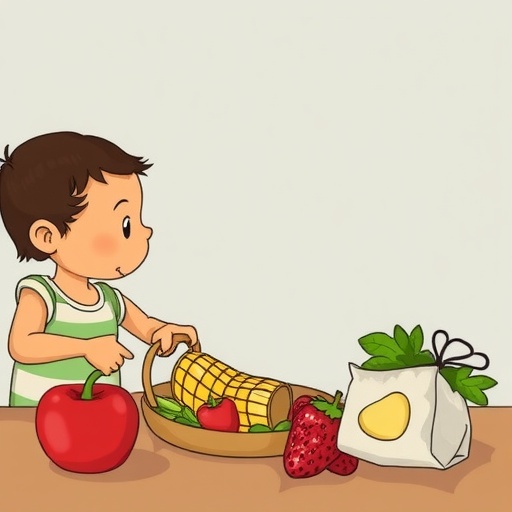
In recent years, the complex dynamics that govern parental decision-making around children’s nutrition have become increasingly prominent in public health discourse. A groundbreaking qualitative study conducted by van den Brink, Visch, Dinklo, and colleagues, published in the International Journal for Equity in Health in 2025, delves deeply into the tensions that arise from conflicting parental values and how these internal conflicts influence dietary choices for children in socioeconomically disadvantaged neighbourhoods. The profound insights from this research not only illuminate the intricate cognitive and emotional processes behind nutrition-related decisions but also raise pivotal questions about equity, cultural influences, and public health messaging.
Understanding food choices within low-income communities demands more than assessing access or economic constraints; it requires recognition of the nuanced value systems parents hold. The study reveals that parents are often caught between competing ideals—such as the desire to provide nutritious, wholesome meals and the cultural or practical constraints that may lead to prioritizing convenience, affordability, or tradition. These value-driven tensions generate an ongoing negotiation process, where parents balance their aspirations for healthy eating against the realities of their environment, including food deserts, time scarcity, and pervasive marketing pressures.
A particularly striking finding of the study is how the parental values related to health and cultural identity sometimes clash. For many families, traditional foods are not only a source of cultural heritage but also a cornerstone of family cohesion and identity. However, some of these traditional items may not align with mainstream nutritional guidelines, creating a sense of guilt or conflict for parents who wish to honor their cultural roots while also adhering to modern standards of healthy eating. This tension can lead to ambivalence in food choices, where parents may oscillate between different ideals depending on the social context or their children’s preferences.
Moreover, the research outlines how economic hardship exacerbates these internal conflicts. In disadvantaged neighbourhoods, financial constraints limit access to fresh fruits, vegetables, and protein-rich foods, promoting reliance on inexpensive, calorie-dense options often laden with sugars and fats. Parents express awareness of these nutritional inadequacies but face frustrations when budget limitations and store availability hinder the translation of knowledge into practice. The study highlights the psychological stress induced by such conditions, where parents feel powerless to fully enact their health-oriented values.
The qualitative methodology employed, involving in-depth interviews and ethnographic observations, allowed the researchers to capture these tensions with remarkable depth and authenticity. Unlike quantitative surveys that might obscure the emotional and cognitive complexity behind food choice, this study brings forward the lived experiences and rationalizations of parents confronting multiple constraints simultaneously. These narratives underscore the importance of contextual understanding when designing interventions aimed at improving child nutrition.
Another dimension that emerges from the study is the role of social networks and community norms. Parents’ nutrition-related decisions are seldom made in isolation; they are embedded within social frameworks that exert influence through shared values, peer behaviors, and normative expectations. In some instances, the desire to conform to community habits, such as sharing comfort foods during social gatherings, can reinforce food choices that run counter to official dietary advice. Thus, parents negotiate not only individual values but also collective identities and social approval.
Public health strategies that target nutritional improvements have traditionally focused on education and economic access. However, insights from this research suggest that these approaches may inadequately address the underlying value conflicts that shape decision-making. For instance, educational campaigns emphasizing nutrient content can sometimes clash with parents’ experiential knowledge or cultural meanings attached to food. This dissonance risks alienating the very communities these programs aim to support, highlighting the need for culturally sensitive and empathetic engagement.
The study further discusses the impact of children’s preferences and agency within familial food choices. Parents describe navigating tensions between wanting to provide healthful meals and accommodating children’s tastes or demands, which are often influenced by media and peer culture. The negotiation around nutrition then reflects a triadic interaction involving parental values, children’s agency, and external socio-cultural pressures, making the decision-making space highly dynamic and complex.
A particularly salient technical aspect of this research lies in its application of value theory frameworks to nutrition. By conceptualizing parental decisions as value-driven conflicts rather than purely economic or informational deficits, the study advances theoretical understanding in nutritional epidemiology and behavioral sciences. This paradigm shift encourages policymakers and practitioners to incorporate value alignments as central to intervention design, moving beyond simplistic models that consider knowledge deficits as the primary barrier.
The findings also expose the influence of stress and mental health on parental decision-making around food. Chronic stress associated with socioeconomic disadvantage affects cognitive resources, emotional regulation, and executive functions, all crucial for complex planning such as nutritious meal preparation. This connection underscores the intertwined nature of social determinants of health, where structural inequalities reverberate through psychological pathways, ultimately influencing child nutrition indirectly yet powerfully.
In addition, the study’s qualitative data reveal the frequent use of coping strategies by parents to manage tensions, such as rationalization, compartmentalization, or shifting priorities in response to crises. These adaptive mechanisms are important to recognize, as they offer entry points for supportive interventions that validate parents’ lived realities while gently redirecting behaviors toward healthier outcomes.
From a wider perspective, this research contributes substantially to the discourse on health equity. By situating parental nutrition decisions within broader socioeconomic contexts and value-laden conflicts, it challenges reductionist perspectives that blame individuals for poor nutritional outcomes. Instead, it advocates for structural changes that reduce environmental barriers and foster environments where healthy values can be more readily enacted.
The implications of this work extend to schools, childcare programs, and community organizations that interact with families. Understanding the internal tensions parents face can inform more effective collaboration and support structures, ensuring that nutritional initiatives are aligned with families’ priorities and cultural narratives, rather than imposing external benchmarks that may conflict with intrinsic values.
Finally, van den Brink and colleagues call for increased multidisciplinary research that fuses qualitative insights with quantitative methods and policy analysis. Addressing childhood nutrition inequities demands robust evidence that speaks to the real-world complexity revealed by this study. This will enable more nuanced, scalable interventions that resonate with disadvantaged communities, ultimately contributing to improved health trajectories and reduced disparities.
In sum, the 2025 study offers a profound exploration into how parental values—often in tension and juxtaposition—shape the nutritional landscape for children in marginalized neighborhoods. Its insights challenge simplistic narratives about food choice and nutrition, insisting on an empathetic, contextually grounded approach to public health nutrition. Such understanding is crucial for unlocking sustainable, equitable improvements in childhood health outcomes worldwide.
Cite Scienmag News
Daisy Hatcher. (December 12, 2025). Parental Values Shape Kids’ Nutrition Choices in Disadvantaged Areas. Scienmag. https://scienmag.com/parental-values-shape-kids-nutrition-choices-in-disadvantaged-areas/
Daisy Hatcher. "Parental Values Shape Kids’ Nutrition Choices in Disadvantaged Areas." Scienmag, 12 December 2025, https://scienmag.com/parental-values-shape-kids-nutrition-choices-in-disadvantaged-areas/. Accessed 4 September 2026.
Daisy Hatcher. "Parental Values Shape Kids’ Nutrition Choices in Disadvantaged Areas." Scienmag. December 12, 2025. https://scienmag.com/parental-values-shape-kids-nutrition-choices-in-disadvantaged-areas/


