


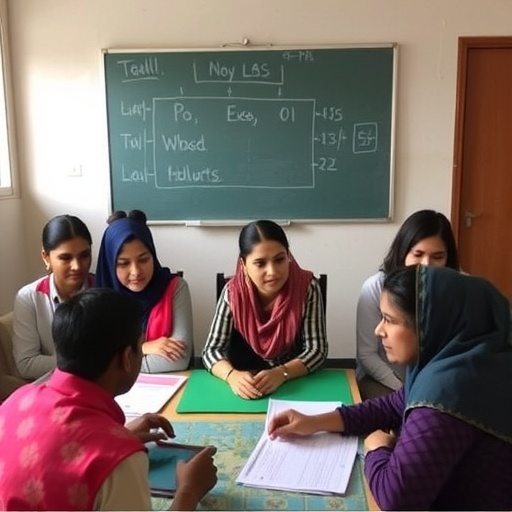
In the educational landscape of Lahore District, Pakistan, a comprehensive study has emerged that sheds light on the pivotal role of school leadership in influencing teacher motivation. This research highlights the intricate dynamics between administration, teaching staff, and student outcomes, delving into the multifaceted responsibilities that school leaders bear in shaping educational environments. The findings suggest that effective leadership isn’t merely about administrative duties; it’s fundamentally about inspiring teachers and fostering a culture that promotes motivation and growth within the school community.
One of the core arguments delineated in this study is that motivated teachers can significantly enhance student learning outcomes. The relationship between teacher enthusiasm and student engagement is well documented and critical for educational success. When school leaders actively promote an environment of support and encouragement, it sets off a positive chain reaction that benefits students, teachers, and the broader school community. This research serves as a clarion call for educational authorities to recognize the importance of supportive leadership in public secondary schools.
The study identifies several leadership styles that contribute to heightened teacher motivation. Transformational leadership, characterized by its focus on inspiration, intellectual stimulation, and individualized consideration, has shown considerable positive impact in motivating teachers. School leaders employing this approach create a vision that teachers can rally around, fostering a sense of purpose and community, driving them to go above and beyond in their roles. This understanding of leadership paves the way for enhancing educational practices within Lahore District’s public schools.
Moreover, the study dives into specific practices that successful school leaders use to uplift their staff. For instance, ongoing professional development opportunities are highlighted as crucial. When leaders prioritize teachers’ growth by providing workshops, training, and mentorship programs, it not only polishes their skills but also reinforces the belief that leaders value their contributions. This commitment to professional development fosters an environment where teachers feel empowered and appreciated, further igniting their passion for teaching.
Another component of the research focuses on communication as a vital pillar of effective school leadership. The study suggests that open channels of communication between school leaders and teaching staff are foundational in motivating teachers. When school leaders engage in regular dialogue, educators feel more connected to the decision-making processes affecting their work environment. Such transparency fosters trust and encourages collaborative efforts, leading to an overall more motivated teaching workforce.
The findings also emphasize the importance of recognition and feedback in maintaining teacher motivation. Leaders who regularly acknowledge the hard work and achievements of their staff cultivate an atmosphere of appreciation. This sense of recognition is essential, as it not only reinforces positive behaviors but also encourages teachers to remain committed to their students’ success. Feedback should be constructive and growth-oriented, ensuring that teachers feel supported rather than criticized. This approach enables teachers to take ownership of their professional development.
The role of school culture cannot be overstated in this context. The researchers argue that leaders play a crucial role in shaping the culture of their institutions. By promoting values such as collaboration, respect, and excellence, school leaders can contribute positively to an environment conducive to motivation. A strong school culture helps create a sense of belonging among teachers, which is a significant motivational factor. When teachers align with the core values of their school, they are more likely to be engaged and enthusiastic about their roles.
Financial incentives also emerge as a subject of exploration within the study. While monetary rewards are not the sole motivators, the research indicates that adequate compensation can influence teacher job satisfaction and motivation. When school leaders advocate for better salaries or resources for their staff, it signals to teachers that they are valued. Hence, integrating financial considerations within a broader motivational framework remains essential for leaders looking to enhance teacher morale.
Moreover, the study presents insightful data on the challenges faced by school leaders in motivating their teachers amidst diverse educational contexts. Limitations such as bureaucratic hindrances and socioeconomic factors can often impede leaders’ abilities to implement effective motivational strategies. By addressing these challenges head-on and suggesting potential solutions, the research aims to empower school leaders in their pursuit to create supportive learning environments.
Another aspect of the research examines the potential effects of cultural norms on motivation. In the context of Lahore District, cultural expectations can often dictate the dynamics between administrators and educators. The study encourages leaders to be culturally aware and sensitive in their interactions with teachers, ensuring that communication and practices resonate well within the local context. This cultural alignment could play a pivotal role in further enhancing teacher motivation and job satisfaction.
In discussing future implications, the authors urge educational policymakers to invest in leadership training programs that emphasize motivational strategies rooted in the findings of this research. By equipping school leaders with the necessary tools and knowledge, educational authorities hold the potential to reshape the teaching landscape in Lahore District and beyond.
As the discourse surrounding teacher motivation continues to evolve, this study offers significant insights that fuel the conversation toward more effective school leadership practices. By recognizing the direct correlation between leadership styles and teacher motivation, stakeholders can collaboratively advance educational outcomes, benefiting not only teachers but also their students and communities.
In conclusion, the research serves as a timely reminder of the essential role school leaders play in nurturing teacher motivation. The outcomes highlight that motivating teachers requires a nuanced understanding of leadership dynamics, cultural contexts, and the needs of educators. As we move forward, this foundational research may pave the way for future studies and interventions aimed at enhancing the educational experience for all involved.
Akram, S., Sohail, F., Chaudhary, D. et al. The role of school leadership in teacher motivation in public secondary schools of Lahore District, Pakistan.
Discov Psychol (2025). https://doi.org/10.1007/s44202-025-00555-w
Cite Scienmag News
Glenn Wilkins. (December 12, 2025). Empowering Teachers: Leadership’s Impact in Lahore Schools. Scienmag. https://scienmag.com/empowering-teachers-leaderships-impact-in-lahore-schools/
Glenn Wilkins. "Empowering Teachers: Leadership’s Impact in Lahore Schools." Scienmag, 12 December 2025, https://scienmag.com/empowering-teachers-leaderships-impact-in-lahore-schools/. Accessed 3 September 2026.
Glenn Wilkins. "Empowering Teachers: Leadership’s Impact in Lahore Schools." Scienmag. December 12, 2025. https://scienmag.com/empowering-teachers-leaderships-impact-in-lahore-schools/


