


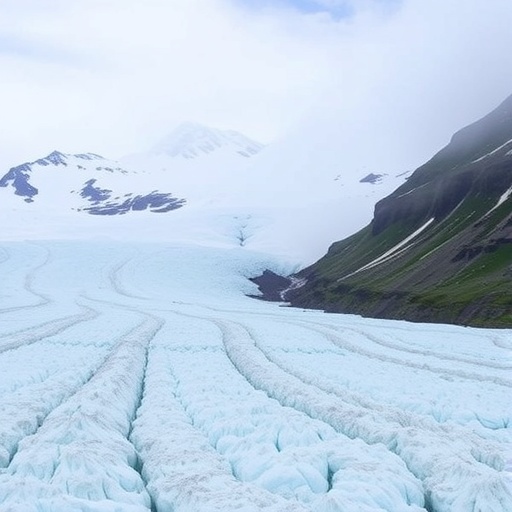
In a groundbreaking study published in Commun Earth Environ, researchers led by Kaufhold, Willeit, and Munhoven delve into the critical question of when the Earth might enter its next glaciation period in light of current anthropogenic climate change. The research pushes the boundaries of our understanding of glacial cycles, examining how human-induced changes to the climate could alter these natural processes. As humanity stands at a crossroads, this research illuminates the urgent need for climate action and presents scenarios that could shape the future of our planet.
The study highlights the significant role that rising global temperatures play in reshaping the Earth’s climate. Historically, glaciation periods have been dictated by complex interactions between Earth’s orbit, solar radiation, and greenhouse gas concentrations. However, the unprecedented increase in atmospheric carbon dioxide and methane due to human activities raises new questions. Will these changes delay the next glaciation, or could they even prevent it altogether? The authors meticulously analyze various climate models, showcasing the drastic impact of current emission trajectories on future glacial cycles.
In their research, the team emphasizes the importance of understanding the timing of glaciations. Glaciation has profound effects not only on global weather patterns but also on ecosystems and sea levels. The last glacial maximum, which occurred approximately 20,000 years ago, demonstrates the significant alterations that occur during these periods. Studying when the next period might begin calls for careful consideration of both geological records and modern climate data, creating a bridge between past and present climate scenarios.
The researchers incorporated a multitude of climate models to assess potential outcomes under different greenhouse gas emission scenarios. Their findings suggest that a continued increase in emissions could significantly postpone the next glaciation period by thousands of years. This conclusion aligns with prior studies but adds even more weight to the argument that human impacts are fundamentally altering Earth’s natural cycles. The implication is clear: unchecked climate change is not just an environmental issue but a profound alteration of Earth’s geological future.
Interestingly, the authors reveal that while current warming trends may delay glaciation, abrupt climate events can never be fully ruled out. Historical records indicate that climate can shift dramatically, leading to rapid temperature changes that dramatically alter glacial dynamics. Understanding these tipping points is crucial, as they could occur within the next few decades, radically changing the predictions currently offered by climate models. This nuance draws attention to the unpredictable nature of climate systems, which may respond in unexpected ways to human influence.
The interconnectedness of various climate systems also becomes a focal point of the study. As ice sheets in Greenland and Antarctica continue to shed mass, they contribute to rising sea levels and disrupt ocean currents. This disruption could profoundly affect temperature distribution across the globe, potentially accelerating or delaying glaciation in unpredictable ways. The study underscores the importance of interdisciplinary research that blends glaciology, oceanography, and climate science, showcasing the complexity of Earth’s climate systems.
Kaufhold and colleagues argue that while glacial periods are often seen as distant geological events, they are radically interconnected with the current period of global warming. The research indicates that human actions today may have consequences that echo through the millennia. This perspective urges policymakers and the public alike to consider individual and collective responsibilities in combating climate change, emphasizing that our choices today can significantly influence the planet’s long-term climate trajectory.
As anthropogenic influences evolve, understanding the drivers behind glaciation is paramount. The research presents an opportunity to rethink climate modeling, advocating for models that incorporate human impacts on natural cycles. The need for policymakers to integrate scientific insights into decision-making processes is more critical than ever. Only through an informed approach can society hope to mitigate the adverse impacts of global warming and restore ecological balance.
The implications of this research extend beyond academic circles into everyday lives. As citizens navigate the challenges posed by climate change, understanding the science that underpins global warming helps foster a sense of agency. The discussion of glaciation connects deeply with current climate issues like rising sea levels, increasing weather extremes, and loss of biodiversity. By fostering awareness, Kaufhold’s study could inspire a generation to engage with climate science and advocate for responsible action.
This study serves as an urgent reminder that the effects of climate change are not merely distant phenomena; they are happening now and will have far-reaching implications for the future of our planet. The timing of the next glaciation is no longer just a scientific question but a reflection of our collective responsibilities. Every fraction of a degree saved in global warming today could postpone significant changes in the climate system and, consequently, our environmental landscape.
As the evidence unfolds, researchers like Kaufhold and his team illuminate paths forward. Their work encourages continued investigation into climate feedback mechanisms and how they interplay with human influence. Engaging with and understanding these mechanisms may empower society to shift towards sustainable practices, proving that collective action can alter a trajectory defined by past behaviors.
Ultimately, the study raises critical questions about the future of glaciation and the broader climate system. Will we heed the warnings? Can we execute meaningful changes that would positively impact both the present and the far future? As Kaufhold and his colleagues reveal, the data suggest that our choices carry monumental weight. Evidence indicates that inaction could lead to irreversible consequences—and the impending glaciation could be just one of many difficult future scenarios shaped by today’s climate crisis.
In light of this research, it becomes evidently clear that our current course must change to avert catastrophic scenarios. The knowledge presented by Kaufhold, Willeit, Munhoven, and their team provides both a warning and a roadmap. The time for action is now—not just for immediate benefits but for the sake of future generations who will inherit the world we shape today.
As we grapple with the complexities of climate science, Kaufhold et al.’s findings remind us that climate change is inexorably linked to the natural world. We stand at a crossroads where the decisions made today will reverberate through time, influencing glacial landscapes and broader ecological communities. Engaging with this research provides a vital opportunity to bridge the gap between understanding and action. The future climate narrative is being written now, and it is one that must prioritize sustainability, resilience, and scientific integrity.
Kaufhold, C., Willeit, M., Munhoven, G. et al. Timing of a future glaciation in view of anthropogenic climate change.
Commun Earth Environ (2025). https://doi.org/10.1038/s43247-025-02867-0
Cite Scienmag News
Sloane Callahan. (December 11, 2025). Future Glaciation Timing Amidst Climate Change Uncertainty. Scienmag. https://scienmag.com/future-glaciation-timing-amidst-climate-change-uncertainty/
Sloane Callahan. "Future Glaciation Timing Amidst Climate Change Uncertainty." Scienmag, 11 December 2025, https://scienmag.com/future-glaciation-timing-amidst-climate-change-uncertainty/. Accessed 6 September 2026.
Sloane Callahan. "Future Glaciation Timing Amidst Climate Change Uncertainty." Scienmag. December 11, 2025. https://scienmag.com/future-glaciation-timing-amidst-climate-change-uncertainty/


