


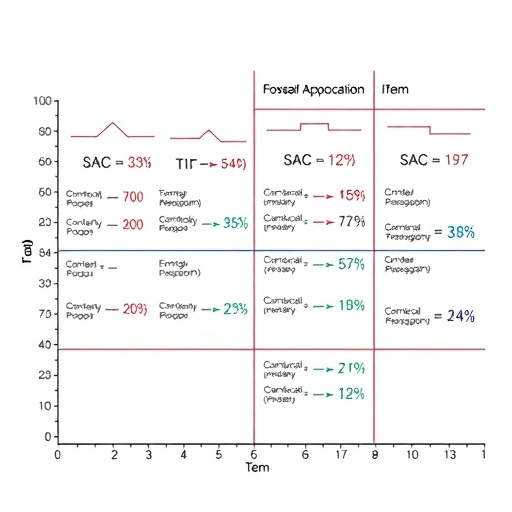
In the vast, evolving landscape of educational assessment, the quest for fairness and reliability continues to ground research initiatives that delve into various methodologies trying to achieve these goals. A significant area of focus is the phenomenon of Differential Item Functioning (DIF), which can compromise the integrity of test scores, ultimately affecting student outcomes. As researchers explore new methodologies to equate scores across diverse populations, the work by Uzun and Öğretmen has generated substantial interest. Their study investigates the impact of DIF on item model fit employing a concurrent equating method, a contemporary technique gaining traction in the realm of large-scale assessments.
DIF occurs when individuals from different groups (for example, based on gender, ethnicity, or socio-economic status) interpret or respond to test items differently, even when their underlying abilities are equivalent. This occurrence raises critical questions regarding the fairness of assessments and necessitates deeper explorations into the mechanisms by which assessments interact with various demographic layers. Uzun and Öğretmen’s study plays a pivotal role in dissecting the complexities surrounding DIF and its subsequent influence on the model fit of assessment items.
By concentrating on the concurrent equating method, the authors are addressing an essential yet often-misunderstood technique that facilitates the adjustment of scores from different test forms while maintaining comparable measurement properties. The concurrent equating method allows for bridging disparate test data, thereby ensuring that student performance assessments remain comparable across various configurations. This approach is particularly beneficial in educational settings, where changes to assessment frameworks are frequent and the need for continuity in measurement is paramount.
Utilizing a comprehensive dataset, Uzun and Öğretmen conducted a meticulous examination of how DIF impacts item model fit within their chosen framework. They sought to identify whether the presence of DIF diminishes the reliability and validity of test scores generated through the concurrent equating process. Their findings reveal that DIF can indeed influence item fit statistics, which raises concerns about the overall fidelity of assessments that rely on traditional equating methods. This nuanced understanding is crucial for educators and policymakers striving for accurate assessments that reflect true student capabilities.
The implications of this research extend beyond theoretical confines; they resonate deeply within the educational community. For instance, understanding that certain items may unfairly advantage or disadvantage specific demographic groups highlights the urgent need for the development of robust assessment practices that can mitigate these discrepancies. The authors advocate for continuous monitoring of item performance and recommend the integration of advanced statistical techniques to identify and rectify potential biases before assessments are widely implemented.
Furthermore, the authors delve into the potential practical applications of their findings. Educational institutions can leverage the insights gained from this research to enhance their assessment frameworks. By incorporating continuous feedback mechanisms and utilizing advanced statistical analyses, stakeholders can work collaboratively to design assessments that are both valid and equitable for diverse populations. This proactive approach not only strengthens the foundation of educational assessment but also fosters a more inclusive educational environment, a hallmark of contemporary pedagogical ideals.
Uzun and Öğretmen’s exploration of these complexities culminates in a call to action for future studies. Their pioneering work elevates the discourse surrounding DIF and item fit, encouraging scholars to investigate further into methodological options that can unravel some of the longstanding issues regarding assessment fairness. They posit that future research should aim at refining equating methods, perhaps by incorporating more sophisticated items that account for demographic differences in responses or utilizing machine learning techniques to analyze test data for hidden biases more effectively.
As educators and assessment designers absorb these findings, the need for conscientious application of psychometric principles grows more apparent. The enhancement of assessment models with an acute awareness of DIF not only improves measurement validity but also plays a critical role in upholding the ethical standards of educational assessments. In an era where accountability and performance metrics dictate educational success, ensuring fairness in testing is of paramount importance.
In summary, the work conducted by Uzun and Öğretmen is a profound contribution to the fields of educational assessment and psychometrics. Their investigation serves to illuminate the intricate layers of DIF and its effect on item model fit through the lens of concurrent equating. This study not only paves the way for more equitable assessments but also challenges future researchers to pursue innovative solutions to persistent problems in educational measurement. As the push for educational equity continues, the insights gained from this research will be invaluable in the ongoing quest for fairness in testing, ensuring that every student receives the assessment that their abilities truly warrant.
As the outcomes of this research reverberate through academic circles, it is recommended that educators, policymakers, and researchers alike familiarize themselves with these findings. Doing so will augment their understanding of the importance of statistical analysis in the assessment process, fostering a culture where fairness, transparency, and accuracy in educational assessments are not just goals but standard practices.
Ultimately, Uzun and Öğretmen’s commitment to exploring the intersections between brushstrokes of educational experience and the nuances of testing methodologies stands to transform the way assessments are crafted, evaluated, and improved. Their call for a more insightful examination of the tools we use to evaluate student performance invites ongoing dialogue and discovery in this vital field of education. Through rigorous analysis and a dedication to innovation, the foundational principles of educational assessment can evolve to reflect the complexities of students’ diverse backgrounds and capabilities.
Cite Scienmag News
Courtney Benton. (December 11, 2025). How Differential Item Functioning Affects Model Fit. Scienmag. https://scienmag.com/how-differential-item-functioning-affects-model-fit-2/
Courtney Benton. "How Differential Item Functioning Affects Model Fit." Scienmag, 11 December 2025, https://scienmag.com/how-differential-item-functioning-affects-model-fit-2/. Accessed 1 September 2026.
Courtney Benton. "How Differential Item Functioning Affects Model Fit." Scienmag. December 11, 2025. https://scienmag.com/how-differential-item-functioning-affects-model-fit-2/


