


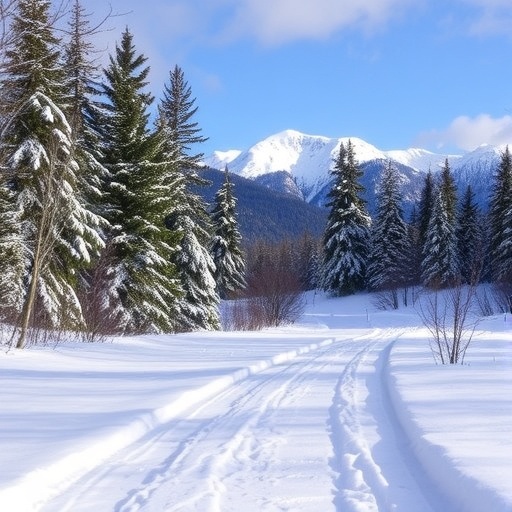
Recent research has illuminated the profound impact of global warming on the number of frozen days experienced across the northern hemisphere. Notably, a study conducted by an international team of scientists, including Hatami, Zaerpour, and Ballarin, reveals alarming trends linking climate change to a declining frequency of land-surface frozen days. The implications of these changes stretch far beyond mere temperature measurements, influencing ecosystems, agricultural productivity, and even hydrology.
In many regions of the northern hemisphere, frozen days—a critical component of the natural seasonal cycle—are becoming increasingly scarce. This trend underscores a dramatic shift in climatic conditions that reflects broader climate change patterns observed globally. The research team utilized extensive datasets, including historical weather patterns and contemporary climate models, to track the changing dynamics of winter seasons over the past decades.
The ramifications of these changes are extensive, particularly in areas reliant on winter freezes to regulate environmental processes. The melting of snowpacks, for instance, has significant consequences for soil moisture levels, which can affect plant growth during the crucial early spring months. As the layers of snow become thinner and less persistent, plants may experience drought conditions even before the summer months arrive.
Moreover, the reduction in surface frozen days disrupts traditional farming practices. Many farmers rely on the consistent freeze-thaw cycles to manage pests and diseases in their crops, which have historically benefitted from natural winter conditions. As the research shows, with less reliable winter freezes, there may be an increase in pest populations during spring, representing yet another challenge to food security.
In addition to agricultural concerns, the findings highlight the disruptions to local ecosystems that depend on predictable seasonal freezes. Various animal species have adapted their life cycles around these frozen days; however, changes in ice cover can impact their breeding and feeding patterns. Certain species, especially those that rely on ice-covered habitats for sustenance, are particularly vulnerable and may face population declines as a result.
Water resources are also at stake. Thinner snowpacks can lead to reduced water availability during warmer months, which poses a significant risk for communities that depend on meltwater from snow. This is particularly concerning in regions where water scarcity is already an issue. The delicate balance between snow accumulation and melting plays a crucial role in maintaining hydrological cycles, and disturbances to this balance can result in serious environmental consequences.
The implications of declining frozen days extend into climate feedback loops as well. With less snow to reflect sunlight back into the atmosphere, more solar energy is absorbed by the Earth’s surface, potentially exacerbating warming. This creates a feedback effect that may lead to further reductions in frozen days, perpetuating this cycle of warming and diminishing snowpacks.
The urgency of addressing these findings cannot be overstated. Policymakers and environmentalists must work collaboratively to develop strategies aimed at mitigating the impacts of climate change. This includes re-evaluating land use practices in agriculture and investing in sustainable farming technologies that account for changing climatic conditions. Additionally, improving public awareness around these issues can help foster a collective response to the evolving climate crisis.
The research team also emphasizes the need for ongoing monitoring and data collection to understand the full extent of these changes. By developing better predictive models and utilizing advanced satellite imaging, scientists can track snow coverage and frozen surface areas with greater precision. This data is vital for shaping effective climate policy and can inform decision-making for community adaptations to these shifts.
As the world grapples with the fathering realities of climate change, studies such as this underscore the interconnectedness of our global systems. The declining number of frozen days in the northern hemisphere serves as a stark reminder that even seemingly localized changes in our climate can have ripple effects throughout the ecosystem. The research stands as both a wake-up call and a call to action for scientists, policymakers, and citizens alike to recognize and respond to the growing threats posed by global warming.
In conclusion, the findings from Hatami and colleagues reveal a trajectory that could alter the northern hemisphere’s seasonal landscape. It challenges our understanding of climate variability and urges immediate attention to those at risk of destabilization—our ecosystems, our farms, and ultimately, our communities. The complexity of these interactions only emphasizes the necessity for unified efforts in combatting climate change while adapting to the new realities we face.
The insight drawn from this research not only serves as a crucial piece of the climate change puzzle but also acts as a catalyst for dialogue on environmental responsibility and sustainability. Moving forward, the action taken following this study could shape the future of environmental stewardship in an era defined by transformation. Nations must come together to recognize the importance of maintaining natural freeze cycles as a critical component of a balanced climate system.
Ultimately, the research paints a clear picture of a warming world; one that necessitates a re-evaluation of our practices on both individual and global scales. As we stand at this crossroad, we must make conscious choices to mitigate these effects and advocate for policies that protect our planet for future generations.
In sum, this study on the decline of frozen days highlights an urgent crisis at hand that requires immediate attention and action from all sectors of society. Engaging with the science, understanding the implications, and taking actionable steps will be vital in our ongoing quest to understand and combat the effects of climate change.
Hatami, S., Zaerpour, M., Ballarin, A.S. et al. Declining number of northern hemisphere land-surface frozen days under global warming and thinner snowpacks. Commun Earth Environ (2025). https://doi.org/10.1038/s43247-025-03059-6
Cite Scienmag News
Violet Maxwell. (December 8, 2025). Fewer Frozen Days and Thinner Snowpacks in North. Scienmag. https://scienmag.com/fewer-frozen-days-and-thinner-snowpacks-in-north/
Violet Maxwell. "Fewer Frozen Days and Thinner Snowpacks in North." Scienmag, 8 December 2025, https://scienmag.com/fewer-frozen-days-and-thinner-snowpacks-in-north/. Accessed 3 September 2026.
Violet Maxwell. "Fewer Frozen Days and Thinner Snowpacks in North." Scienmag. December 8, 2025. https://scienmag.com/fewer-frozen-days-and-thinner-snowpacks-in-north/


