


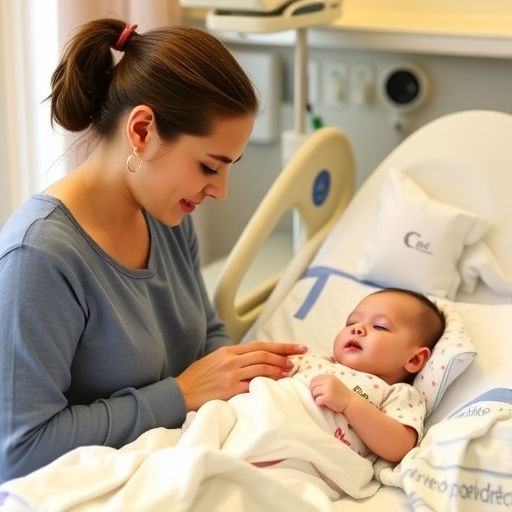
In the intensely stressful environment of neonatal intensive care units (NICUs), mothers of premature or critically ill newborns face overwhelming emotional and psychological burdens. Recognizing this pressing challenge, a recent study published in BMC Psychology by Moghimian Shahrbabaki and colleagues has introduced a compelling intervention designed to enhance coping strategies among these mothers. The research explores how a brief, four-session mindfulness-based cognitive therapy (MBCT) can empower mothers to adopt more effective, problem-focused coping mechanisms, thereby alleviating stress and potentially improving both maternal well-being and infant outcomes.
Neonatal intensive care units are specialized healthcare settings where critically ill neonates receive life-saving interventions. Although NICUs are essential for infant survival and recovery, the environment itself is rife with stressors that affect parents, especially mothers, who often bear the psychological weight of uncertainty, anxiety, and helplessness. These mothers can experience high levels of depression, anxiety, and post-traumatic stress symptoms, which complicate their mental health and maternal role adaptation. Effective coping strategies are crucial for these women to navigate such an emotionally tumultuous period.
Mindfulness-based cognitive therapy, a structured psychological intervention combining mindfulness practices with elements of cognitive behavioral therapy, has shown promise in addressing various emotional and psychological difficulties, including depression, anxiety, and stress-related disorders. MBCT teaches individuals to cultivate present-moment awareness and develop detached observation of their thoughts and emotions, fostering adaptive responses to distress. The innovation of this study lies in tailoring a brief MBCT protocol specifically for mothers in NICU settings, aiming to enhance their resilience and coping capabilities in a time-sensitive framework.
The intervention consisted of four carefully structured sessions, during which participants engaged in mindfulness exercises, cognitive restructuring techniques, and discussions geared toward identifying and modifying maladaptive thought patterns. The sessions focused on increasing awareness of stress triggers, promoting acceptance of difficult emotions, and encouraging the development of active, problem-focused coping strategies—those that involve directly addressing problems and finding practical solutions rather than resorting to avoidance or emotional suppression.
Results from this intervention were striking. Mothers who participated in the four-session MBCT program demonstrated significant improvements in their ability to manage stress through problem-focused coping. These coping strategies are associated with better psychological adjustment because they empower individuals to exert control over their circumstances. By learning to approach problems constructively, mothers became more proactive in managing caregiving challenges and navigating the complexities of the NICU environment.
The study emphasizes that problem-focused coping serves as a crucial mediator between stress exposure and psychological outcomes. Unlike emotion-focused coping, which primarily aims to reduce emotional distress without altering the stressor itself, problem-focused methods contribute to tangible changes in the external environment or in behavioral responses, thereby reducing the source of stress. In the context of NICUs, this can involve seeking information, advocating for the infant, or organizing logistical support, all of which were enhanced through the MBCT intervention.
Intriguingly, the compact nature of the intervention—a mere four sessions—makes it highly feasible for implementation in clinical settings where time and resources are often constrained. This brevity does not sacrifice efficacy; instead, it signals the potential for scalable mental health support programs tailored specifically to the unique needs and schedules of mothers in neonatal care situations.
The research team employed rigorous methodologies, including pre- and post-intervention assessments of coping styles, psychological stress indices, and qualitative feedback from participants. Statistical analyses confirmed the robustness of the findings, showing substantial effect sizes for improvements in problem-focused coping and concurrent reductions in reported anxiety and depressive symptoms. This suggests that MBCT does not merely influence coping in isolation but positively impacts overall psychological health.
This study also contributes to a growing body of literature advocating for the integration of psychological interventions into neonatal healthcare workflows. Historically, psychological support for parents in NICUs has been inconsistent or unavailable, despite clear evidence of mental health challenges. Mindfulness-based approaches, due to their adaptability and evidence base, emerge as promising candidates for routine psychological care, particularly when delivered in concise formats.
Moreover, the implications of enhanced maternal coping extend beyond maternal health. Improved maternal psychological states have been correlated with better infant developmental outcomes, partly because responsive and emotionally regulated caregiving can optimize neonatal recovery and bonding. Thus, interventions like MBCT could indirectly influence infant well-being by fortifying the caregiver’s mental resilience.
Future directions proposed by the authors include expanding the intervention to other caregiver populations, such as fathers or extended family members, and conducting longitudinal studies to examine the durability of coping improvements over time. Additionally, integrating digital platforms to deliver mindfulness-based cognitive therapy could further democratize access, especially for mothers unable to attend in-person sessions due to geographical or logistical barriers.
In conclusion, Moghimian Shahrbabaki et al.’s pioneering study offers compelling evidence that a short, structured mindfulness-based cognitive therapy program can significantly enhance problem-focused coping strategies in mothers of neonates admitted to ICUs. This advancement not only addresses an urgent mental health need but also highlights the potential of brief, targeted psychological interventions to transform the neonatal care experience for families. As NICUs continue to evolve with technological and medical advancements, parallel development of holistic support systems is essential to ensure the well-being of both infants and their caregivers.
The intersection of mindfulness and cognitive therapy appears uniquely suited to the NICU context, where uncertainty and acute stress dominate. By cultivating mindful awareness and cognitive flexibility, mothers learn to navigate the turbulent NICU journey with greater composure and strategic action. This study’s findings mark a critical step toward integrating psychological resilience training into neonatal care protocols worldwide, heralding a new era of compassionate, comprehensive support in pediatric healthcare.
Given the study’s encouraging results, healthcare providers and policymakers should consider widespread implementation of mindfulness-based cognitive therapy programs as part of standard supportive care in NICUs. Supporting mothers through their most vulnerable moments is not merely a humane impulse but a clinical imperative with far-reaching impacts on family health trajectories. As research continues to unfold, such innovative psychosocial interventions may become a cornerstone of modern neonatal intensive care, redefining how we support families confronting premature birth and critical infant illness.
Cite Scienmag News
Glenn Wilkins. (December 3, 2025). Mindfulness Boosts Problem-Solving in NICU Mothers. Scienmag. https://scienmag.com/mindfulness-boosts-problem-solving-in-nicu-mothers/
Glenn Wilkins. "Mindfulness Boosts Problem-Solving in NICU Mothers." Scienmag, 3 December 2025, https://scienmag.com/mindfulness-boosts-problem-solving-in-nicu-mothers/. Accessed 5 September 2026.
Glenn Wilkins. "Mindfulness Boosts Problem-Solving in NICU Mothers." Scienmag. December 3, 2025. https://scienmag.com/mindfulness-boosts-problem-solving-in-nicu-mothers/


