


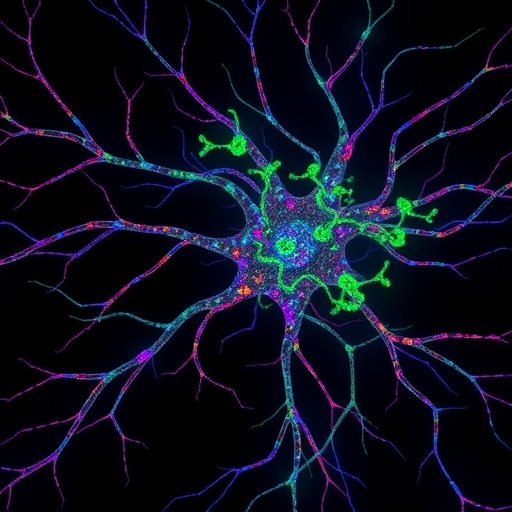
In a groundbreaking development that could pave the way for innovative treatments for Parkinson’s disease, researchers have identified a critical molecular mechanism by which ALDH2, an important enzyme, protects dopaminergic neurons from ferroptosis—a form of programmed cell death driven by iron-dependent lipid peroxidation. The study, published in the prestigious journal npj Parkinson’s Disease, reveals how ALDH2 enhances the enzymatic activity of PRDX6, providing a novel neuroprotective pathway that could halt or delay the progressive neuronal loss central to Parkinson’s disease pathology.
Parkinson’s disease, a neurodegenerative disorder characterized primarily by the progressive loss of dopamine-producing neurons in the substantia nigra, leads to debilitating motor symptoms like tremors, rigidity, and bradykinesia. The exact molecular underpinnings of this neuronal death have long eluded scientists, but recent studies increasingly implicate ferroptosis as a key contributor. Ferroptosis is distinct from apoptosis or necrosis, as it is marked by the accumulation of lipid reactive oxygen species that damage cellular membranes, leading to cell demise. Understanding modulators of this pathway is imperative for developing targeted therapies.
ALDH2, or aldehyde dehydrogenase 2, traditionally recognized for its role in metabolizing toxic aldehydes generated during cellular stress, has now been shown to have a far more complex role within neuronal environments. The enzyme’s elevated expression and activity appear to confer a defense mechanism, curbing oxidative stress and the resultant ferroptotic cell damage. This neuroprotective effect, the authors argue, is mediated through the increased catalytic function of peroxiredoxin 6 (PRDX6), a bifunctional enzyme possessing both peroxidase and phospholipase A2 activities, which maintains redox balance.
The meticulous experimental work carried out by Li, Peng, Wang, and colleagues involved both in vitro and in vivo Parkinson’s disease models. They demonstrated that ALDH2 activation leads to a significant enhancement of PRDX6 activity, thereby bolstering the cell’s antioxidant capacity. This biochemical synergy inhibits the lipid peroxidation process that is fundamental to ferroptosis initiation. Notably, when ALDH2 function was impaired or silenced, dopaminergic neurons became markedly more susceptible to ferroptotic death, affirming the enzyme’s protective role.
Importantly, the findings extend beyond biochemical curiosity into potential clinical relevance. Given the correlation between decreased ALDH2 activity and increased vulnerability to oxidative neuronal damage observed in patients, strategies to boost ALDH2 function could become a cornerstone of disease modification. Small molecule activators of ALDH2, or gene therapy approaches to enhance its expression, might effectively stave off the relentless progression of neuron loss, potentially ameliorating symptoms and improving quality of life for millions of Parkinson’s patients worldwide.
Beyond the direct enzymatic interaction, the study sheds light on the intricate redox regulatory networks operating within dopaminergic neurons. PRDX6, while already known as a cytoprotective agent, appears to be modulated by ALDH2 through post-translational mechanisms, an area ripe for further exploration. Unraveling how ALDH2 influences the structural conformation and catalytic domains of PRDX6 could inform drug design targeting these precise molecular interfaces.
This research also compels a re-examination of ferroptosis in the context of other neurodegenerative diseases. While Alzheimer’s and Huntington’s diseases have been explored for oxidative stress models, the conclusive demonstration of ferroptosis involvement in Parkinson’s offers a paradigm to test ALDH2 and PRDX6 interplay in these and related conditions. Cross-disease investigations could ultimately unify disparate neurodegenerative pathways under common therapeutic targets.
The implications of regulating cellular ferroptosis extend into broader aging and metabolic disorders, where oxidative damage prevails. ALDH2’s protective mechanism may therefore be relevant beyond neurodegeneration, potentially impacting cardiovascular health, liver diseases, and cancers where ferroptotic processes contribute to pathological states. This multifaceted enzyme is a promising candidate for systemic antioxidant therapy development.
Moreover, the study opens avenues to investigate the genetic polymorphisms of ALDH2, which vary significantly across populations and influence enzyme efficacy. Understanding how allelic variations affect susceptibility to Parkinson’s disease through the ferroptosis pathway could lead to personalized medicine approaches. Such insights are imperative for tailoring intervention strategies that accommodate patient-specific risk profiles and therapeutic responsiveness.
Concurrently, the research underscores the emerging role of lipid peroxidation control as a therapeutic target. While antioxidants have been tested previously with limited success, the precise targeting of ferroptosis-related enzymes like PRDX6 introduces a novel level of biochemical specificity that might overcome prior clinical challenges. By indirectly modulating ferroptosis through ALDH2, interventions could achieve more stable control over oxidative homeostasis in vulnerable neurons.
Another intriguing dimension of this discovery lies in its potential to serve as a biomarker axis. Measuring ALDH2 and PRDX6 activity levels in biological fluids or brain imaging might predict disease onset or progression, facilitating earlier diagnosis and timely treatment. Biomarker-guided therapies derive considerable value from such easily quantifiable molecular indicators, which can accelerate clinical decision-making and improve outcome monitoring.
In the realm of translational neuroscience, this study exemplifies the importance of integrating enzymology with neurodegenerative disease frameworks. The elucidation of ALDH2-mediated enhancement of PRDX6 activity highlights how enzymatic regulation can have profound effects on cell fate, offering a biochemical foundation for next-generation neuroprotective agents. Future research will likely focus on screening for compounds that can simulate or amplify this natural cellular defense mechanism.
Ultimately, the work by Li and colleagues represents a milestone in Parkinson’s disease research, revealing a heretofore unappreciated molecular axis that directly counters neuronal ferroptosis. As the scientific community digests these findings, the spotlight will inevitably turn toward practical applications, including drug discovery and clinical trials aimed at harnessing ALDH2’s protective capacities. The hope is that these efforts will culminate in tangible improvements in the lives of those affected by this challenging disease.
As we stand on the cusp of novel therapeutic strategies informed by deep molecular insights, this research reinforces the value of understanding enzyme interactions in neurobiology. The ALDH2-PRDX6 partnership emerges as a beacon of potential, illuminating pathways to neuroprotection that could transform Parkinson’s disease from a progressively disabling condition into a manageable chronic illness.
As the fight against Parkinson’s disease advances, studies like this one underscore the critical need for collaborative, multidisciplinary research that bridges molecular biology, neurology, and pharmacology. By decoding fundamental protective mechanisms such as those mediated by ALDH2, the path toward effective, targeted therapies becomes clearer, driving hope for a future where neurodegenerative disease can be not just treated but prevented.
Cite Scienmag News
Cassandra Pierce. (December 2, 2025). ALDH2 Shields Dopaminergic Neurons via PRDX6 in Parkinson’s. Scienmag. https://scienmag.com/aldh2-shields-dopaminergic-neurons-via-prdx6-in-parkinsons/
Cassandra Pierce. "ALDH2 Shields Dopaminergic Neurons via PRDX6 in Parkinson’s." Scienmag, 2 December 2025, https://scienmag.com/aldh2-shields-dopaminergic-neurons-via-prdx6-in-parkinsons/. Accessed 3 September 2026.
Cassandra Pierce. "ALDH2 Shields Dopaminergic Neurons via PRDX6 in Parkinson’s." Scienmag. December 2, 2025. https://scienmag.com/aldh2-shields-dopaminergic-neurons-via-prdx6-in-parkinsons/


