


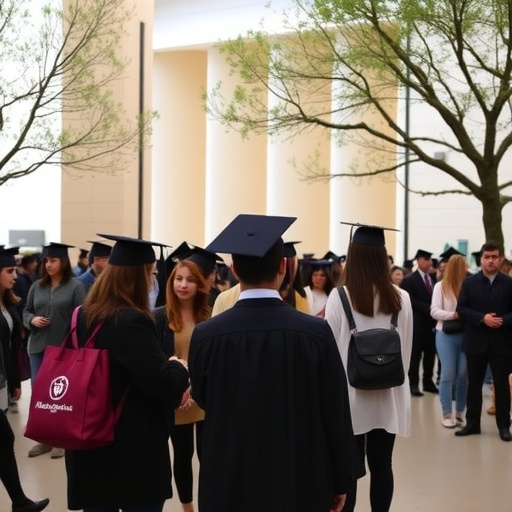
In an era characterized by rapid globalization and ever-evolving job market dynamics, the pursuit of postgraduate education has emerged as a vital pathway for many. A new study led by researchers Espinoza, Sandoval, and Miranda, set to appear in the journal Higher Education in 2025, critically examines the motivations of Chilean university graduates toward further academic pursuits. The findings reveal that a singular undergraduate degree is increasingly perceived as insufficient in providing the competitive edge desired in today’s complex professional landscape.
The research employs a mixed-methods approach, blending qualitative and quantitative analyses to gather insights from a diverse cohort of Chilean graduates. Through surveys and in-depth interviews, the team explores a range of factors that propel graduates to consider postgraduate education, including career aspirations, economic incentives, and personal fulfillment. The study’s comprehensive methodology stands out, offering rich contextual data that enhances understanding of this multifaceted issue.
Key findings indicate that a significant proportion of participants view a postgraduate degree as essential for advancing their careers or securing a desirable position in competitive fields. Graduates articulate that the increasing complexity of their respective industries demands specialized knowledge and skills that can typically only be acquired through advanced study. This notion underscores a broader trend where higher education is not merely a personal achievement but increasingly a professional necessity.
Economic considerations also play a pivotal role in graduates’ decisions to pursue further studies. Many respondents expressed concerns about salary disparities between those with only undergraduate degrees and those with postgraduate qualifications. This realization is further compounded by the cost of living and inflationary pressures that characterize contemporary economies, leading graduates to feel that investing in further education is not just beneficial but, in many cases, essential for achieving financial stability and security.
One surprising discovery from the study is the influence of social networks and peer behaviors on educational decisions. Graduates reported that their friends or colleagues who pursued postgraduate degrees served as role models and catalysts for their own educational ambitions. This networking effect illustrates the powerful impact of social dynamics and peer perceptions in shaping academic pathways, suggesting that institutions might benefit from fostering environments that encourage such aspirations among students.
Moreover, the research highlights the intersection between personal motivations and systemic factors that contribute to the desire for further education. Many participants identified a profound desire for intellectual challenge and personal growth, indicative of a shift in how educational success is perceived. Rather than being solely a means to an economic end, postgraduate education increasingly represents a journey of self-discovery and mastery for many graduates.
Interestingly, the study also addresses the potential challenges associated with pursuing postgraduate education. Several participants noted the significant financial burden of graduate programs and the subsequent accumulation of debt, which can deter prospective students. The researchers emphasize the need for improved policies and financial support systems to help alleviate these pressures, thereby ensuring that motivated individuals can access further educational opportunities without the fear of crippling financial constraints.
As the research unfolds, it points to varying motivations influenced by gender and socio-economic backgrounds. Female graduates, in particular, underscored the role of postgraduate education in overcoming barriers in male-dominated sectors. These insights call attention to the importance of understanding how educational aspirations can differ markedly among diverse demographic groups, thereby informing tailored educational policies.
In addition, the study uncovers a gap in institutional support systems for graduates considering further education. Many respondents expressed feelings of being inadequately informed about postgraduate opportunities and the application processes involved. This raises questions about the responsibility of universities in providing comprehensive guidance and resources to equip graduates with the knowledge they need to navigate their educational choices effectively.
The authors also highlight the crucial role of adaptability in today’s educational climate. Graduates increasingly recognize the importance of lifelong learning as industries continue to evolve at a breakneck pace. This realization heralds a shift in mindset from viewing education as a finite achievement—obtaining a degree—to embracing a continual journey of learning and skill enhancement that extends well beyond the university experience.
In conclusion, the research conducted by Espinoza, Sandoval, and Miranda sheds light on the intricate motivations that drive Chilean university graduates to pursue further studies. It underscores the need for systemic changes in higher education that align with the evolving aspirations of students. With insights that span economic, social, and personal dimensions, the study calls for a comprehensive reevaluation of the post-graduate landscape to better support the aspirations of future generations.
As the discourse surrounding higher education continues, this research stands as a critical contribution, emphasizing that in a world where one degree is no longer sufficient, understanding the nuanced motivations behind further study is more important than ever. This study not only provides insights specific to Chile but also resonates with a global audience grappling with similar educational dynamics in the 21st century.
Espinoza, O., Sandoval, L., Miranda, C. et al. When one degree isn’t enough: analysing Chilean university graduates’ motivations for postgraduate studies.
High Educ (2025). https://doi.org/10.1007/s10734-025-01597-8
Cite Scienmag News
Courtney Benton. (December 1, 2025). Why Chilean Graduates Pursue Postgraduate Studies Beyond Degrees. Scienmag. https://scienmag.com/why-chilean-graduates-pursue-postgraduate-studies-beyond-degrees/
Courtney Benton. "Why Chilean Graduates Pursue Postgraduate Studies Beyond Degrees." Scienmag, 1 December 2025, https://scienmag.com/why-chilean-graduates-pursue-postgraduate-studies-beyond-degrees/. Accessed 5 September 2026.
Courtney Benton. "Why Chilean Graduates Pursue Postgraduate Studies Beyond Degrees." Scienmag. December 1, 2025. https://scienmag.com/why-chilean-graduates-pursue-postgraduate-studies-beyond-degrees/


