


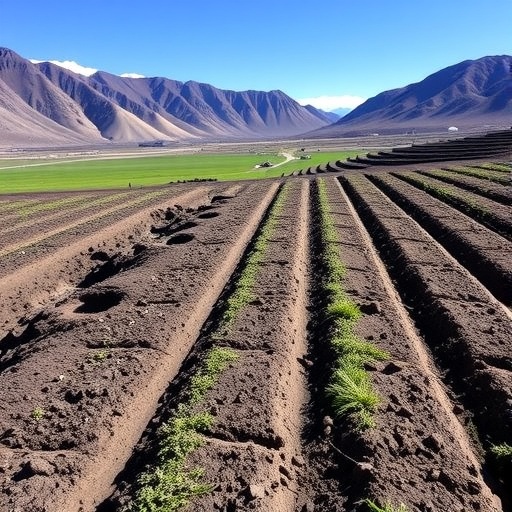
In recent years, the concept of soil health has gained immense traction, serving as a critical parameter for ecology, agriculture, and environmental monitoring. An insightful study conducted by researchers He, Li, and Qiu shines a light on this pressing issue, particularly focusing on the low-disturbance areas of Yushu in Qinghai Province, China. The study aims to provide a comprehensive assessment of soil health, leveraging advanced methodologies and empirical data to deliver robust findings that speak to the ecological integrity of this unique region.
Soil health is often defined not merely by its ability to support plant life but rather through a multidimensional lens that incorporates physical, chemical, and biological attributes. The researchers adopted a holistic approach to evaluate these attributes, measuring parameters such as soil organic matter, nutrient availability, microbial diversity, and overall ecosystem functionality. Understanding the interdependencies among these factors is crucial to the sustainability of agricultural practices and the resilience of natural ecosystems in the face of climate change and human impact.
Yushu, located in an ecologically sensitive region, exhibits distinct characteristics that make it a unique subject for study. The area’s historical low-disturbance status has preserved various ecological functions that are often compromised in regions subjected to extensive human activity. The research team conducted an array of field surveys and soil sampling, meticulously analyzing the composition and quality of the soil across different sites within the Yushu area. The methodological rigor employed in this assessment allowed for comprehensive data collection, serving as a foundation for subsequent analyses.
One of the standout findings of the study is the relationship between soil biodiversity and health. The researchers found that regions with higher microbial diversity corresponded to enhanced soil function and resilience. This connection underscores the critical role of biodiversity in maintaining soil health, particularly in low-disturbance conditions, where natural ecosystems often thrive without significant anthropogenic influences. This relationship offers promising implications for ecological restoration efforts and informs strategies aimed at enhancing soil health in more disturbed areas.
In addition to microbial diversity, the chemical properties of the soil were assessed. Parameters such as pH, nutrient levels, and organic matter content were meticulously evaluated. The researchers found that higher levels of organic matter were directly correlated with improved soil structure and health indicators. This insight is particularly valuable for informing land management practices that prioritize organic amendments, which could promote soil health and therefore agricultural productivity in the region.
Furthermore, the study highlighted the significance of soil structure in maintaining water retention and air permeability, which are essential for plant growth. The researchers observed that intact, structured soils better supported root systems, thereby facilitating nutrient uptake and promoting overall plant health. Such findings advocate for sustainable land-use practices that protect soil structure, especially in the face of increasing land conversion for agriculture and other developments.
The methods utilized in this comprehensive assessment reflect an innovative paradigm in soil health evaluation. The incorporation of advanced analytical tools such as soil DNA sequencing, alongside traditional soil chemistry analyses, provided a more nuanced understanding of soil microbial communities. This dual approach empowers researchers to glean insights not only into the organisms present but also into their potential functions and their implications for soil health.
As climate change continues to pose challenges for global agriculture, the findings from the Yushu study hold significant implications. The insights into soil health can inform adaptive management strategies that enhance resilience to climate variability. By fostering practices that support soil health, stakeholders can create agricultural systems that are less vulnerable to extremes, thereby contributing to food security and sustainable development goals.
Moreover, the results of the study could influence policy decisions at multiple levels. By emphasizing the importance of soil health, decision-makers can advocate for soil conservation and sustainable management practices that reflect ecological principles. This can include initiatives to reduce soil degradation, promote biodiversity, and educate land users about the critical role of maintaining healthy soils in ecological balance.
It’s worth noting that the research team faced several challenges during their study, including logistical issues associated with fieldwork in remote areas of Yushu. Despite these obstacles, their commitment to rigorous methodologies and data integrity ensured the reliability of their findings. Their perseverance set a precedent for future studies aiming to assess soil health in similarly challenging environments.
As the research community continues to explore soil health dynamics, the Yushu study stands out as a pioneering example of integrative approaches to environmental assessment. It not only enriches the scientific discourse surrounding soil health but also provides a valuable framework that can be applied globally. This research underscores the importance of understanding soil as a living system that requires careful stewardship to sustain its myriad functions.
In conclusion, the comprehensive assessment conducted by He, Li, and Qiu is a remarkable contribution to the field of environmental monitoring and soil health research. It delineates a clear understanding of the pressing need for ecological conservation and sustainable practices. By bridging the gap between scientific research and practical application, this investigation lays the groundwork for future explorations into the vital realm of soil health, particularly in low-disturbance ecosystems.
As the study garners attention both nationally and internationally, it emphasizes an urgent call to action for stakeholders, policymakers, and the scientific community alike. Recognizing the integral role of soil health in broader environmental and societal contexts can pave the way for innovative strategies that safeguard this critical resource for generations to come.
Cite Scienmag News
Alan Morgan. (December 1, 2025). Evaluating Soil Health in Yushu, Qinghai Province. Scienmag. https://scienmag.com/evaluating-soil-health-in-yushu-qinghai-province/
Alan Morgan. "Evaluating Soil Health in Yushu, Qinghai Province." Scienmag, 1 December 2025, https://scienmag.com/evaluating-soil-health-in-yushu-qinghai-province/. Accessed 4 September 2026.
Alan Morgan. "Evaluating Soil Health in Yushu, Qinghai Province." Scienmag. December 1, 2025. https://scienmag.com/evaluating-soil-health-in-yushu-qinghai-province/


