


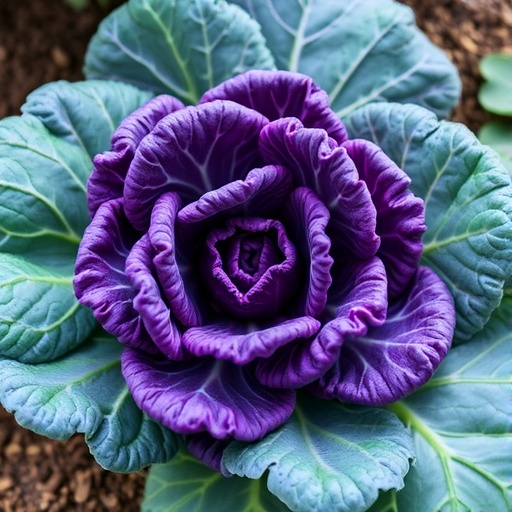
In the ever-evolving world of agriculture, the quest for sustainable practices is paramount. Recent research has shed light on a novel strategy that taps into the power of plant physiology to bolster crop resilience against pests. Specifically, the push-pull cropping system has emerged as a promising technique that not only enhances crop yields but also fortifies plants’ natural defenses. This approach leverages the soil’s legacy effects, promoting glucosinolate production that serves as a critical line of defense against the notorious Diamondback moth, scientifically known as Plutella xylostella.
The story begins with the understanding of glucosinolates, a group of natural compounds found predominantly in cruciferous vegetables like kale. These compounds are not just mere chemicals but are intricately linked to the plant’s metabolic processes, playing a pivotal role in deterring herbivores and pathogens. As the kale plant engages in the push-pull system, it is exposed to various biotic and abiotic stresses that stimulate glucosinolate synthesis, resulting in a feat of natural biochemistry that wards off potential threats.
The push-pull system functions by integrating specific companion plants that attract beneficial insects while repelling pests. In essence, this intercropping architecture works in harmony, fostering an ecosystem that incentivizes plant growth and health. Researchers Opio, Mutyambai, and Cheseto have meticulously documented these phenomena, showcasing how the synergistic relationship between the crops and their environment contributes to increased production of glucosinolates in kale. It’s a compelling illustration of how intelligent farming practices can mimic natural ecological interactions to enhance agricultural productivity.
Field trials and laboratory experiments solidify the findings that underscore the importance of soil health. The push-pull system does more than just manipulate plant traits; it also enriches microbial communities within the soil. Such increases in microbial diversity have been linked to enhanced nutrient cycling, which in turn enriches the crops. This dynamic interplay between soil biota and plant chemistry is not only fascinating but essential for building resilience against pests. The legacy effect of this system can lead to sustained increases in glucosinolate levels, providing a long-term defense mechanism for crops once established.
Beyond the immediate benefits, this approach offers a sustainable pathway to combating the incessant threat posed by pests like the Diamondback moth. The increasing global attention on the ecological impact of pesticides amplifies the urgency for implementing such organic strategies. As the research indicates, the glucosinolate’s role in plant defense is pivotal; when herbivores consume the leaves, these compounds can disrupt metabolic processes, ultimately decreasing their survival rates. From a biological standpoint, this method provides a selective advantage for kale, allowing it to thrive in environments where the Diamondback moth continues to pose significant challenges.
Moreover, the implications of these findings extend far beyond individual farms. They offer a glimpse into the future of agricultural practices that prioritize sustainability and biodiversity. By adopting such innovative strategies, farmers can significantly reduce reliance on synthetic pesticides, thus minimizing chemical footprints. It is a vindication of traditional ecological knowledge augmented by modern scientific techniques, showcasing how age-old farming wisdom can harmonize with cutting-edge research to create sustainable agricultural ecosystems.
As we transition into a new era of food production, the integration of push-pull cropping systems could redefine our approach to pest management. The findings from this study are not isolated; they resonate with a growing body of literature that champions ecological methods for pest control. As climate change exacerbates pest pressures and agricultural systems face increased challenges, the significance of such sustainable practices cannot be overstated. By fostering a deeper understanding of plant-soil interactions and ecological balance, the agricultural community can better prepare for future challenges.
Further research will be critical in fine-tuning these practices to maximize their effectiveness and applicability across various environmental conditions. Understanding the optimal combinations of companion plants and the precise conditions that promote glucosinolate production will be vital. As researchers continue to unravel the complexities of plant responses to pests and environmental stresses, every new discovery will contribute to a more sustainable agricultural future.
The rigorous methodologies employed by the researchers also serve as a template for future studies aiming to explore similar avenues. Critics may argue about the complexity and time-consuming nature of implementing such systems, yet the long-term benefits paint a compelling picture of necessity versus convenience. Sustainable practices such as the push-pull cropping system deserve significant attention, especially as the world grapples with food security in the face of a growing population.
In summary, the work led by Opio and colleagues is a beacon of hope in the field of sustainable agriculture. The interplay between push-pull cropping systems, glucosinolate production, and pest resistance encapsulates the incredible potential of ecological farming practices. By investing in such innovative strategies, the agricultural community not only enhances crop resilience but also paves the way for a more sustainable interaction between farming and the environment.
The findings of this research reinforce the idea that agricultural practices must evolve alongside scientific advancements. Only by embracing such strategies can we hope to create a resilient food system capable of withstanding the pressures of the 21st century. The integration of sustainable practices such as push-pull cropping offers an invaluable opportunity to revolutionize how we approach pest management, allowing crops like kale to flourish in the face of adversities.
Ultimately, it underscores a crucial message: the future of agriculture lies in our ability to innovate while respecting natural systems. The exploration of the push-pull cropping system serves not only as an academic exercise but as a call to arms for farmers and scientists alike. As we look ahead, let us remember that sustainable solutions are within our reach—rooted not just in technology but in nature itself.
Opio, B., Mutyambai, D.M., Cheseto, X. et al. Push-pull cropping system soil legacies enhance glucosinolate production and subsequent defense against Diamondback moth (Plutella xylostella) larvae in Kale (Brassica oleracea).
Discov. Plants 2, 346 (2025). https://doi.org/10.1007/s44372-025-00420-z
Cite Scienmag News
Alan Morgan. (December 1, 2025). Boosting Kale Defense: Soil Legacies and Glucosinolates. Scienmag. https://scienmag.com/boosting-kale-defense-soil-legacies-and-glucosinolates/
Alan Morgan. "Boosting Kale Defense: Soil Legacies and Glucosinolates." Scienmag, 1 December 2025, https://scienmag.com/boosting-kale-defense-soil-legacies-and-glucosinolates/. Accessed 3 September 2026.
Alan Morgan. "Boosting Kale Defense: Soil Legacies and Glucosinolates." Scienmag. December 1, 2025. https://scienmag.com/boosting-kale-defense-soil-legacies-and-glucosinolates/


