


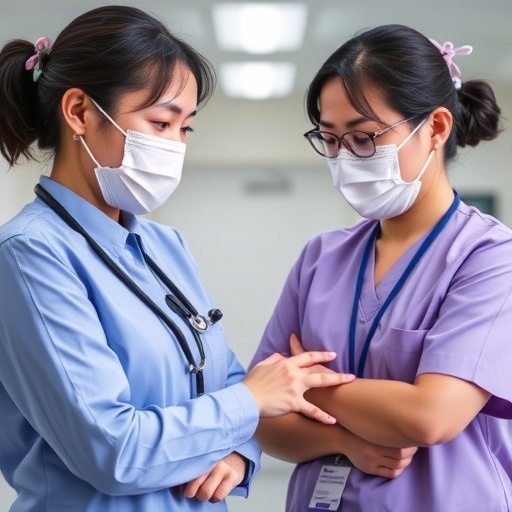
In the realm of healthcare, particularly during crises such as infectious disease outbreaks, the resilience and solidarity among clinical nurses emerge as critical factors in maintaining operational efficiency and emotional well-being. A recent study conducted by Luo, Feng, Wang, and colleagues delves deeply into the collective support mechanisms activated among Chinese clinical nurses during such challenging times. This research not only illuminates the strategies nurses employ to support one another but also enhances our understanding of interpersonal dynamics in high-stakes environments.
The study employs a constructivist grounded theory approach, which allows the researchers to uncover the nuanced and complex support processes that unfold among nursing professionals amidst the chaos of an emerging infectious disease outbreak. The research showcases how interactions among nurses transform into a vital source of both psychological and practical aid. It’s a testament to the power of teamwork and shared experience in stressful situations, exemplifying a model that could be replicated in healthcare systems worldwide.
One of the core findings of the study highlights the concept of “watching over and helping each other.” This phrase encapsulates the essence of collective support as a survival mechanism during times of crisis. Nurses frequently deploy strategies that enhance their emotional resilience, offering each other both moral support and practical assistance. This reciprocal behavior fosters a sense of belonging and strengthened bonds among team members, underscoring the importance of social networks in the nursing profession.
Furthermore, this research elucidates the various dimensions of collective support, detailing how these nurses engage in both formal and informal mechanisms to aid each other. Examples range from shared professional duties to spontaneous emotional check-ins that help alleviate stress. Such interactions are crucial as they not only support individual nurses but also cohesively enhance the overall team performance, ensuring that patient care remains uncompromised.
The research emphasizes the timing and context of support processes, noting that the immediacy of nursing duties often compels professionals to rely on instinct and deep-seated relationships with coworkers. In critical moments, informal support mechanisms may become primary, overshadowing formal organizational protocols. This reality speaks volumes about the nature of healthcare environments, especially during emergencies, where the hierarchical structures often found in organizations can temporarily yield to more fluid, team-based dynamics.
Additionally, the study sheds light on the emotional toll that nurses endure during an outbreak, which can lead to burnout and mental fatigue. The authors argue for the necessity of creating supportive environments that prioritize mental health resources alongside physical health protocols. By strengthening the support mechanisms among nursing staff, healthcare systems can cultivate a more robust workforce capable of navigating the uncertainties inherent to their roles.
Emerging infectious disease outbreaks pose unique challenges, and the lessons drawn from the Chinese clinical nurses can offer invaluable insights for nursing professionals globally. The approach taken by Luo and his colleagues illustrates that the welfare of healthcare workers is intrinsically linked to patient welfare. When nurses support one another, they not only enhance their own resilience but ultimately improve the quality of care they provide to their patients.
This study underscores the importance of research on collective support in nursing, an area that, while increasingly garnering attention, remains underexplored compared to other dimensions of healthcare. With the rising frequency of infectious disease outbreaks and other health crises, understanding how clinical staff work together to overcome challenges will be essential for future preparedness and response strategies.
As healthcare innovations continue to emerge, it will be vital to integrate findings like these into training and operational frameworks. Education programs should incorporate strategies for building teamwork and interpersonal relationships, fostering a culture of support that extends beyond individual capabilities to collective strength. By reinforcing the theory of collective support within nursing education, future nurses can be better equipped to handle the demands of their profession, particularly in times of crisis.
The implications of this study also resonate in a broader context, highlighting the universal need for solidarity and collaboration in the face of adversity. It emphasizes the importance of viewing nursing not as an isolated profession but as a collaborative endeavor where bonds between colleagues are paramount for success. This paradigm shift could lead to more cohesive healthcare systems that prioritize the well-being of their workforce, ultimately benefiting patient care.
In summary, the exploration of collective support processes among Chinese clinical nurses offers profound insights into the mechanisms of resilience in nursing. As the field continues to evolve, understanding the dynamics of teamwork through research such as this will be pivotal in shaping the future of nursing education and practice. It is a clarion call to acknowledge the intricate web of emotions, interactions, and support systems that significantly influence healthcare delivery, especially during outbreaks of infectious diseases.
The study serves as a vital reminder that, in the throes of crisis, it is often the connections between individuals that form the backbone of healthcare delivery, reinforcing the notion that the health of caregivers is as critical as that of the patients they serve.
Cite Scienmag News
Ophelia Keating. (November 30, 2025). Supporting Each Other: Chinese Nurses in Crisis. Scienmag. https://scienmag.com/supporting-each-other-chinese-nurses-in-crisis/
Ophelia Keating. "Supporting Each Other: Chinese Nurses in Crisis." Scienmag, 30 November 2025, https://scienmag.com/supporting-each-other-chinese-nurses-in-crisis/. Accessed 4 September 2026.
Ophelia Keating. "Supporting Each Other: Chinese Nurses in Crisis." Scienmag. November 30, 2025. https://scienmag.com/supporting-each-other-chinese-nurses-in-crisis/


