


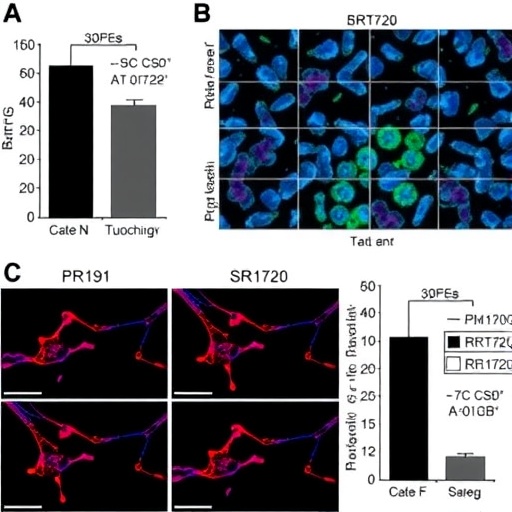
In recent groundbreaking research published in BMC Neuroscience, researchers led by Sun, L., Li, C., and Shi, J. have unveiled significant findings regarding the connection between mitophagy, specifically Parkin-mediated processes, and depressive-like behaviors induced by lipopolysaccharides (LPS) in murine models. The study, titled “SRT1720 ameliorates LPS-induced depressive-like behaviors in mice and activates Parkin-mediated mitophagy,” highlights potential therapeutic pathways for treating depression through the modulation of mitochondrial health and neuronal function.
Depression remains a pervasive mental health challenge affecting millions globally. Traditional treatments, while effective for some, often fall short for others, leading scientists to explore alternative approaches. This research offers a promising perspective by investigating the role of SRT1720, a molecule known for its ability to activate sirtuin pathways, in alleviating depressive symptoms associated with inflammatory responses.
The researchers started their inquiry by establishing a clear link between inflammation and depression. Previous research has suggested that inflammatory markers, such as cytokines activated by LPS, contribute to the onset of depression. In this context, the study’s design incorporated LPS to induce depressive-like behaviors in mice, mimicking the effects of systemic inflammation observed in humans with depression. This innovative model allowed the researchers to systematically assess the behavioral changes and physiological responses associated with treatment.
In a series of controlled experiments, the team administered SRT1720 to the LPS-treated mice to evaluate its effects on depressive-like behaviors. Results demonstrated that the substance significantly mitigated symptoms, indicating a potential mechanism that could be explored for therapeutic interventions in human subjects. By reversing some of the depressive-like behaviors, SRT1720 emerged as a potential breakthrough in understanding the biochemical pathways involved in mood regulation.
The underlying mechanisms of SRT1720’s action were also meticulously examined. The researchers focused on mitophagy, a process critical for the removal of damaged mitochondria and the maintenance of cellular homeostasis. Mitochondrial dysfunction has been implicated in various neurodegenerative diseases and mood disorders. The activation of Parkin, a vital protein in the mitophagic pathway, was shown to be enhanced by SRT1720, suggesting that improving mitochondrial health could have cascading benefits for brain function and emotional well-being.
What makes this study particularly compelling is the intersection of neurobiology and inflammation. By demonstrating that SRT1720 does not merely act on neurotransmitter levels but influences mitochondrial dynamics, the findings pave the way for a broader understanding of how metabolic processes affect mental health. This holistic view of depression can lead to novel strategies that address not just symptoms but the root causes of mood disorders.
Moreover, the study opens up possibilities for alternative treatment modalities. Conventional antidepressants often come with a host of side effects and limitations. The findings regarding SRT1720 indicate that compounds targeting mitochondrial health might provide a safer and more effective means of addressing depressive symptoms, especially in patients with inflammation-induced depression. This revelation could catalyze future drug development initiatives aimed at enhancing mitochondrial function in the brain.
Importantly, the research also highlights the potential for personalized medicine approaches in the treatment of depression. Understanding an individual’s inflammatory profile might aid clinicians in selecting the most appropriate therapeutic strategies, particularly for those who do not respond well to traditional antidepressants. This could significantly enhance the efficacy of treatment and improve patient outcomes.
As the field advances, further investigation will be critical. It will be essential to conduct additional studies exploring the long-term effects of SRT1720 on both behavior and neuronal function. Additionally, expanding research to human trials will solidify the translational opportunities of these findings. Such developments could revolutionize the treatment landscape for depression, offering hope to millions who suffer from this debilitating condition.
In summary, this ground-breaking research elucidates the intricate relationship between inflammation, mitochondrial function, and depression. By highlighting the role of SRT1720 in ameliorating depressive-like behaviors in mice, it sets the stage for potential new avenues in therapeutic approaches. The findings could inspire a paradigm shift in how mood disorders are understood and treated, emphasizing the need for further exploration and validation in clinical settings.
The implications of this study are profound, affecting not only biomedical research but also clinical practices and patient management strategies in the field of psychiatry. As more attention is drawn to the physiological underpinnings of depression, the need for a multifaceted approach in addressing this condition will become increasingly evident.
Ultimately, the research conducted by Sun, Li, and Shi, alongside their co-authors, signifies an important step towards unraveling the complexities of depression and provides a beacon of hope for the development of innovative treatment options. By continuing to explore the connections between metabolic processes and mental health, the scientific community can work towards alleviating the burden of depression and enhancing the quality of life for those affected.
In the years to come, it will be fascinating to observe how these findings shape future research and clinical practices, as we strive towards a more integrated understanding of mental health and wellness across all dimensions of human life.
Cite Scienmag News
Glenn Wilkins. (November 30, 2025). SRT1720 Alleviates Depression and Boosts Mitophagy in Mice. Scienmag. https://scienmag.com/srt1720-alleviates-depression-and-boosts-mitophagy-in-mice/
Glenn Wilkins. "SRT1720 Alleviates Depression and Boosts Mitophagy in Mice." Scienmag, 30 November 2025, https://scienmag.com/srt1720-alleviates-depression-and-boosts-mitophagy-in-mice/. Accessed 4 September 2026.
Glenn Wilkins. "SRT1720 Alleviates Depression and Boosts Mitophagy in Mice." Scienmag. November 30, 2025. https://scienmag.com/srt1720-alleviates-depression-and-boosts-mitophagy-in-mice/


