


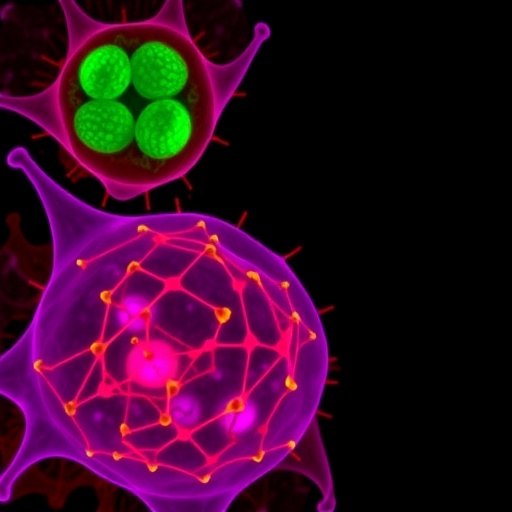
In a groundbreaking study that could redefine therapeutic strategies for hormone receptor-positive breast cancer, researchers have uncovered profound cellular reprogramming occurring during combined anti-PD-1 immunotherapy and chemotherapy treatment in early-stage patients. This cutting-edge research sheds light on the intricate molecular interplay and adaptive mechanisms within tumor microenvironments, potentially opening new avenues for precision oncology and improved clinical outcomes.
Hormone receptor-positive breast cancer (HR+ BC) represents the most common subtype of breast cancer, traditionally managed through endocrine therapy augmented by chemotherapy. However, the advent of immunotherapies, particularly checkpoint inhibitors targeting programmed cell death protein 1 (PD-1), has introduced promising yet complex dynamics in the treatment landscape. This latest investigation meticulously explores how concomitant administration of anti-PD-1 agents with cytotoxic chemotherapy orchestrates a dynamic cellular reconfiguration within tumor tissue, emphasizing the plasticity and resilience of malignant cells under therapeutic pressure.
Employing state-of-the-art single-cell transcriptomics and advanced multi-omics profiling, the study delineates the cellular heterogeneity and transcriptional shifts induced by dual-modality treatment. The researchers applied high-resolution single-cell RNA sequencing to biopsy samples obtained pre- and post-treatment from patients diagnosed with early-stage primary HR+ BC undergoing anti-PD-1 combined with standard chemotherapy regimens. This approach enabled unprecedented visualization of intratumoral cellular states, unmasking previously unappreciated trajectories of cellular identity transformation and immune landscape remodeling.
The findings reveal a striking induction of cellular reprogramming, characterized by the emergence of transcriptional phenotypes distinct from baseline tumor cells. Notably, the tumor compartment exhibited a shift towards a more mesenchymal-like, therapy-resistant phenotype, concomitant with altered expression of immune modulatory molecules. This phenotypic plasticity may underlie mechanisms of immune escape and chemoresistance, contributing to disease persistence despite aggressive therapeutic intervention.
Moreover, the immune milieu within treated tumors underwent significant recalibration. The investigation identified enhanced infiltration and activation of cytotoxic T lymphocytes as well as reprogramming of tumor-associated macrophages towards a pro-inflammatory, anti-tumorigenic state. These immunological shifts bolster the concept of combinatory synergy between checkpoint blockade and chemotherapy, potentiating immune-mediated tumor eradication yet also implicating the need for strategic timing and dosing optimization to counterbalance immune evasion phenomena.
Further mechanistic insights were gained through integrative pathway analyses, highlighting key signaling cascades such as the interferon-gamma response, epithelial-to-mesenchymal transition (EMT), and metabolic rewiring pathways that converge to facilitate cellular plasticity and therapeutic resistance. This multifactorial adaptation underscores the complexity of tumor evolutionary dynamics under immune-oncologic stress, challenging existing models and necessitating refined biomarker development for treatment responsiveness prediction.
Additionally, the study underscores the relevance of early-stage intervention timing, illustrating that cellular reprogramming signatures discernible prior to overt clinical resistance can serve as prognostic indicators. This predictive capacity hints at the potential for real-time monitoring of tumor adaptation via minimally invasive liquid biopsies or serial imaging modalities, enabling personalized treatment adjustments to preempt relapse and improve long-term survival.
Importantly, these revelations compel a reevaluation of current clinical trial designs integrating immunotherapy with chemotherapy in HR+ breast cancer. While the dual strategy demonstrates enhanced immune engagement, the emergence of resistant cell populations mandates incorporation of novel agents targeting identified adaptive pathways, such as EMT inhibitors or metabolic modulators, to forestall resistance and potentiate durable remissions.
This work also holds profound translational implications beyond breast cancer, as similar principles of therapy-induced cellular plasticity and immune remodeling may apply to diverse solid tumors treated with checkpoint inhibitors. Consequently, it catalyzes a broader paradigm shift towards embracing tumor heterogeneity and plasticity as central challenges in immuno-oncology, guiding future drug development and combinatorial regimen innovation.
By illuminating the fundamental biology of tumor adaptation during anti-PD-1 and chemotherapy administration, this research empowers clinicians and scientists to devise more sophisticated, evolutionarily-informed treatment algorithms. Such algorithms would dynamically counteract tumor escape mechanisms, optimizing therapeutic efficacy while minimizing adverse effects, ultimately advancing the frontier of cancer precision medicine.
As the field progresses, integrating these molecular insights with cutting-edge technologies like spatial transcriptomics and longitudinal patient-derived models will further decode the spatial and temporal intricacies of treatment-induced cellular reprogramming. This comprehensive understanding is pivotal for tailoring next-generation immuno-chemotherapy combinations that anticipate and intercept cancer’s adaptive maneuvers.
In summary, the discovery of robust cellular reprogramming during anti-PD-1 and chemotherapy treatment in early-stage HR+ breast cancer signifies a transformative step in oncology research. It highlights the critical importance of unraveling complex tumor-immune dynamics and devising integrated therapeutic strategies that address both tumor heterogeneity and immune contexture. This study sets a new benchmark for future investigations aimed at conquering therapeutic resistance and achieving lasting cures for breast cancer patients worldwide.
Cite Scienmag News
Rowan B. (November 28, 2025). Cellular Reprogramming in Early Hormone-Positive Breast Cancer. Scienmag. https://scienmag.com/cellular-reprogramming-in-early-hormone-positive-breast-cancer/
Rowan B. "Cellular Reprogramming in Early Hormone-Positive Breast Cancer." Scienmag, 28 November 2025, https://scienmag.com/cellular-reprogramming-in-early-hormone-positive-breast-cancer/. Accessed 29 August 2026.
Rowan B. "Cellular Reprogramming in Early Hormone-Positive Breast Cancer." Scienmag. November 28, 2025. https://scienmag.com/cellular-reprogramming-in-early-hormone-positive-breast-cancer/
![High-Contrast [¹⁸F]SiTATE PET/CT Imaging Maps Somatostatin Receptors in Meningiomas](https://scienmag.com/wp-content/plugins/wp-fastest-cache-premium/pro/images/blank.gif)

