


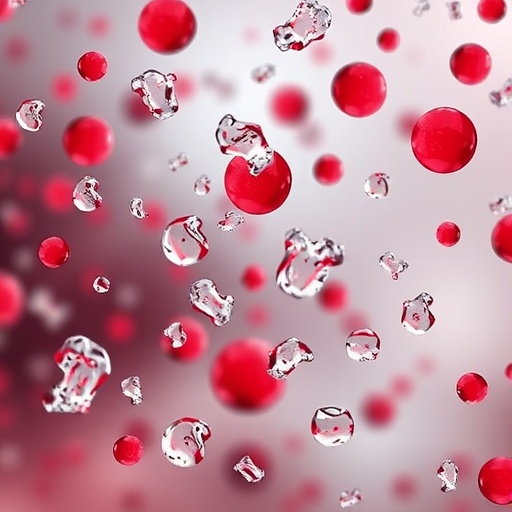
In a groundbreaking advancement that probes the intersection of environmental pollution and human health, scientists have unearthed compelling evidence revealing how weathered microplastics interact with human blood components, influencing coagulation and platelet activation. This pivotal research sheds new light on the potential pathways through which these omnipresent pollutants could contribute to cardiovascular risks, presenting both a scientific revelation and a pressing public health concern.
Microplastics—tiny plastic fragments less than 5 millimeters in size—have become ubiquitous contaminants, infiltrating virtually every ecosystem on the planet. From the depths of the oceans to the air we breathe, these minuscule particles pose complex challenges, their impacts on human physiology still largely a mystery. The latest study breaks new ground by focusing specifically on microplastics that have undergone environmental weathering, a process that modifies the physical and chemical properties of these particles. Such alterations may play a crucial role in determining how microplastics interact with biological systems.
Scientists have long suspected that microplastics could influence blood coagulation—an essential physiological mechanism that prevents excessive bleeding—but the precise dynamics had remained elusive. This research employed sophisticated analytical techniques to simulate the environmental aging process experienced by microplastics, replicating years of exposure to sunlight, water, and atmospheric conditions. By artificially weathering these particles, researchers could examine their surface structural changes in meticulous detail and observe their effect in human blood.
The study reveals that weathering significantly alters the microplastic surface morphology, creating roughened textures and new chemical functionalities. These modifications increase the particles’ reactivity and capacity to interact with blood plasma proteins and cellular components such as platelets. Platelets, key players in the clotting cascade, respond sensitively to foreign surfaces, and the weathered microplastics appeared to provoke an activation response far more pronounced than their pristine counterparts.
Through a series of experiments utilizing whole blood assays, flow cytometry, and scanning electron microscopy, the research team demonstrated that weathered microplastics expedite the initial clotting stages and enhance platelet adherence and aggregation. These biologically relevant phenotypes indicate a higher propensity for microplastics to contribute to thrombogenic conditions, raising questions about their cumulative impact on vascular health.
The research also delves into the biochemical mechanisms behind these interactions. Surface oxidation products and microfractures on weathered microplastics expose reactive groups that can trigger protein adsorption patterns favoring coagulation factor binding. By altering the delicate balance of coagulation mediators, these particles could inadvertently tip the scales toward hypercoagulability—a state associated with increased risk for conditions such as stroke, myocardial infarction, and deep vein thrombosis.
Significantly, the study highlights that the observed effects are size-dependent; particles in the submicron range, capable of penetrating deeper into the bloodstream, exhibited enhanced interactions with platelets. This size selectivity underscores the importance of nanoscale phenomena in mediating microplastic toxicity and points to the need for regulatory focus on the smallest particulate fractions.
While previous investigations have identified microplastics in human tissues and fluids, including blood, this research goes further by connecting environmental weathering—a naturally occurring phenomenon—to heightened biological reactivity. This connection suggests that the risk posed by microplastics is not static but evolves with the particles’ environmental history.
The presence of weathered microplastics in human blood, as evidenced by the study, raises urgent questions about exposure routes and accumulation dynamics. Inhalation, ingestion, and dermal absorption likely represent principal pathways, but the precise kinetics of microplastic translocation into the circulatory system remain under active investigation. Understanding these pathways will be crucial for developing effective mitigation strategies.
Beyond the immediate hematological implications, these findings implicate microplastics in a broader spectrum of systemic health risks. Chronic low-level exposure to activated platelets and pro-coagulant stimuli could exacerbate inflammatory states, endothelial dysfunction, and atherogenesis. The authors caution that current toxicological assessments may underestimate the long-term impacts of environmental plastics on cardiovascular morbidity.
The interdisciplinary nature of this research—bridging environmental science, material chemistry, and biomedical engineering—illustrates the complexity of microplastic health risks. It also opens new avenues for investigating how engineered nanomaterials behave in biological milieus when subjected to environmental wear, a consideration critical to nanomedicine and toxicology.
The study underscores the necessity for comprehensive regulatory frameworks to address the influx of microplastics into ecosystems and human bodies. It advocates for international collaboration to monitor microplastic pollution while accelerating research into remediation technologies, such as biodegradable alternatives and filtration systems capable of capturing nanoscale particles.
In light of these findings, public health policies must incorporate environmental exposure assessments into cardiovascular risk models. Enhanced surveillance of microplastic contamination in consumables, air, and water, combined with biomonitoring of affected populations, will be essential for informed decision-making and health risk reduction.
Ultimately, this research represents a clarion call to scientists, policymakers, and the global community, emphasizing that microplastics are far more than inert debris floating in the environment. Their subtle yet significant interaction with human physiology commands urgent attention to safeguard human health in an era of rampant plastic use and pollution.
As the study disseminates through scientific and public domains, it provokes reflection on humanity’s role in plastic pollution and its cascading consequences. It also inspires innovation toward sustainable materials science and heightened awareness of environmental stewardship as critical safeguards for cardiovascular health and overall wellbeing.
Cite Scienmag News
Denise Maddox. (November 25, 2025). Weathered Microplastics in Blood Impact Coagulation, Platelets. Scienmag. https://scienmag.com/weathered-microplastics-in-blood-impact-coagulation-platelets/
Denise Maddox. "Weathered Microplastics in Blood Impact Coagulation, Platelets." Scienmag, 25 November 2025, https://scienmag.com/weathered-microplastics-in-blood-impact-coagulation-platelets/. Accessed 1 September 2026.
Denise Maddox. "Weathered Microplastics in Blood Impact Coagulation, Platelets." Scienmag. November 25, 2025. https://scienmag.com/weathered-microplastics-in-blood-impact-coagulation-platelets/


