


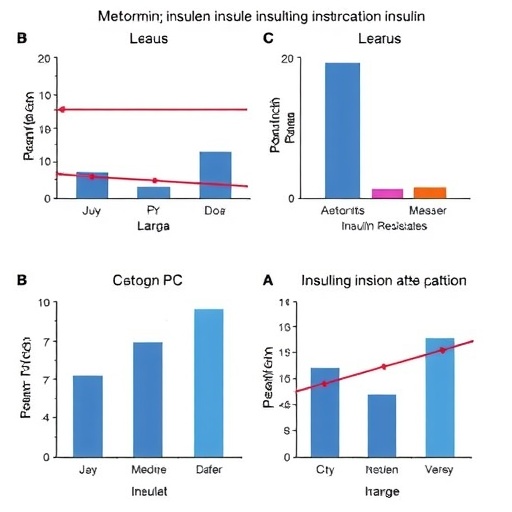
In a groundbreaking clinical trial that could redefine treatment paradigms for type 1 diabetes, researchers have revealed promising effects of metformin on insulin resistance in adults. This 26-week randomized, double-blind study, conducted by Snaith et al. and published in Nature Communications, offers nuanced insights into how a widely used diabetes drug operates beyond its traditional role in type 2 diabetes, potentially reshaping therapeutic strategies for a growing patient population.
Type 1 diabetes has long been characterized by autoimmune destruction of pancreatic beta cells, leading to insulin deficiency and lifelong dependence on exogenous insulin. However, emerging evidence suggests that insulin resistance also plays a crucial role in the disease’s complexity, especially as adults with type 1 diabetes present with variable metabolic profiles. Addressing this challenge, the study’s authors focused on metformin, a well-known antihyperglycemic agent effective in type 2 diabetes, to evaluate its impact on insulin sensitivity in type 1 diabetic adults.
The clinical trial enrolled a carefully selected cohort of adult participants with established type 1 diabetes, administering either metformin or placebo under rigorous double-blind conditions. Over the 26-week intervention period, researchers meticulously monitored changes in insulin sensitivity using gold-standard metabolic assessments alongside continuous glucose monitoring systems. The study design ensured the robustness and reliability of the findings, minimizing bias and placebo effects.
Remarkably, participants receiving metformin exhibited a statistically significant improvement in insulin resistance compared to the placebo group. This enhancement was quantified through reductions in the insulin dose required to maintain glycemic control, improvements in glucose variability, and favorable shifts in markers indicative of metabolic health. These concrete outcomes suggest that metformin can exert beneficial effects beyond glycemic control, targeting underlying pathophysiological mechanisms that contribute to disease burden.
Metformin’s mechanisms of action are multifaceted. Traditionally credited with reducing hepatic glucose production and enhancing peripheral glucose uptake, the drug also influences mitochondrial function and cellular energy homeostasis. This study highlights how these biochemical pathways may be exploited therapeutically in type 1 diabetes, where cellular insulin signaling defects add complexity to disease management. By improving insulin receptor sensitivity and modulating metabolic stress, metformin may alleviate the compensatory demands placed on exogenous insulin therapy.
The trial’s findings carry profound implications for clinical practice. Introducing an insulin-sensitizing agent like metformin into the treatment regimen for adult patients with type 1 diabetes might reduce insulin requirements, lower the risk of hypoglycemia, and potentially improve cardiovascular outcomes, which are disproportionately high in this population. This approach could also contribute to weight management, as insulin resistance is frequently associated with metabolic syndrome components that complicate diabetes care.
The study’s careful methodology included comprehensive safety evaluations, ensuring metformin was well tolerated. Adverse effects, primarily gastrointestinal symptoms, were minimal and did not substantially differ from placebo, supporting the drug’s safety profile within this new therapeutic context. Long-term safety, however, remains to be fully elucidated, warranting ongoing surveillance and future research to confirm sustained benefits and risks.
Importantly, this research underscores the heterogeneity within type 1 diabetes, pushing clinicians and scientists to reconsider a one-size-fits-all approach. Tailoring interventions to address insulin resistance alongside autoimmunity may usher in an era of personalized medicine, optimizing outcomes through combined therapeutic strategies. This nuanced understanding opens doors for novel combination therapies that integrate immunomodulation with metabolic improvement.
Technologically, the integration of continuous glucose monitoring and sophisticated metabolic testing in this trial exemplifies advancements in clinical research methodology. These tools allowed for real-time tracking of glucose dynamics and precise quantification of insulin action, thereby elevating the quality of data and enabling deeper mechanistic insights. Such technological applications are pivotal in advancing diabetes research and clinical management.
Moreover, the researchers explored secondary endpoints including lipid profiles, inflammatory markers, and body mass index, revealing trends that further support metformin’s multifactorial benefits. These systemic effects hint at metformin’s capacity to mitigate comorbidities often observed in diabetes, such as dyslipidemia and low-grade inflammation, which exacerbate vascular complications and mortality risk.
The trial’s outcomes resonate with epidemiological data suggesting that insulin resistance complicates disease management in a significant fraction of type 1 diabetes patients, particularly those with longer disease duration or higher body mass index. Hence, metformin could serve as a valuable adjunct therapy, especially in subpopulations experiencing insulin resistance-driven metabolic dysregulation, thereby improving quality of life and clinical outcomes.
Nonetheless, while these findings are highly encouraging, they invite further investigation into optimal dosing strategies, treatment duration, and patient selection criteria. Identifying biomarkers predictive of therapeutic response could refine clinical decision-making, ensuring metformin is deployed where it will offer maximal benefit without unnecessary exposure.
This study also stimulates exploration into the molecular underpinnings of insulin resistance in autoimmune diabetes. Unraveling how metabolic and immune pathways intersect could unveil new drug targets and innovative interventions. Metformin’s impact on cellular energy sensors like AMP-activated protein kinase (AMPK) and downstream signaling cascades remains a fertile area for basic and translational research.
Clinicians and patients alike are likely to welcome these developments, as they suggest a relatively affordable, well-tolerated treatment could improve disease control and reduce the burden of insulin therapy. These results may lead to updates in clinical guidelines and reshape the standard of care for adult type 1 diabetes, aligning therapeutic approaches with the latest scientific evidence.
In conclusion, this pioneering clinical trial expands the therapeutic landscape for type 1 diabetes by demonstrating that metformin significantly improves insulin resistance in adults over a 26-week period. The findings herald a shift towards comprehensive, mechanism-based treatment strategies that address both autoimmune and metabolic facets of the disease, ultimately aiming to enhance patient outcomes and reduce the global health burden of diabetes.
As the medical community digests these insights, ongoing and future research will be critical to validate and extend these results, probing metformin’s role in diverse patient populations and in combination with emerging therapies. This study marks a significant step forward, rekindling hope for improved management of a complex, life-altering disease through innovative, evidence-based interventions.
Cite Scienmag News
Ophelia Keating. (November 25, 2025). Metformin’s Impact on Insulin Resistance in Type 1 Diabetes. Scienmag. https://scienmag.com/metformins-impact-on-insulin-resistance-in-type-1-diabetes/
Ophelia Keating. "Metformin’s Impact on Insulin Resistance in Type 1 Diabetes." Scienmag, 25 November 2025, https://scienmag.com/metformins-impact-on-insulin-resistance-in-type-1-diabetes/. Accessed 1 September 2026.
Ophelia Keating. "Metformin’s Impact on Insulin Resistance in Type 1 Diabetes." Scienmag. November 25, 2025. https://scienmag.com/metformins-impact-on-insulin-resistance-in-type-1-diabetes/


