


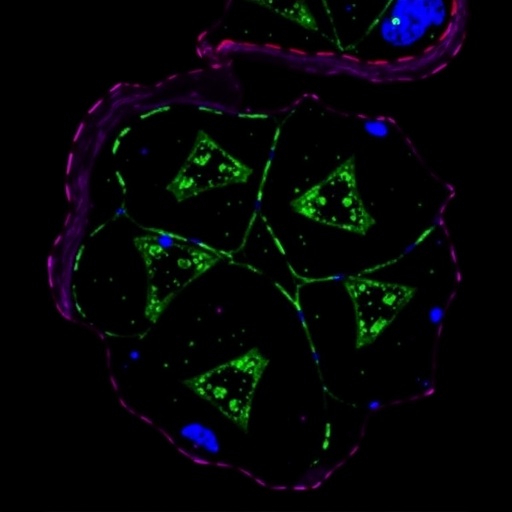
In the relentless quest to thwart aggressive breast cancer types, new research has emerged offering a promising therapeutic target that could revolutionize treatment paradigms. A study published in Cell Death Discovery reveals a critical vulnerability in triple-negative breast cancer (TNBC) cells linked to the loss of the retinoblastoma protein (RB). This finding not only deepens our understanding of TNBC biology but also opens potential avenues for intervention that exploit cellular stress mechanisms to promote cancer cell death.
Triple-negative breast cancer, characterized by the absence of estrogen and progesterone receptors and HER2 amplification, has long posed a formidable challenge to oncologists due to its aggressive nature and lack of targeted therapies. Unlike hormone receptor-positive or HER2-positive breast cancers, TNBC does not respond to conventional hormone treatments or HER2-targeted drugs, leaving chemotherapy as the mainstay but often with limited long-term success. Researchers have been intensively studying molecular hallmarks that could serve as Achilles’ heels for this stubborn cancer subtype.
The latest research led by Anna K. Witkiewicz and colleagues sheds light on the retinoblastoma protein—a pivotal tumor suppressor often lost or mutated in various cancers—as a critical factor that influences the fate of TNBC cells under stress. RB functions primarily as a regulator of the cell cycle, preventing uncontrolled cellular proliferation. Its loss has been associated with enhanced tumor progression and resistance to certain treatments. However, this study revealed a paradoxical effect: the absence of RB sensitizes TNBC cells to apoptosis, or programmed cell death, when subjected to cellular stress.
Cellular stress, induced by factors such as DNA damage, oxidative stress, or metabolic strain, typically triggers adaptive responses allowing cells to survive adverse conditions. In cancer, these adaptations can foster resistance to therapies, enabling tumor persistence and relapse. The examination of RB-deficient TNBC models demonstrated that the lack of RB impairs key stress response pathways, making these cancer cells unusually susceptible to apoptosis when challenged with stress-inducing agents.
Using advanced molecular and cellular techniques, the research team meticulously dissected the pathways altered by RB loss. They found that RB-deficient cells failed to effectively engage critical protective mechanisms, including DNA damage repair and reactive oxygen species (ROS) mitigation. This failure culminates in catastrophic cellular damage, tipping the balance towards cell death rather than survival. This insight is pivotal because it implies that therapies designed to induce cellular stress could be particularly effective against TNBC tumors lacking functional RB.
The implications of these findings extend beyond basic science, suggesting a translational strategy to enhance therapeutic efficacy. By combining stress-inducing treatments—such as certain chemotherapeutic drugs or novel agents that elevate cellular oxidative stress—with knowledge of RB status, clinicians could tailor more effective regimens. Specifically, patients with RB-deficient TNBC may benefit from therapies that push cancer cells beyond their stress tolerance limits, triggering apoptosis and reducing tumor burden.
Moreover, this study contributes a compelling rationale for developing diagnostic tools that assess RB functionality in tumors as a biomarker for treatment stratification. Identifying patients whose cancers have lost RB could inform personalized therapy plans, allowing oncologists to exploit this vulnerability with precision. Such an approach aligns perfectly with the burgeoning field of precision oncology, which seeks to match treatments with the genetic and molecular features unique to each patient’s cancer.
Using a combination of in vitro experiments and animal models, the researchers demonstrated that the heightened apoptotic sensitivity observed in RB-deficient TNBC cells translated into substantial tumor regression when subjected to stress-inducing therapies. These preclinical validations underscore the therapeutic potential of this approach and pave the way for clinical trials. The prospect of improving outcomes in a historically difficult-to-treat cancer is particularly thrilling for patients and clinicians alike.
The mechanistic insights uncovered also highlight the broader role of tumor suppressors in modulating the cellular stress response. While RB is traditionally conceptualized as a gatekeeper of cell cycle progression, this study extends its influence to cellular homeostasis pathways that govern survival under duress. Such a dual role may explain why its loss can paradoxically render cancer cells more vulnerable, offering a fresh angle from which to attack tumors.
From a research perspective, this study invites further exploration into the interplay between cell cycle regulators and stress response machinery. How exactly RB interfaces with signaling networks that detect and resolve cellular damage remains an area ripe for investigation. Understanding these molecular crosstalks could uncover additional targets that synergize with RB loss to amplify cancer cell death.
The findings also carry implications for combination therapies. Since RB loss enhances sensitivity to stress-induced apoptosis, integrating stress-inducing agents with immune checkpoint inhibitors or other modalities could unlock synergistic effects. The immune system’s role in clearing apoptotic cells adds another layer of therapeutic potential, where increased tumor cell death may invigorate antitumor immunity.
Critically, the research underscores the importance of cellular context in cancer treatment decisions. Not all TNBC tumors will have RB loss, and this heterogeneity necessitates precise tumor profiling before implementing stress-based therapeutic strategies. Advances in genomic and proteomic technologies can facilitate such detailed characterizations, ensuring tailored interventions that maximize efficacy and minimize side effects.
In summary, this work by Witkiewicz et al. offers a compelling narrative in cancer biology and therapeutics. By unraveling how RB loss primes triple-negative breast cancer cells for apoptosis in response to cellular stress, the study not only identifies a promising vulnerability but also charts a roadmap for clinical exploitation. The intersection of tumor suppressor biology, cellular stress responses, and therapeutic innovation creates an exciting frontier that may soon translate into life-saving treatments for patients grappling with this aggressive cancer subtype.
As breast cancer researchers worldwide grapple with the complexity and resilience of TNBC, these findings inject new optimism into the field. Harnessing the built-in Achilles’ heel created by RB loss and leveraging cellular stress mechanisms could redefine treatment landscapes. Future efforts will undoubtedly focus on validating these insights in clinical settings and expanding our arsenal against one of the deadliest breast cancer variants.
In conclusion, the study represents a beacon of hope illustrating how fundamental molecular discoveries can inspire practical, targeted interventions in cancer care. Exploiting the unique vulnerabilities shaped by genetic aberrations such as RB loss is emblematic of the precision medicine era—transforming daunting clinical challenges into manageable ones. As the scientific community continues to decode cancer’s complexity, such breakthroughs remind us that every genetic quirk in a tumor harbors potential keys to its downfall.
Cite Scienmag News
Nathaniel Bowman. (November 25, 2025). RB Loss Boosts Triple-Negative Breast Cancer Stress Apoptosis. Scienmag. https://scienmag.com/rb-loss-boosts-triple-negative-breast-cancer-stress-apoptosis/
Nathaniel Bowman. "RB Loss Boosts Triple-Negative Breast Cancer Stress Apoptosis." Scienmag, 25 November 2025, https://scienmag.com/rb-loss-boosts-triple-negative-breast-cancer-stress-apoptosis/. Accessed 1 September 2026.
Nathaniel Bowman. "RB Loss Boosts Triple-Negative Breast Cancer Stress Apoptosis." Scienmag. November 25, 2025. https://scienmag.com/rb-loss-boosts-triple-negative-breast-cancer-stress-apoptosis/


