


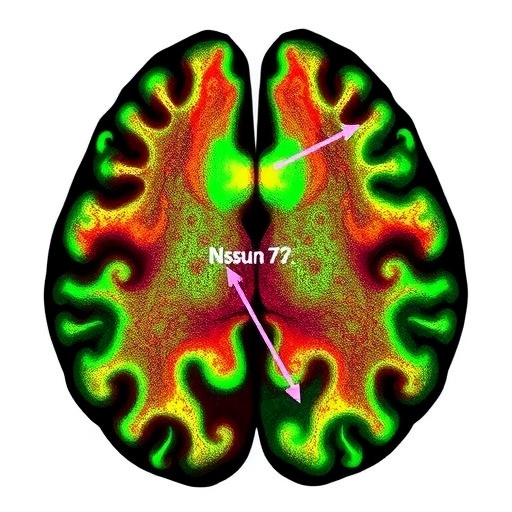
Recent advancements in cancer research have shed light on the intricate mechanisms controlling glioblastoma, one of the most aggressive brain tumors. A groundbreaking study conducted by a team of researchers, including Zhao, Zhang, and Ma, has unveiled the role of a specific RNA modification in regulating the properties of glioblastoma stem cells. This discovery has the potential to guide new therapeutic strategies targeting this formidable cancer.
In glioblastoma, the aberrant behavior of cancer stem cells contributes significantly to tumor initiation, resistance to therapies, and recurrence after treatment. These stem cells possess the unique ability to self-renew and differentiate into various types of brain tumors. Understanding the molecular pathways that regulate their properties is critical for developing effective treatment strategies. The researchers focused their investigation on the NSUN7 enzyme and its association with the modification of circular RNA molecules, particularly circNTRK2.
Circular RNAs have emerged as a new class of regulatory molecules in various biological processes. Unlike linear RNAs, these molecules form a covalently closed continuous loop, which allows them to exhibit distinct properties, such as greater stability and unique interaction capabilities with proteins and other RNAs. The researchers hypothesized that circNTRK2 might be involved in temozolomide resistance, a common treatment for glioblastoma. The NSUN7 enzyme plays a pivotal role in the N^5-methylcytosine (m^5C) modification of RNA, which is known to influence RNA stability and function.
In examining the activities of NSUN7, the research team conducted a series of experiments that demonstrated the correlation between NSUN7 expression levels and the stemness properties of glioblastoma cells. Their findings revealed that enhanced NSUN7 activity led to increased m^5C modification of circNTRK2, which in turn activated the STK31 protein. STK31 is crucial for maintaining the stem-like characteristics of glioblastoma cells, suggesting that the m^5C modification serves as a regulatory switch in this context.
One of the most compelling aspects of this research was the demonstration of the functional implications of NSUN7-induced m^5C modification. The authors conducted in vitro assays that showcased how the introduction of a specific inhibitor targeting the NSUN7 enzyme diminished the stemness features of glioblastoma cells. This was accompanied by reduced cell proliferation, increased apoptosis, and diminished abilities to form spheres, a hallmark of stem cell behavior in vitro.
Furthermore, the in vivo component of the study involved the use of xenograft models to evaluate how NSUN7 modulation influences tumor growth and progression in a living organism. The results were striking: tumors derived from cells with inhibited NSUN7 showed significantly reduced growth rates and alterations in their histological characteristics. These findings not only corroborate the role of the NSUN7-circNTRK2-STK31 pathway but also underline its potential as a therapeutic target.
Given the challenges posed by glioblastoma, particularly its notorious resistance to conventional therapies, this research paves the way for novel treatment approaches. By targeting the m^5C modification pathway intertwined within the glioblastoma stem cell compartment, it may be possible to develop strategies that can sensitize tumors to existing treatments while simultaneously depleting their stem-like populations.
Moreover, the implications of this research extend beyond glioblastoma. The N^5-methylcytosine modification is increasingly recognized as a crucial post-transcriptional modification that could influence various other malignancies and cellular contexts. Thus, further exploration into the dynamics of RNA modifications holds promise for broadening our understanding of cancer biology and therapeutic intervention.
While the research makes significant inroads, there are various avenues for future inquiry. The interplay between different RNA modifications, such as m^5C and N6-methyladenosine, is not well understood and could hold keys to unraveling further complexities of RNA regulation in cancer. Additionally, the exploration of the broader RNA landscape in glioblastoma could reveal more targets for intervention and deeper insights into the behaviors of cancer stem cells.
Furthermore, the precise molecular mechanisms through which NSUN7-modified circNTRK2 influences STK31 activity warrant deeper exploration. Understanding the interactions at the molecular level could pave the way toward developing small molecules or biologics that could specifically target these pathways in glioblastoma.
The community eagerly anticipates follow-up studies as they could enrich the conversation surrounding RNA modifications in cancer research. As our understanding of non-coding RNAs and their modifications deepens, the potential for RNA-based therapeutics could become a tangible reality.
In conclusion, the research conducted by Zhao et al. shines a beacon of hope in the fight against glioblastoma, emphasizing the role of RNA modifications in cancer biology. This study not only elucidates a novel regulatory mechanism governing glioblastoma stemness but also opens new doors for potential therapeutic strategies targeting resistant populations in this devastating disease.
Zhao, Y., Zhang, M., Ma, J. et al. NSUN7-mediated m5C modification of circNTRK2 regulates stemness properties of glioblastoma cells by activating STK31. J Transl Med (2025). https://doi.org/10.1186/s12967-025-07484-1
Cite Scienmag News
Ophelia Keating. (November 22, 2025). NSUN7 Modulates Glioblastoma Stemness via m5C CircNTRK2. Scienmag. https://scienmag.com/nsun7-modulates-glioblastoma-stemness-via-m5c-circntrk2/
Ophelia Keating. "NSUN7 Modulates Glioblastoma Stemness via m5C CircNTRK2." Scienmag, 22 November 2025, https://scienmag.com/nsun7-modulates-glioblastoma-stemness-via-m5c-circntrk2/. Accessed 1 September 2026.
Ophelia Keating. "NSUN7 Modulates Glioblastoma Stemness via m5C CircNTRK2." Scienmag. November 22, 2025. https://scienmag.com/nsun7-modulates-glioblastoma-stemness-via-m5c-circntrk2/


