


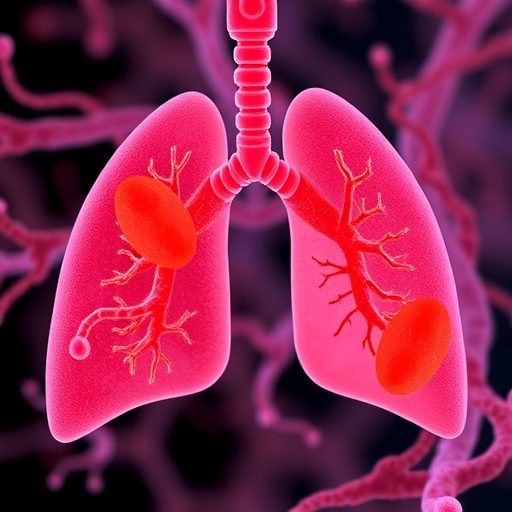
In a groundbreaking study poised to reshape our understanding of lung biology, researchers have uncovered a sophisticated cellular interplay that governs tissue development and fibrotic remodeling of the lung. The study, spearheaded by Klinkhammer, Warren, Knopp, and colleagues, reveals an intricate process of competition between epithelial and mesenchymal cells that orchestrates fate decisions across distinct tissue compartments during lung formation and fibrosis. This pivotal discovery unravels previously elusive mechanisms that may open novel therapeutic avenues for chronic lung diseases marked by scarring and impaired function.
Lung development is a marvel of coordinated cellular choreography, requiring precisely timed communication between various cell types to establish the complex architecture and functionality necessary for respiration. Traditionally, epithelial cells, which line the airways, and mesenchymal cells, a heterogeneous group that provides structural support and niche signals, were studied separately regarding their roles in development and pathology. However, this study illuminates how these two cell populations engage in direct competition, influencing each other’s destiny to balance organ formation with repair mechanisms.
Delving deeply into embryonic lung tissues as well as models of adult lung fibrosis, the researchers utilized advanced lineage tracing and single-cell transcriptomics to dissect the molecular dialogs underpinning this competition. They demonstrated that epithelial and mesenchymal cells do not merely coexist but actively contest spatial domains and functional roles through signaling pathways that regulate proliferation, differentiation, and apoptosis. This dynamic competition ensures that tissue compartments are populated with the appropriate cell types in response to developmental cues and injury.
Of particular interest is the identification of a regulatory network mediated by Notch and Wnt signaling pathways, which modulate the competitive interactions. The epithelial cells, expressing specific Notch ligands, can inhibit mesenchymal expansion under normal conditions, maintaining tissue boundaries and promoting epithelial integrity. Conversely, under fibrotic stress or injury, mesenchymal cells can alter their signaling output, tipping the balance to favor fibrotic tissue deposition and impaired epithelial regeneration.
Furthermore, the study highlights how mechanical forces and extracellular matrix components influence this cellular rivalry. Mesenchymal cells, by remodeling the local matrix, can create a microenvironment that either supports epithelial proliferation or drives fibrotic scarring depending on the context. This mechanotransduction aspect introduces a critical layer of complexity, integrating biochemical cues with physical interactions to precisely regulate lung tissue composition.
Importantly, the authors report that disrupting this epithelial-mesenchymal cell competition in mouse models leads to aberrant lung development characterized by defective airway patterning and compromised alveolarization. Similarly, in models of lung fibrosis, abnormal competition accelerates scar formation and decreases tissue elasticity—a hallmark of diseases such as idiopathic pulmonary fibrosis (IPF). These findings underscore the pathological implications of dysregulated cell fate decisions in chronic lung conditions.
The implications for regenerative medicine and anti-fibrotic therapy are profound. Understanding the molecular switches controlling epithelial and mesenchymal fate could enable targeted interventions that restore healthy competition balance, thereby promoting tissue repair while mitigating fibrosis. For example, modulating Notch or Wnt pathways, or targeting extracellular matrix remodeling enzymes, may recalibrate cellular interactions toward regenerative outcomes.
Technological advances, including single-cell RNA sequencing with spatial transcriptomics, were instrumental in illuminating the heterogeneous cell populations and their dynamic states within lung tissue compartments. These data suggest that epithelial and mesenchymal cells exist on a spectrum of activation states rather than discrete identities, further complicating but also enriching our understanding of their interactions. This continuum model could explain variable responses to injury and treatment observed in patients.
This study also propels the concept that tissue compartments in the lung are not static territories but fluid domains maintained by cellular competition and signaling gradients. Such dynamic regulation allows lungs to adapt to developmental and environmental changes but also opens vulnerabilities when homeostatic mechanisms fail. The competitive cellular crosstalk thus serves as a fundamental principle underpinning organ plasticity and disease progression.
Elucidating how epithelial and mesenchymal cells interpret and respond to in vivo signals during lung development sets a precedent for exploring similar competitive mechanisms in other organs prone to fibrotic diseases, such as the liver or kidney. The conserved nature of these pathways might suggest universal principles of tissue maintenance and repair that transcend organ-specific contexts, broadening the scope of potential interventions.
In their meticulous work combining developmental biology, cell signaling, and pathological models, the authors propose a new paradigm whereby cell competition is not merely a developmental curiosity but a critical determinant of organ health and disease. This insight challenges previous compartmentalized views and invites a holistic perspective on cell fate regulation within tissue ecosystems.
As next steps, the research community is expected to probe how external factors such as aging, pollution, and infection might perturb epithelial-mesenchymal cell competition. Deciphering these influences will be crucial for understanding the onset and progression of chronic lung diseases, many of which currently lack effective therapies. The interplay between genetic predisposition and environmental insults in modulating this cellular competition represents an exciting frontier.
The advent of novel imaging technologies and organoid models derived from patient cells will likely accelerate translational research by enabling precise manipulation of epithelial and mesenchymal interactions ex vivo. Such platforms will be invaluable for screening potential drugs that can restore healthy competition, offering hope for personalized approaches to lung fibrosis and regenerative medicine.
This landmark study by Klinkhammer, Warren, Knopp, and their team not only advances our fundamental knowledge of lung biology but also offers a compelling narrative of how cells communicate and compete to sculpt functional tissues. Their findings illuminate the delicate balance of cellular power struggles that sustain life and open transformative possibilities for treating devastating lung diseases.
As the global burden of fibrotic lung conditions rises, fueled by aging populations and environmental challenges, insights into epithelial-mesenchymal competition stand poised to inspire a new generation of therapies. By harnessing the natural competitive dynamics within tissues, future treatments may pioneer innovative regenerative strategies, shifting paradigms from symptom management to true biological cure.
The scientific community eagerly awaits further studies building upon these findings to decode the complexities of cell competition and guide clinical breakthroughs. The potential to intervene at the level of cell-cell interactions offers a promising horizon for lung disease research, embodying the concept that understanding and modulating fundamental biological processes can profoundly impact human health.
Cite Scienmag News
Ophelia Keating. (November 21, 2025). Cell Competition Shapes Lung Development and Fibrosis. Scienmag. https://scienmag.com/cell-competition-shapes-lung-development-and-fibrosis/
Ophelia Keating. "Cell Competition Shapes Lung Development and Fibrosis." Scienmag, 21 November 2025, https://scienmag.com/cell-competition-shapes-lung-development-and-fibrosis/. Accessed 2 September 2026.
Ophelia Keating. "Cell Competition Shapes Lung Development and Fibrosis." Scienmag. November 21, 2025. https://scienmag.com/cell-competition-shapes-lung-development-and-fibrosis/


