


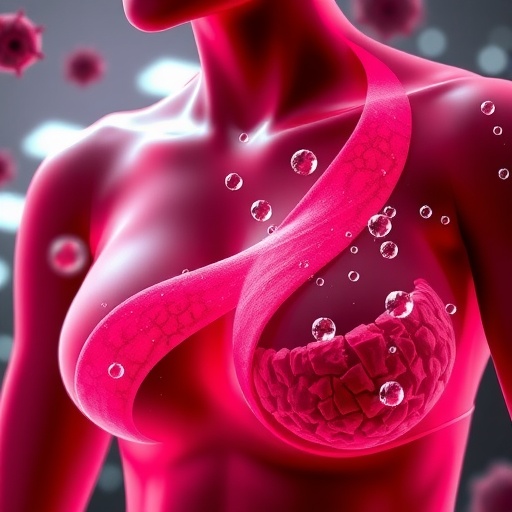
Recent research published in the renowned journal Scientific Reports has shed new light on the complex relationship between oxidative stress and breast cancer, suggesting that this ubiquitous biological phenomenon plays a dual role in cancer progression. Oxidative stress, characterized by an imbalance between reactive oxygen species (ROS) generation and the body’s ability to detoxify these harmful compounds, has been a focal point for scientists seeking to understand disease mechanisms. The implications of this duality in oxidative stress present significant opportunities for therapeutic intervention and highlight the need for nuanced approaches in breast cancer care.
The study conducted by a collaborative team comprising Li, Lin, and Zhang entails a comprehensive investigation into how oxidative stress can both promote and inhibit breast cancer. On one hand, excessive oxidative stress has been linked to DNA damage, leading to genomic instability that favors tumor progression. This understanding aligns with existing literature that frames oxidative stress as a critical player in the pathogenesis of various malignancies, including breast cancer. The accumulation of DNA mutations incited by oxidative damage serves as a precursor for oncogenic transformations, underscoring a crucial aspect of cancer biology.
Conversely, the authors point out that controlled levels of oxidative stress may actually facilitate cancer cell differentiation and apoptosis in certain contexts. This paradoxical nature of oxidative stress reveals a potential therapeutic window: harnessing the beneficial aspects while mitigating detrimental effects could pave the way for innovative treatment strategies. The balance between oxidative damage and signaling is delicate, requiring an intricate understanding of when and how to intervene.
In their research, Li and colleagues provided compelling evidence that ROS can modulate cellular pathways involved in cell survival and death. This modulation occurs through various mechanisms, including the activation of pro-survival signaling pathways that fortify cancer cells against therapeutic challenges. Enhanced understanding of these signaling cascades may unveil new drug targets aimed at reestablishing redox balance in tumor cells. As researchers navigate this complex landscape, they are challenged to delineate which pathways might provide the greatest benefit in a clinical setting.
Moreover, the interaction between oxidative stress and the tumor microenvironment represents another critical dimension of this investigation. The tumor microenvironment, replete with immune cells, fibroblasts, and extracellular matrix components, dynamically influences cancer cell behavior. High levels of oxidative stress can alter the immune landscape, often promoting an immune-suppressive milieu that facilitates cancer progression. Characterizing how oxidative stress modifies immune cell function could lead to strategies aimed at rejuvenating anti-tumor immunity, highlighting yet another layer in the intricate relationship between oxidative stress and breast cancer.
Aside from immunological implications, oxidative stress has been recognized for its role in metabolic reprogramming within cancer cells. The study discusses how altered redox states can influence metabolic pathways, prompting adaptations that support energetic and biosynthetic demands indispensable for rapid cell proliferation. Research indicates that targeting metabolic vulnerabilities in cancer cells, exacerbated by oxidative stress, can lead to synthetic lethality. This highlights the potential of employing metabolic interventions as a form of cancer therapy in conjunction with standard treatments.
Furthermore, the researchers explored how dietary antioxidants can serve as a double-edged sword regarding oxidative stress in breast cancer. While antioxidants are generally regarded as protective agents against cellular damage, their role in cancer therapy is contentious. Some studies suggest that high doses of antioxidants might inadvertently protect cancer cells from oxidative damage induced by conventional therapies, thereby diminishing their effectiveness. Understanding the right balance and timing in antioxidant administration becomes imperative for mounting effective cancer treatments.
The study’s findings engage a broader discourse on lifestyle factors influencing oxidative stress levels in breast cancer patients. Factors such as diet, exercise, and exposure to environmental toxins may significantly affect oxidative stress and, subsequently, cancer development. Due to the modifiable nature of these factors, public health initiatives that encourage healthier lifestyle choices could be instrumental in reducing breast cancer risk and improving patient outcomes. Cancer prevention efforts would benefit from a focus on empowering individuals to make informed decisions about their health in order to mitigate environmental impacts on oxidative stress.
The researchers also propose that future studies must delve deeper into the molecular machinery regulating oxidative stress responses. Specific proteins and enzymes involved in redox homeostasis, like superoxide dismutases and glutathione peroxidases, may become potential biomarkers for predicting breast cancer susceptibility or progression. Additionally, these molecules could provide unique insights into patients’ oxidative stress profiles, enriching personalized medicine approaches in oncology.
Ultimately, the paper underscores the complexity of oxidative stress in breast cancer, urging a reevaluation of long-held beliefs about its sole detrimental effects. In light of their findings, Li et al. advocate for a new paradigm in the management of breast cancer that recognizes the dualistic nature of oxidative stress as both a foe and a potential ally. Strategic capitalizing on this complexity could lead to the development of more effective treatment regimens.
As the interplay between oxidative stress and breast cancer continues to unfold, it becomes clear that extensive collaborative research is essential for translating these insights from bench to bedside. The ongoing pursuit of understanding this critical relationship holds the promise of refining therapeutic strategies and ultimately improving patient outcomes in breast cancer treatment.
In summary, the dual impact of oxidative stress on breast cancer elucidated in the recent study opens new doors for research and therapeutic avenues. Emphasizing a balanced view of oxidative stress will not only advance our scientific knowledge but also enrich the way breast cancer is treated, ultimately providing hope and improved prognosis for countless individuals facing this challenging disease.
Li, J., Lin, N., Zhang, S. et al. The dual impact of oxidative stress on breast cancer.
Sci Rep 15, 39948 (2025). https://doi.org/10.1038/s41598-025-23653-0
Cite Scienmag News
Rowan B. (November 16, 2025). Oxidative Stress: A Double-Edged Sword in Breast Cancer. Scienmag. https://scienmag.com/oxidative-stress-a-double-edged-sword-in-breast-cancer/
Rowan B. "Oxidative Stress: A Double-Edged Sword in Breast Cancer." Scienmag, 16 November 2025, https://scienmag.com/oxidative-stress-a-double-edged-sword-in-breast-cancer/. Accessed 29 August 2026.
Rowan B. "Oxidative Stress: A Double-Edged Sword in Breast Cancer." Scienmag. November 16, 2025. https://scienmag.com/oxidative-stress-a-double-edged-sword-in-breast-cancer/


