


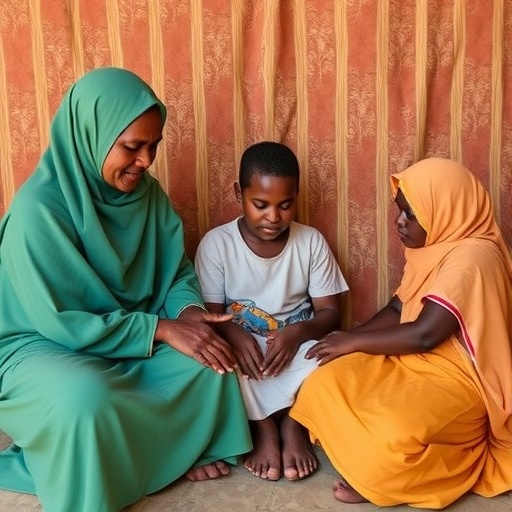
In the midst of global conflict, the need for innovative approaches to peacebuilding and reconciliation has never been more crucial. The complexities of armed disputes and tensions create hurdles that impede societal healing and stability. Yet, emerging insights into intergenerational and family learning within these tumultuous environments suggest a transformative potential for fostering peace. The work by Birhanu and Sala sheds light on the often-overlooked mechanisms through which familial ties and intergenerational interactions can contribute to a more peaceful society.
At the heart of this research lies the concept that family dynamics and shared experiences across generations play pivotal roles in shaping attitudes toward conflict resolution. In many societies experiencing strife, families serve as the primary unit of socialization, where values and beliefs related to peace and conflict are transmitted. As children observe their parents’ responses to conflict, they internalize lessons that can either perpetuate cycles of violence or pave the way for understanding and resolution. Birhanu and Sala argue that harnessing these familial interactions offers a path toward cultivating a culture of peace.
The researchers emphasize that intergenerational learning can be particularly impactful in conflict zones. In such areas, the narratives of trauma and survival shared between grandparents, parents, and children create a rich tapestry of experiences that can inform future generations. For instance, grandparents who have lived through violent events may provide insights that promote empathy and resilience, thus encouraging younger family members to engage in dialogue rather than hostility. By fostering environments in which these narratives are shared, communities can broaden their understandings of conflict and the importance of reconciliation.
Additionally, family learning approaches directly influence individuals’ and communities’ responses to ongoing conflicts. When families engage in discussions about historical grievances and personal experiences, they create a collective memory that nurtures understanding rather than division. This dialogical process can transform how individuals perceive the arbitrary lines drawn by conflict, fostering recognition of shared humanity. Birhanu and Sala outline how such practices in families can lead to a profound shift in collective attitudes toward peacebuilding efforts.
Moreover, the paper explores the intersectionality of culture, identity, and education within conflict zones. The authors argue that intergenerational learning must be contextualized within the local sociocultural frameworks where these families reside. For instance, traditional storytelling practices, communal gatherings, and family rituals can serve as platforms for dialogue about peace, offering a culturally resonant means of conflict transformation. This approach underscores the importance of grounding interventions in familiar cultural practices that reinforce communal identities while promoting peaceful coexistence.
The researchers conducted field studies across several conflict-affected regions, documenting the diverse ways families navigate the complexities of their sociopolitical realities. Their findings suggest that programs aimed at strengthening family bonds and facilitating intergenerational communication can significantly enhance community resilience. Families that engage in cooperative activities, such as shared educational pursuits or community service, not only reinforce their own ties but also serve as catalysts for broader societal change.
Resolving the tensions inherent in conflict zones necessitates a multifaceted understanding of peace that transcends mere absence of violence. The cultivation of peace through familial learning also poses educational implications. Schools and community organizations must recognize the role of families in education about peace, developing curricula that involve families in peacebuilding initiatives. Such collaborations could yield stronger community ties and a more profound impact on the next generation’s approach to conflict resolution.
In the discussion of governmental and NGO-led peace initiatives, the authors caution against overlooking these grassroots dynamics. Traditional top-down strategies can often miss the nuances involved in family-based learning processes. By integrating the insights from intergenerational learning into policy-making and intervention design, stakeholders can enhance the effectiveness of their efforts. Programs that promote dialogue between generations, focus on healing collective trauma, and encourage shared storytelling can aid in breaking cycles of violence.
Birhanu and Sala’s research contributes substantially to our understanding of the mechanisms through which familial and intergenerational relationships can influence peacebuilding. The evidence suggests that sustainable peace initiatives must incorporate the family unit, recognizing its unique capacity to engender understanding and cooperation across generations. This emphasis on family learning signals a paradigm shift in the way we approach conflict resolution strategies within affected communities.
Furthermore, the authors highlight the importance of documenting and disseminating successful family learning practices as models for others in similar contexts. Creating platforms for sharing these experiences can multiply their impact, providing templates that communities can adapt to their unique circumstances. Mutual learning between families in different conflict zones could also foster a sense of solidarity and shared purpose, reinforcing collective narratives of resilience.
As we reflect on the future of peacebuilding in conflict-affected areas, the insights from Birhanu and Sala’s work are not merely theoretical; they provide valuable frameworks grounded in real-world applications. The need for innovative methods to foster dialogue within families has never been more pressing amid unfolding global conflicts. With focused efforts on strengthening familial connections and intergenerational learning, there exists a profound opportunity to reshape the narratives that define societal attitudes toward peace and violence.
The intersection of family, learning, and peacebuilding offers a rich avenue for research and application. Policymakers, educators, and community leaders must prioritize these connections, ensuring that families are at the forefront of initiatives aimed at reconciliation and healing. While the road ahead may be fraught with challenges, the power of intergenerational learning represents a beacon of hope, illuminating paths toward a more peaceful future.
In conclusion, Birhanu and Sala’s exploration of family and intergenerational learning serves as a compelling reminder of the transformative potential nestled within our familial structures. It calls for a reevaluation of how we engage with and support families in conflict zones, urging a collective commitment to nurturing peace from the ground up. As we continue to examine the complexities of conflict and resolution, let us draw upon these insights to inspire robust approaches to peacebuilding that resonate within the very fabric of our communities.
Birhanu, E.T., Sala, S. Intergenerational and family learning in conflict zones and their influence on peacebuilding and reconciliation.
Discov glob soc 3, 114 (2025). https://doi.org/10.1007/s44282-025-00261-x
Cite Scienmag News
Courtney Benton. (November 16, 2025). Family Learning in Conflict Zones: Impact on Peace. Scienmag. https://scienmag.com/family-learning-in-conflict-zones-impact-on-peace/
Courtney Benton. "Family Learning in Conflict Zones: Impact on Peace." Scienmag, 16 November 2025, https://scienmag.com/family-learning-in-conflict-zones-impact-on-peace/. Accessed 1 September 2026.
Courtney Benton. "Family Learning in Conflict Zones: Impact on Peace." Scienmag. November 16, 2025. https://scienmag.com/family-learning-in-conflict-zones-impact-on-peace/


