


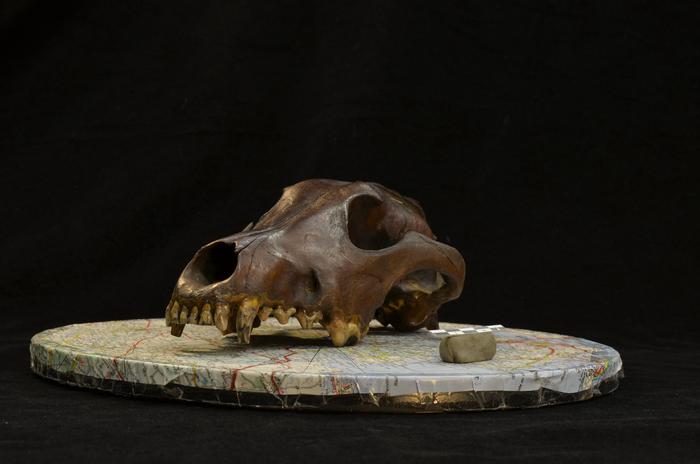
A landmark archaeological investigation has revolutionized our understanding of the origins and evolution of domestic dog morphology, demonstrating that the astonishing diversity observed in dogs today began to emerge more than 11,000 years ago. This pivotal research, utilizing cutting-edge shape analysis techniques on an extensive collection of archaeological specimens, has extended the timeline of canine diversification deep into prehistory, reshaping views on the domestication and evolutionary trajectory of man’s earliest animal companion.
For decades, prevailing assumptions held that the broad range of dog sizes and skull shapes characteristic of modern breeds is a relatively recent development, primarily a byproduct of controlled selective breeding that gained momentum during the Victorian era’s formal Kennel Club establishment. However, this groundbreaking study challenges these assumptions by showing that significant variation in skull morphology was apparent soon after domestic dogs split from their grey wolf ancestors, suggesting a protracted and complex coevolution with human societies.
The research, published today in the prestigious journal Science, represents one of the most comprehensive morphological analyses of canid remains to date. Spearheaded by an international team of archaeologists, evolutionary biologists, and museum curators working across over 40 institutions, the study scrutinized 643 skull specimens ranging from the Pleistocene epoch—over 50,000 years ago—to present-day samples. This broad temporal and geographic dataset afforded unparalleled insight into patterns of size and shape changes within domestic dogs through millennia.
Central to the study’s methodology was the application of geometric morphometrics, an advanced imaging technique that produces three-dimensional models of skulls to meticulously quantify shape differences. This method enabled the researchers to transcend limitations of traditional morphological assessments and detect subtle but significant variations that mark the early stages of canine diversification. These quantitative analyses revealed that already by the Mesolithic and Neolithic periods, domestic dogs exhibited an extensive range of cranial shapes and sizes correlating with their assorted functional roles alongside humans.
Dr. Carly Ameen of the University of Exeter, co-lead author, emphasizes the profound implications of these findings for understanding canine domestication. “Our data reveal that the morphological diversity seen in modern dogs originated thousands of years ago, reflecting a long-standing evolutionary partnership with humans where dogs adapted to a variety of ecological niches and societal functions beyond mere companionship,” she explained. This deep historical perspective underscores the intricate symbiosis underlying human-canine relations, extending far beyond recent breeding practices.
Among the most significant specimens analyzed was the earliest confirmed domestic dog skull from the Mesolithic site of Veretye in Russia dated approximately 11,000 years ago. Additional archaeological dogs from early sites in North America (~8,500 years ago) and Asia (~7,500 years ago) also displayed domesticated skull morphologies. Intriguingly, the study identifies a discernible reduction in average skull size of dogs between 9,700 and 8,700 years ago, followed by a notable expansion in size variability from roughly 7,700 years ago onward. These morphological shifts highlight an adaptive radiation potentially driven by divergent selective pressures associated with emerging human cultures.
Notably, while contemporary dog breeds exhibit extreme craniodental specializations—such as the brachycephalic (short-faced) skulls of bulldogs or the elongated snouts of borzois—such features were absent from early archaeological specimens. Nevertheless, the range of cranial variation in Neolithic dogs was already twice that observed in Pleistocene canids and about half that seen in modern breeds, affirming early and substantial diversification prior to formalized breeding initiatives.
Tracing the initial stages of dog domestication remains an elusive challenge, as no Late Pleistocene canid specimens previously considered potential “proto-dogs” presented skull morphologies consistent with domesticated features. This suggests that the earliest domestication processes may have involved subtle behavioral and genetic changes not yet captured by osteological analyses, or that these early forms have yet to be discovered in the archaeological record.
Professor Greger Larson of the University of Oxford, senior author of the study, highlights the intricate dynamics revealed by the analysis. “While the proxy fossils for earliest dog domestication evade detection, our findings demonstrate an extraordinary early burst of morphological diversity once domestication was established. This pattern likely reflects a dual influence: natural ecological adaptations and human-mediated selective pressures that shaped the evolutionary destiny of dogs across different landscapes and cultures,” he remarked.
The comprehensive temporal and spatial scope of the research provides valuable new avenues for exploring the coevolutionary pathways that shaped not only canine morphology but also human cultural development. By contextualizing dog diversification within broader ecological and societal transitions, the study illuminates how ancient human communities influenced the biological trajectories of their animal companions.
Funded by a constellation of international agencies including the UK’s Natural Environment Research Council and Arts and Humanities Research Council, the European Research Council, the Social Sciences and Humanities Research Council of Canada, the Russian Academy of Sciences, and the Fyssen Foundation, this collaborative endeavor redefines the narrative of dog domestication. The application of geometric morphometrics to a vast, globally sourced assemblage of canid skulls demonstrates the power of integrative approaches combining archaeology, biology, and advanced imaging.
The research article, titled “The emergence and diversification of dog morphology,” published on November 13, 2025, in Science, not only reconfigures timelines for the onset of dog diversity but also enhances our understanding of how early human culture and environment sculpted the evolutionary landscape for one of our most beloved and enduring animal companions.
Cite Scienmag News
William Thompson. (November 13, 2025). Remarkable Dog Diversity Existed Thousands of Years Before Modern Breeding Practices. Scienmag. https://scienmag.com/remarkable-dog-diversity-existed-thousands-of-years-before-modern-breeding-practices/
William Thompson. "Remarkable Dog Diversity Existed Thousands of Years Before Modern Breeding Practices." Scienmag, 13 November 2025, https://scienmag.com/remarkable-dog-diversity-existed-thousands-of-years-before-modern-breeding-practices/. Accessed 3 September 2026.
William Thompson. "Remarkable Dog Diversity Existed Thousands of Years Before Modern Breeding Practices." Scienmag. November 13, 2025. https://scienmag.com/remarkable-dog-diversity-existed-thousands-of-years-before-modern-breeding-practices/


