

Sunday, August 16, 2026
Science
No Result
View All Result
  • Login
  • HOME
  • SCIENCE NEWS
  • CONTACT US
  • HOME
  • SCIENCE NEWS
  • CONTACT US
No Result
View All Result
Scienmag
No Result
View All Result
Home Science News Medicine

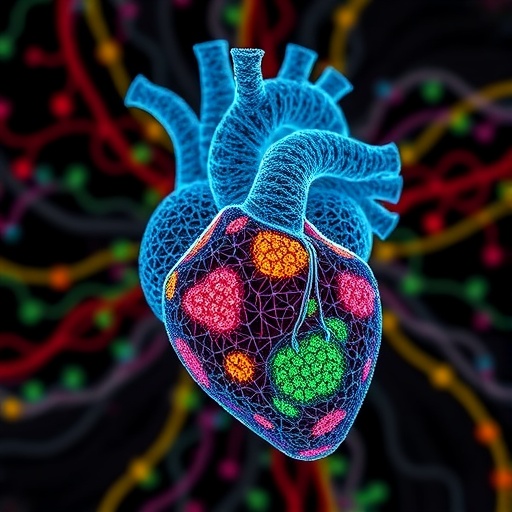
4D Cardiac Nucleome Maps Nuclear and Chromatin Dynamics in Health and Aging

July 26, 2026
in Medicine
Reading Time: 2 mins read
0
4D Cardiac Nucleome Maps Nuclear and Chromatin Dynamics in Health and Aging

4D Cardiac Nucleome Maps Nuclear and Chromatin Dynamics in Health and Aging

65
SHARES
587
VIEWS
Share on FacebookShare on Twitter
ADVERTISEMENT

The nucleus is a layered, moving control center whose organization—from nucleosome positioning to chromatin domains and large-scale 3D genome architecture—governs how genes are turned on or off. When these changes are tracked across time, the result is a “4D nucleome,” a dynamic landscape that allows transcription to respond precisely to cellular context. In the heart, this time-dependent architecture helps coordinate the gene-expression programs that shape lineage choices, generate cardiac cell types, and sustain function long after development. As cells transition from embryonic stages to mature states, and later into disease or aging programs, the genome is reorganized rather than merely read out.

New findings synthesize evidence that shifts in nuclear architecture align with coordinated changes in chromatin accessibility and transcription factor occupancy. In other words, remodeling the physical and epigenetic neighborhood of DNA helps determine which regulatory sites are available when. These remodeling events create stable yet adaptable states, enabling heart cells to mount appropriate transcriptional responses as conditions change.

The review emphasizes that nuclear organization is not static. Over developmental time, chromatin moves and domains reorganize, reshaping enhancer–promoter communication and thereby modulating lineage commitment. During disease progression, similar principles reappear: altered 3D genome topology and epigenetic marks accompany aberrant gene-expression programs. Aging adds another layer, with progressively remodeled chromatin states that can change how regulatory networks respond to stress.

Importantly, genome organization is shaped by inputs beyond genetics. Mechanical cues—such as changes in tissue stiffness and nuclear tension—can influence chromatin compaction, nuclear positioning, and accessibility. Metabolic signals also feed into epigenetic regulation, altering the availability of chromatin-modifying substrates and the activity of epigenetic enzymes.

By framing the heart’s genome as a 4D system, the authors argue that understanding these coupled mechanical, metabolic, and architectural controls could reveal disease mechanisms that are otherwise invisible when studying DNA regulation alone. Such insights may guide regenerative strategies that rebuild appropriate chromatin states and support precision cardiovascular medicine. The Review also outlines emerging approaches to interrogate nuclear structure and chromatin dynamics, including technologies designed to map chromatin interactions in space and track how they change over time.

Ultimately, deciphering the cardiac 4D nucleome promises a mechanistic bridge between genome organization and clinical outcomes—connecting transcriptional control to development, degeneration, and adaptive resilience. As nuclear and chromatin dynamics become measurable in increasingly detail, they may also become actionable targets in future therapies.

Subject of Research: Cardiac 4D nucleome; nuclear and chromatin dynamics in development, disease and ageing
Article Title: The cardiac 4D nucleome: nuclear and chromatin dynamics across development, disease and ageing.
Article References: Wang, Y., Dobreva, G. The cardiac 4D nucleome: nuclear and chromatin dynamics across development, disease and ageing. Nat Rev Cardiol (2026). https://doi.org/10.1038/s41569-026-01322-7
Image Credits: AI Generated
DOI: 10.1038/s41569-026-01322-7
Keywords: cardiac nucleus; 4D nucleome; chromatin architecture; 3D genome topology; transcriptional control; epigenome; mechanical and metabolic regulation

Tags: 3D genome remodeling in cardiac cells4D nucleomeaging-related chromatin modificationscardiac genome architecturechromatin accessibility and gene regulationchromatin dynamics in heart healthepigenetic changes in cardiac diseasegenome topology and cardiac functionheart development and lineage commitmentnuclear and chromatin domain reorganizationnuclear organization during agingnuclear positioning and transcription factor binding
Share26Tweet16
Previous Post

Tutorial Explains How to Use Large Language Models in Medical Research

Next Post

AI language models may surpass collaboration benefits as they scale

Related Posts

PARP1 Drives Neuropathic Pain Through GPX4-Dependent Ferroptosis in Injured Mice’s Sensory Neurons
Medicine

PARP1 Drives Neuropathic Pain Through GPX4-Dependent Ferroptosis in Injured Mice’s Sensory Neurons

August 15, 2026
Genome-wide skin pQTL map reveals genetic regulators and mechanisms underlying skin disorders
Medicine

Genome-wide skin pQTL map reveals genetic regulators and mechanisms underlying skin disorders

August 15, 2026
Levistilide A Drives Ferroptosis via RNF40-HSP90α Axis, Suppressing Colorectal Cancer Lung Metastasis
Medicine

Levistilide A Drives Ferroptosis via RNF40-HSP90α Axis, Suppressing Colorectal Cancer Lung Metastasis

August 15, 2026
Sintilimab, IBI305, and Chemotherapy Show Promise in First-Line Advanced Gastric and GEJ Adenocarcinoma
Medicine

Sintilimab, IBI305, and Chemotherapy Show Promise in First-Line Advanced Gastric and GEJ Adenocarcinoma

August 15, 2026
Mercury Detected in New York City Skin-Lightening and Skincare Products, 2009–2022
Medicine

Mercury Detected in New York City Skin-Lightening and Skincare Products, 2009–2022

August 15, 2026
Study maps early follicle oocyte proteins and cisplatin-induced changes in mice
Medicine

Study maps early follicle oocyte proteins and cisplatin-induced changes in mice

August 15, 2026
Next Post
AI language models may surpass collaboration benefits as they scale

AI language models may surpass collaboration benefits as they scale

  • Mothers who receive childcare support from maternal grandparents show more

    Mothers who receive childcare support from maternal grandparents show more parental warmth, finds NTU Singapore study

    27656 shares
    Share 11059 Tweet 6912
  • University of Seville Breaks 120-Year-Old Mystery, Revises a Key Einstein Concept

    1061 shares
    Share 424 Tweet 265
  • Bee body mass, pathogens and local climate influence heat tolerance

    682 shares
    Share 273 Tweet 171
  • Researchers record first-ever images and data of a shark experiencing a boat strike

    546 shares
    Share 218 Tweet 137
  • Groundbreaking Clinical Trial Reveals Lubiprostone Enhances Kidney Function

    531 shares
    Share 212 Tweet 133
Science

Embark on a thrilling journey of discovery with Scienmag.com—your ultimate source for cutting-edge breakthroughs. Immerse yourself in a world where curiosity knows no limits and tomorrow’s possibilities become today’s reality!

RECENT NEWS

  • Tropical Forest Biomass Responds to Diverse Climate Controls
  • Survey-Based Model Reveals How Preparedness Constraints Shape Cholera Transmission in Sudan
  • Waste-Based Retrofits Improve Thermal Performance in North Sinai Social Housing
  • KAIST develops semiconductor neuron that harnesses noise to selectively process signals

Categories

  • Agriculture
  • Anthropology
  • Archaeology
  • Athmospheric
  • Biology
  • Biotechnology
  • Blog
  • Bussines
  • Cancer
  • Chemistry
  • Climate
  • Earth Science
  • Editorial Policy
  • Marine
  • Mathematics
  • Medicine
  • Pediatry
  • Policy
  • Psychology & Psychiatry
  • Science Education
  • Social Science
  • Space
  • Technology and Engineering

Subscribe to Blog via Email

Success! An email was just sent to confirm your subscription. Please find the email now and click 'Confirm Follow' to start subscribing.

Join 5,149 other subscribers

© 2025 Scienmag - Science Magazine

Welcome Back!

Login to your account below

Forgotten Password?

Retrieve your password

Please enter your username or email address to reset your password.

Log In
No Result
View All Result
  • HOME
  • SCIENCE NEWS
  • CONTACT US

© 2025 Scienmag - Science Magazine
