

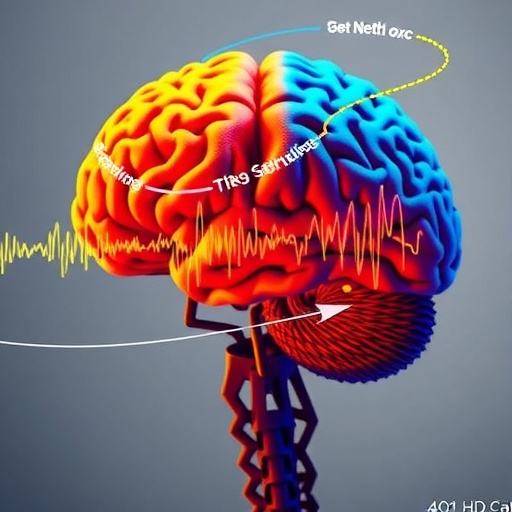
In a groundbreaking study poised to reshape our understanding of neuropsychiatric interventions, researchers have unveiled compelling evidence supporting the therapeutic potential of 40 Hz transcranial alternating current stimulation (tACS) in modulating brain activity and cognitive performance among individuals diagnosed with schizophrenia. The study, conducted by Liu, Y., Cao, X., Jin, H., and colleagues and recently published in Translational Psychiatry, employs advanced electroencephalography (EEG) techniques to elucidate how rhythmic electrical stimulation can enhance neural synchronization—a key factor often disrupted in schizophrenia.
Schizophrenia, a complex psychiatric disorder characterized by fragmented thought processes, hallucinations, and cognitive deficits, has long challenged clinicians due to its enigmatic neurobiological underpinnings. Central to its symptomatology is impaired neural oscillation, particularly within the gamma frequency band (~30-100 Hz), which is intimately linked to cognitive functions such as attention, memory encoding, and perceptual processing. The 40 Hz gamma oscillation, in particular, has garnered scientific interest for its role in facilitating synchronized neural communication, a process that appears diminished in schizophrenia.
The study harnesses 40 Hz tACS—a non-invasive brain stimulation method that delivers weak, rhythmic electrical currents—to stimulate cortical regions implicated in cognitive control and sensory integration. Unlike conventional transcranial direct current stimulation (tDCS), which applies a constant current, tACS introduces oscillatory currents that mimic endogenous brain rhythms, potentially allowing for entrainment of neural networks. This entrainment may restore the aberrant oscillatory activity observed in schizophrenia, thereby ameliorating associated cognitive dysfunctions.
Utilizing an experimental design that involved multiple tACS sessions targeting dorsolateral prefrontal cortex and superior temporal gyrus regions, participants diagnosed with schizophrenia underwent EEG recordings pre- and post-stimulation. The researchers meticulously quantified changes in neural synchronization by analyzing phase coherence and power spectral density within the gamma band. Their findings revealed a marked enhancement of 40 Hz oscillatory activity following tACS, correlating with improved performance on standardized cognitive assessments measuring working memory and executive function.
These revelations carry profound implications for the future of psychiatric treatment, as they suggest a mechanistic pathway through which non-invasive electrical stimulation can recalibrate dysfunctional neural circuits. Enhancing gamma synchronization could mitigate the cognitive deficits that severely compromise quality of life in schizophrenia, addressing a critical unmet need unmet by pharmacological therapies, which primarily target psychotic symptoms but often fail to improve cognition.
What distinguishes this investigation is its rigorous approach to neurophysiological measurement, leveraging high-density EEG and advanced signal processing algorithms to capture subtle shifts in oscillatory dynamics. By demonstrating dose-dependent effects and specifying targeted cortical regions for tACS delivery, the study offers a blueprint for personalized neurotherapeutic strategies, highlighting the importance of spatial and temporal precision in brain stimulation protocols.
Moreover, the findings contribute to a burgeoning body of literature that positions gamma oscillations as not merely epiphenomenal but causally involved in cognitive processing. This challenges traditional models of schizophrenia pathology that emphasize neurotransmitter imbalances alone, inviting a more nuanced understanding that integrates electrophysiological abnormalities.
Further research is anticipated to explore the durability of cognitive benefits from repeated 40 Hz tACS sessions, potential synergistic effects with cognitive training, and optimization of stimulation parameters. Ongoing clinical trials are expected to clarify long-term outcomes and evaluate safety profiles, although the non-invasive nature of tACS bodes well for its translational viability.
In addition to clinical impact, these advances deepen our comprehension of brain rhythm engineering—a concept that leverages intrinsic brain oscillations as therapeutic targets. This paradigm could extend beyond schizophrenia, offering insights into other neurological and psychiatric conditions marked by dysregulated neural synchrony such as Alzheimer’s disease, autism spectrum disorder, and major depressive disorder.
The research encapsulates the integration of cutting-edge neurotechnology with theoretical neuroscience, setting the stage for a new era where modulation of brain rhythms can restore cognitive faculties once deemed intractable. Its significance resonates both within specialized academic circles and among clinicians seeking innovative treatments that transcend the limitations of current pharmacotherapy.
Notably, the study also underscores the potential of EEG as a biomarker for treatment responsiveness, providing a non-invasive window into the electrophysiological changes induced by neuromodulation. Real-time EEG monitoring could eventually guide adaptive stimulation regimens, enhancing efficacy and reducing side effects.
As the dialogue around brain stimulation therapies evolves, ethical considerations regarding patient autonomy, informed consent, and equitable access remain paramount. The promising outcomes reported by Liu et al. encourage balanced enthusiasm, advocating for meticulous clinical validation alongside thoughtful regulatory frameworks.
In sum, this pioneering exploration into 40 Hz tACS unveils a compelling avenue to correct disrupted neural synchronization in schizophrenia, offering hope for meaningful cognitive restoration. By harnessing the brain’s inherent oscillatory mechanisms, the study paves the way toward more precise, effective, and personalized neuropsychiatric interventions that could transform the future landscape of mental health care.
Subject of Research: Effects of 40 Hz transcranial alternating current stimulation on neural synchronization and cognitive correlates in schizophrenia.
Article Title: Effects of 40 Hz transcranial alternating current stimulation on neural synchronization and cognitive correlates in schizophrenia: An EEG study.
Article References:
Liu, Y., Cao, X., Jin, H. et al. Effects of 40 Hz transcranial alternating current stimulation on neural synchronization and cognitive correlates in schizophrenia: An EEG study. Transl Psychiatry (2026). https://doi.org/10.1038/s41398-026-03917-7
Image Credits: AI Generated


