

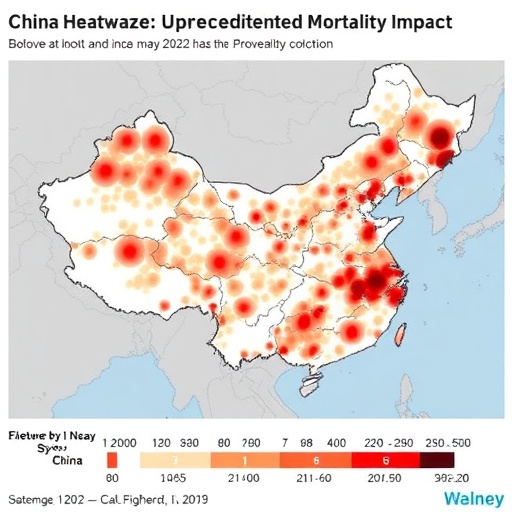
In 2022, China experienced an unprecedented heatwave that exerted significant strain on the country’s public health systems. This extreme weather event, marked by soaring temperatures and prolonged high humidity, led to severe health repercussions across various demographic segments, culminating in a notable increase in mortality rates. The critical examination of this phenomenon has resulted in a groundbreaking study conducted by Hu, JX., Zhuo, YL., and He, GH., which meticulously assesses the national mortality burden attributable to this extreme climatic condition.
In recent years, the phenomenon of climate change has amplified the frequency and severity of heatwaves around the globe. This escalating temperature crisis is not merely an environmental concern but a public health emergency that requires immediate attention. The 2022 heatwave in China was particularly devastating, serving as a stark reminder of the vulnerabilities inherent in contemporary society. Reports indicate that cities across the nation, particularly those in central and eastern regions, faced extreme temperatures that shattered historical records, leaving many citizens exposed to heat-related health risks.
The research led by Hu et al. meticulously quantified the mortality attributable to the heatwave, employing sophisticated epidemiological modeling techniques to provide a comprehensive overview of the crisis. The study underscores the urgency of understanding the interplay between climate events and public health outcomes, particularly in a nation as populous and diverse as China. By analyzing various socio-demographic factors, the researchers could identify which populations were most significantly affected, including the elderly, individuals with pre-existing health conditions, and those living in urban areas with limited access to cooling resources.
Furthermore, one of the striking findings of the study was the disproportionate impact of the heatwave on vulnerable populations. The research indicated that older adults, particularly those over 65, exhibited the highest mortality rates during the extreme heat period. These individuals often face complex health challenges, making them more susceptible to the adverse effects of extreme temperatures. Moreover, the study highlighted the stark discrepancies between urban and rural health outcomes, suggesting that rural residents had limited access to health resources and cooling systems, exacerbating their vulnerability.
As the research progresses, the implications for public policy and health system preparedness become increasingly clear. The findings advocate for the integration of climate change predictions into public health planning and emergency response strategies. As heatwaves become more frequent, local governments will need to develop robust plans that include public education, enhanced healthcare services, and infrastructure improvements to support those who are most at risk.
The role of local governments in adapting to climate change has never been more critical. The study emphasizes the importance of developing community-centered interventions aimed at reducing heat exposure, especially in areas prone to extreme temperatures. For instance, creating cooling centers where vulnerable populations can seek refuge during heatwaves, along with public health campaigns aimed at raising awareness about the risks of heat-related illnesses, are essential steps in mitigating the adverse impacts associated with such climatic events.
Moreover, the implications extend beyond immediate health concerns. The study serves as a wake-up call for policymakers to recognize the broader societal impacts of heatwaves. Increased mortality leads to a significant economic burden, not only in terms of healthcare costs but also through loss of productivity and social support services. Policymakers must confront these multisectoral challenges head-on and implement comprehensive strategies that address both health and economic repercussions.
At the same time, the research serves as a foundation for future studies in the realm of climate change and public health. It opens new avenues of inquiry into the long-term health effects induced by prolonged exposure to high temperatures. As heatwaves continue to escalate in intensity and duration, it is imperative to cultivate a deeper understanding of their impacts on chronic diseases, mental health, and overall population well-being.
Public awareness and engagement are also paramount. The findings of this study should resonate with the general public, encouraging a collective response to climate change. Citizens must advocate for more aggressive climate policies, support sustainability initiatives, and educate themselves about personal health strategies to protect themselves during extreme weather events. This participatory model would not only empower individuals but also promote a culture of resilience within communities.
In conclusion, the study led by Hu, JX., Zhuo, YL., and He, GH. sheds light on a critical public health crisis stemming from the unprecedented heatwave experienced in China in 2022. The alarming mortality rates observed are a call to action for healthcare systems, policymakers, and the public alike. As the world grapples with the escalating consequences of climate change, understanding the human health dimensions of extreme weather events becomes increasingly indispensable.
The urgency of this issue cannot be overstated. The findings provide critical insights that should inform both immediate responses and long-term strategies to combat the health-related effects of climate change. As we look to the future, the imperative is clear: we must prioritize public health in the face of a changing climate to safeguard the well-being of populations now and for generations to come.
Subject of Research: National mortality burden attributable to the unprecedented heatwave in 2022 in China.
Article Title: National mortality burden attributable to the unprecedented heatwave in 2022 in China.
Article References:
Hu, JX., Zhuo, YL., He, GH. et al. National mortality burden attributable to the unprecedented heatwave in 2022 in China.
Military Med Res 12, 92 (2025). https://doi.org/10.1186/s40779-025-00676-2
Image Credits: AI Generated
DOI: https://doi.org/10.1186/s40779-025-00676-2
Keywords: Climate change, heatwave, mortality, public health, China.


