


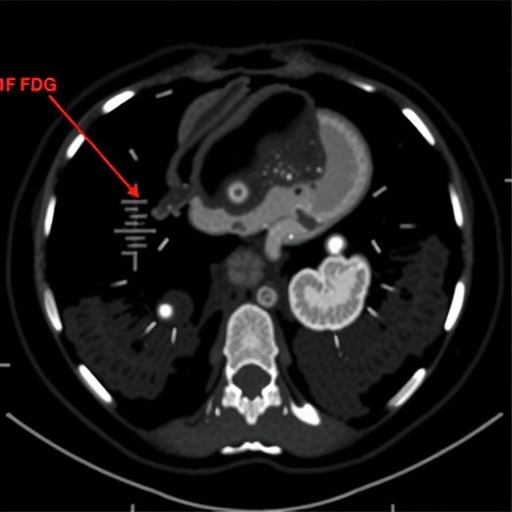
In an enlightening reply to the work of Sun et al., Littooij and colleagues delve into the applications and implications of 18F-Fluorodeoxyglucose positron emission tomography/computed tomography (FDG-PET/CT) in diagnosing and managing pediatric renal tumors. This timely commentary not only addresses important aspects raised by Sun et al. but also provides compelling insights into the evolving landscape of diagnostic imaging in pediatric oncology. As pediatric cancers remain relatively rare but pose significant challenges in management, the role of advanced imaging techniques has become a focal point for researchers and clinicians alike.
Pediatric renal tumors, which include Wilms’ tumor and other less common renal malignancies, necessitate accurate staging and response assessment to therapy. The implementation of FDG-PET/CT has garnered attention due to its unique ability to provide metabolic and anatomical information simultaneously. Littooij and his team shed light on the distinct advantages this imaging modality holds over traditional imaging techniques, particularly in the observance of metabolic activity that may not be visible through standard ultrasound or CT scans alone.
One of the crucial points raised in the response is the specificity of FDG-PET/CT for various types of renal tumors in children. Recent studies have indicated a particularly high sensitivity for detecting metastatic disease, which can significantly alter treatment plans and prognostic outcomes. By addressing the limitations present in conventional imaging approaches, Littooij et al. advocate for the broader incorporation of FDG-PET/CT into clinical practice, emphasizing its predictive value in assessing treatment response and recurrence risk.
Moreover, the dialogue surrounding FDG-PET/CT application is further enriched by discussions of radioisotope selection and its implications. The choice of 18F-fluorodeoxyglucose as the tracer of interest is intentional, given its established track record in adult cancers. However, the authors also ponder the potential for other radiotracers that may enhance the imaging profile specifically for pediatric populations, where physiological uptake variations may differ significantly from adults.
Littooij and his co-authors also address safety concerns associated with the radiation exposure from PET/CT scans, especially in young patients. Citing data from recent studies, they argue that the benefits of acquiring crucial diagnostic information often outweigh the risks of radiation exposure. This analysis suggests a paradigm shift in how clinicians weigh the risks and benefits of imaging modalities in a vulnerable patient demographic.
The authors also reflect on the current guidelines related to pediatric imaging practices and the existing barriers that limit the widespread adoption of FDG-PET/CT. They contend that with increasing evidence supporting the technique’s efficacy, there is a pressing need for updating these guidelines to facilitate its integration into standard care practices for pediatric renal tumor management.
Furthermore, the need for additional research focused on the long-term outcomes of patients who undergo FDG-PET/CT imaging is underscored. As the oncological landscape continuously evolves with new therapeutic modalities and strategies, comprehensive data on long-term survivorship and the impact of imaging on treatment decisions will be invaluable. This will ensure that the direction of future research aligns appropriately with the clinical needs of both patients and practitioners.
Engagement between researchers like Littooij et al. and the comments made by Sun et al. exemplifies the importance of scholarly dialogue in pushing the boundaries of oncological imaging forward. Through constructive discussions and critical evaluations of methodologies, the medical community can ensure that patients receive the most effective and appropriate care.
Collaboration across institutions in various research endeavors is essential in establishing a robust evidence base that supports the use of sophisticated diagnostic tools. The authors assert that not all centers currently have access to FDG-PET/CT, which may lead to disparities in diagnosis and treatment outcomes. This inequity is a call to action for the pediatric oncology community to strive for universally accessible imaging technologies.
In conclusion, Littooij and his colleagues present a compelling case for the use of FDG-PET/CT in pediatric renal tumors, offering critical insights into its advantages, challenges, and future research directions. Their response not only adds a significant dimension to the ongoing conversation initiated by Sun et al. but also highlights the broader implications for imaging practices in pediatric oncology. As research continues to evolve, the hope is that such advancements will ultimately lead to improved outcomes for children facing these challenging diagnoses.
Littooij, A., van der Beek, J., Coma, A. et al. 18F‐Fluorodeoxyglucose positron emission tomography/computed tomography in pediatric renal tumors: reply to Sun et al..
Pediatr Radiol (2025). https://doi.org/10.1007/s00247-025-06352-w
Cite Scienmag News
Nathaniel Bowman. (August 29, 2025). 18F-FDG PET/CT in Pediatric Renal Tumors: Response. Scienmag. https://scienmag.com/18f-fdg-pet-ct-in-pediatric-renal-tumors-response/
Nathaniel Bowman. "18F-FDG PET/CT in Pediatric Renal Tumors: Response." Scienmag, 29 August 2025, https://scienmag.com/18f-fdg-pet-ct-in-pediatric-renal-tumors-response/. Accessed 3 September 2026.
Nathaniel Bowman. "18F-FDG PET/CT in Pediatric Renal Tumors: Response." Scienmag. August 29, 2025. https://scienmag.com/18f-fdg-pet-ct-in-pediatric-renal-tumors-response/


