


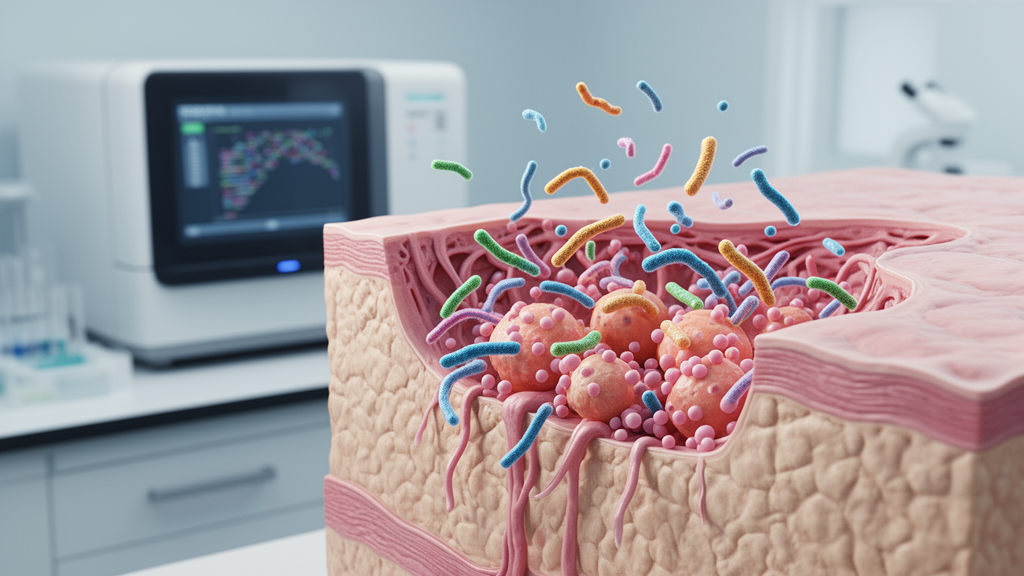
Researchers at the University of East Anglia have recovered the genetic blueprints of 18 bacterial species not previously recorded from DNA sequencing data collected from men with prostate cancer. Most of the newly identified organisms were oral bacteria, including new types of Porphyromonas, a genus previously linked to more aggressive prostate cancer, and Treponema. The experimental human study also assembled 249 near-complete bacterial genomes in total from 194 patients, giving researchers reference sequences and new tools for investigating individual species. The results do not establish that these bacteria cause prostate cancer or drive its progression; instead, they identify organisms that can now be studied and, in one case, detected with a species-specific DNA test.
The analysis drew on saliva, tumour and blood whole-genome sequencing data assembled by the Pan Prostate Cancer Group, an international collaboration co-founded and co-led by scientists at the University of East Anglia and the Institute of Cancer Research in London. The consortium has brought together molecular data from more than 2,000 prostate cancers across nine countries. From 2,176 datasets, the UEA team recovered 249 near-complete bacterial genomes representing material from 194 patients. Twenty-four of the assembled genomes did not match any species then on record, and the researchers classified 18 as previously undescribed bacterial species.
Much of the discovery came from sequencing data that might ordinarily have been discarded. When a tumour or blood sample is sequenced, a small proportion of sequence reads do not match human DNA. Conventional workflows generally filter out these fragments as noise before analysis. The UEA team instead retained the non-human reads and applied metagenomic assembly, a technique that combines short fragments into longer sequences, to reconstruct bacterial genomes from the available data. Because the human sequencing had already been performed for prostate cancer research, this approach required no additional patient samples and, according to the research release, no additional sequencing cost.
Porphyromonas was the most frequently recovered genus. The genus includes Porphyromonas gingivalis, the principal bacterium behind gum disease, while the research team had previously linked particular anaerobic oral bacteria to more aggressive prostate cancer. Most organisms assembled in the present study were also oral. The researchers cautioned that this pattern does not by itself establish a biological connection with prostate tissue: the mouth contains far more bacteria than the prostate, so oral organisms leave more fragments that can be assembled into genomes. The team assigned formal provisional names to 16 of the new organisms, including Candidatus Porphyromonas leptis, Candidatus Treponema oralis and Candidatus Nanosyncoccus prostatocharitus.
One newly identified species proved to be almost an exact genetic match to a previously documented bacterium. In the researchers’ assessment, that close match supports the finding as a genuine recovery rather than an error in the data. The broader analysis showed that bacterial genomes can be assembled from the residual non-human portion of cancer sequencing datasets. The authors also propose that archived prostate cancer data generated around the world could be searched for additional organisms in the same way, without collecting extra specimens or generating new sequencing data. This is an extension of the analytical approach, not a result demonstrating how widely the newly named species occur in other populations.
Generating reference genomes addresses only one obstacle to studying previously uncharacterized microbes. Many relevant organisms have never been grown in the laboratory, lacked reference genomes and could not be detected with species-specific tests, making it difficult to determine which bacteria were present or to assess them individually. Using the newly assembled sequences, the team predicted the conditions needed to grow the bacteria and developed a validated DNA test capable of detecting one species with precision. The researchers said these resources could support work on whether particular organisms are associated with aggressive disease and, subsequently, whether targeting them changes an outcome.
The wider context for investigating oral bacteria in prostate disease remains limited and uncertain. The release cites Viridans streptococci, common organisms in the mouth, as causes of around one in five cases of infective endocarditis. It also describes laboratory models in which Fusobacterium nucleatum spread with bowel tumours to the liver, where antibiotics reduced both the bacterium and tumour growth. That evidence concerns bowel tumours and laboratory models, not the prostate cancer cohort analysed in the new study. For prostate disease, emerging evidence has linked gum disease with a slightly higher risk of prostate cancer, and Porphyromonas gingivalis has been found in both dental plaque and prostate fluid from the same patients. A 2024 report proposed that this bacterium may worsen benign prostate enlargement through inflammation.
Earlier prostate cancer research cited by the authors found that men carrying a set of anaerobic bacteria, several from the oral cavity, were more than twice as likely to see their cancer progress. That was an association rather than proof that the bacteria caused progression. Progress in examining possible links has also been limited by missing reference genomes, the inability of many microbes to be cultured and the absence of species-specific detection tests. The new study addresses that technical gap by recovering and naming organisms, predicting culture conditions and validating a detection assay. The stated next steps are to isolate the bacterial strains from patient samples, determine how to grow them and examine their genes and possible relationship with prostate cancer behaviour.
The work was conducted with the Pan Prostate Cancer Group and colleagues at the Institute of Cancer Research in London, the University of Copenhagen, the University of Melbourne, the Wellcome Sanger Institute, Weill Cornell Medicine, the Ontario Institute for Cancer Research and institutions across nine countries. The consortium is publishing a series of studies based on its tumour dataset, with the long-term aim of explaining why men given the same prostate cancer diagnosis can have different outcomes. The bacterial analysis was published in npj Biofilms and Microbiomes as an experimental study in people. Its principal result is the recovery and naming of previously uncharacterized bacterial species from existing prostate cancer datasets, together with preliminary culture predictions and a validated assay for one species. Any diagnostic, preventive or therapeutic implications remain questions for further research.
Subject of Research: Recovery of previously uncharacterized bacterial species from human prostate cancer whole-genome sequencing data.
Article Title: ‘Hiding in plain sight’ – new bacteria discovered in DNA samples from prostate cancer patients
Article References: ‘Hiding in plain sight’ – new bacteria discovered in DNA samples from prostate cancer patients. Original publication (Bibliographic details unavailable.)
Image Credits: AI Generated
DOI: Not provided
Keywords: prostate cancer, bacterial genomics, metagenomic assembly, oral bacteria, whole-genome sequencing, Porphyromonas, Treponema, cancer microbiome, DNA assay, Pan Prostate Cancer Group, Hiding, plain
Cite Scienmag News
Nathaniel Bowman. (October 20, 2026). 18 new bacterial species recovered from prostate cancer sequencing data. Scienmag. https://scienmag.com/18-new-bacterial-species-recovered-from-prostate-cancer-sequencing-data/
Nathaniel Bowman. "18 new bacterial species recovered from prostate cancer sequencing data." Scienmag, 20 October 2026, https://scienmag.com/18-new-bacterial-species-recovered-from-prostate-cancer-sequencing-data/. Accessed 20 October 2026.
Nathaniel Bowman. "18 new bacterial species recovered from prostate cancer sequencing data." Scienmag. October 20, 2026. https://scienmag.com/18-new-bacterial-species-recovered-from-prostate-cancer-sequencing-data/


