


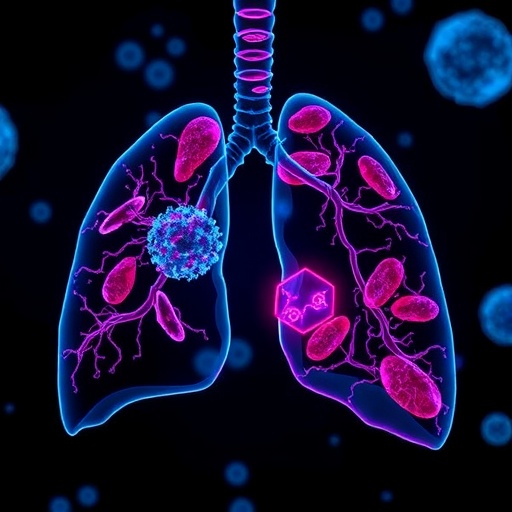
Lung cancer remains the deadliest malignancy in the world, and non-small cell lung cancer, which accounts for roughly 85 percent of all cases, continues to defy even the most sophisticated immunotherapies now in clinical use. Immune checkpoint inhibitors have undoubtedly reshaped the therapeutic landscape, yet a substantial fraction of patients either fail to respond initially or relapse after transient benefit. A newly published review in the Journal of Translational Medicine argues that part of the answer may lie in an unusual and often overlooked population of immune cells: gamma delta T cells. Written by Yige Wang of Nanjing Medical University and Qiang Xiao of Changde Hospital, Xiangya School of Medicine, Central South University, the review synthesizes mechanistic insights into how these unconventional lymphocytes can act simultaneously as tumor killers and tumor promoters within the lung cancer microenvironment, and it lays out a translational roadmap for turning their plasticity to the patient’s advantage.
Gamma delta T cells are not the mainstream soldiers of adaptive immunity. Unlike conventional alpha beta T cells, they do not require recognition of peptide antigens presented by the major histocompatibility complex, the molecular display system that tumors frequently shut down to escape immune detection. This MHC independence gives gamma delta T cells an inherent advantage in solid tumors such as lung cancer, where downregulation of antigen presentation machinery is one of the dominant escape strategies. The cells are also unusually enriched in pulmonary mucosal tissue, positioning them as first-line sentinels of the lung. When functioning in their cytotoxic type 1 state, they destroy malignant cells through the release of perforin and granzymes, pore-forming and proteolytic molecules that induce target cell death, while simultaneously secreting interferon-gamma to amplify inflammatory anti-tumor signaling across the microenvironment.
The paradox, as the review makes clear, is that the very plasticity that makes gamma delta T cells versatile also makes them vulnerable to subversion. Under the influence of commensal microbiota-driven inflammatory signals, specifically interleukin-1 beta and interleukin-23, tissue-resident subsets can be polarized into a pro-tumorigenic type 17 phenotype. These interleukin-17-secreting cells recruit neutrophils into the tumor and foster an inflammatory milieu that accelerates cancer progression rather than restraining it. In other words, the same family of lymphocytes can function as a double-edged sword in non-small cell lung cancer, and which edge cuts depends on the local context of cytokines, metabolites, and microbial products. The review emphasizes that understanding the signals governing this fate decision is essential before gamma delta T cells can be reliably exploited therapeutically.
A central mechanistic thread in the review concerns the butyrophilin 3A1 and 2A1 phosphoantigen recognition axis. Butyrophilins are molecules related to the B7 costimulatory family, and in humans BTN3A1 in particular acts as an intracellular sensor for phosphoantigens, small phosphorylated metabolites that accumulate in transformed cells as a byproduct of dysregulated mevalonate pathway activity. When phosphoantigens bind inside the cell, BTN3A1 undergoes conformational changes that trigger activation of gamma delta T cells expressing a specific T cell receptor lineage, most notably the Vgamma9Vdelta2 subset that predominates in human blood. This recognition pathway is a major reason why gamma delta T cells can sense and kill tumor cells without conventional antigen presentation, and it has been the foundation for several clinical strategies, including aminobisphosphonate drugs that elevate intracellular phosphoantigen levels to stimulate these cells in vivo. The authors underscore that manipulating this axis, while promising, must contend with the reality of the tumor microenvironment, which actively degrades the functional competence of infiltrating lymphocytes.
That hostile environment is the second pillar of the review. The lung tumor microenvironment imposes layered barriers that fall into three broad categories: metabolic, epigenetic, and physical. Metabolically, solid tumors are nutrient-deprived battlefields where rapidly dividing cancer cells consume glucose, glutamine, and essential amino acids, leaving infiltrating immune cells starved and functionally exhausted. Gamma delta T cells undergo metabolic reprogramming under these conditions, and their effector function depends on maintaining mitochondrial fitness and glycolytic capacity, both of which are compromised in the hypoxic, lactate-rich interior of a tumor. Epigenetically, chronic exposure to immunosuppressive cytokines and checkpoint ligands drives stable transcriptional silencing of effector programs, a form of immune senescence that persists even when cells are removed from the tumor. Physically, the dense stroma, abnormal vasculature, and elevated interstitial pressure of lung tumors impede trafficking and infiltration, so that even potent gamma delta cells may never reach their targets in sufficient numbers.
Against this backdrop, the review surveys emerging engineering strategies designed to restore or enhance gamma delta T cell efficacy. Among the most clinically consequential is the development of allogeneic cellular products, meaning gamma delta T cells derived from healthy donors rather than patients themselves. Because these cells do not depend on MHC matching and carry a low risk of graft-versus-host disease compared with conventional allogeneic alpha beta T cells, they are natural candidates for off-the-shelf immunotherapy, a manufacturing and logistics advantage that could democratize access to advanced cellular medicine. Autologous approaches, in which a patient’s own gamma delta cells are expanded and activated outside the body before reinfusion, remain important, but they are constrained by the fact that cells harvested from cancer patients are often already exhausted or corrupted by tumor-induced dysfunction.
Epigenetic priming is presented as a complementary strategy with particular relevance to reversing immune senescence. By manipulating chromatin-modifying enzymes, for example through pharmacological inhibition of DNA methyltransferases or histone deacetylases, researchers can reactivate silenced effector genes and restore the cytotoxic identity of exhausted gamma delta T cells. The review suggests that epigenetic priming could be applied either ex vivo during cell manufacturing or in vivo as part of combination regimens, effectively wiping the dysfunctional epigenetic memory that the tumor microenvironment imposes. This approach acknowledges a growing consensus in immunology that functional T cell states are not fixed lineages but recoverable programs, provided the right transcriptional and chromatin landscape can be reinstated.
The third strategic pillar is microbiota-directed polarization. Given that commensal microbial signals can push gamma delta T cells toward the pro-tumorigenic type 17 fate through interleukin-1 beta and interleukin-23, the review proposes deliberately shaping the microbiome or intervening in downstream cytokine signaling to stabilize durable anti-tumor type 1 phenotypes instead. This could involve antibiotics, probiotics, dietary interventions, or targeted blockade of the interleukin-17 axis, an approach already validated in other inflammatory diseases. The idea that the gut and airway microbiota exert systemic control over tumor immunity has gained substantial traction in recent years, and the review situates gamma delta T cell biology squarely within this emerging framework of microbiota-immune crosstalk, arguing that polarization control may be as important as cell activation or expansion.
The translational roadmap that Wang and Xiao propose integrates these elements into a coherent pipeline: allogeneic off-the-shelf cellular engineering to solve supply and logistics, metabolic priming to reverse immune senescence and restore cytotoxic metabolism, and microbiota-directed polarization to lock in stable anti-tumor function. Combination approaches, including pairing engineered gamma delta cells with checkpoint inhibitors, bisphosphonates, or metabolic modulators, are framed as the likely path to clinical impact. The ultimate goal, the authors write, is to overcome immune escape driven by impaired antigen presentation and to advance precision immunotherapy for non-small cell lung cancer, a disease in which the current immunotherapy paradigm leaves too many patients behind. Because gamma delta T cells can recognize stressed and transformed cells through stress ligands and phosphoantigen sensing rather than a single tumor antigen, they may also offer a broader and more durable response than approaches dependent on a single target.
The review arrives at a moment of genuine momentum for gamma delta T cell therapeutics, with multiple clinical trials underway across hematologic malignancies and solid tumors, and with growing commercial interest in allogeneic gamma delta platforms. For lung cancer, where the tumor microenvironment is among the most immunosuppressive and physically hostile of any solid malignancy, the stakes are particularly high. The authors’ synthesis makes a persuasive case that the field’s next advances will come not from simply arming these cells, but from understanding and controlling the environmental forces that determine whether they fight for the patient or for the tumor. As the mechanistic picture sharpens, the double-edged nature of gamma delta T cells may yet prove to be less a liability than an opportunity, provided clinicians and engineers learn to grip the correct handle. The work was supported by the Changde Science and Technology Innovation Guidance Program under Grant No. 2025ZD145, and the article is published open access, making the full mechanistic analysis available to researchers and clinicians worldwide.
Cite Scienmag News
Nathaniel Bowman. (September 3, 2026). γδ T cells play dual roles in non-small cell lung cancer therapy. Scienmag. https://scienmag.com/%ce%b3%ce%b4-t-cells-play-dual-roles-in-non-small-cell-lung-cancer-therapy/
Nathaniel Bowman. "γδ T cells play dual roles in non-small cell lung cancer therapy." Scienmag, 3 September 2026, https://scienmag.com/%ce%b3%ce%b4-t-cells-play-dual-roles-in-non-small-cell-lung-cancer-therapy/. Accessed 11 September 2026.
Nathaniel Bowman. "γδ T cells play dual roles in non-small cell lung cancer therapy." Scienmag. September 3, 2026. https://scienmag.com/%ce%b3%ce%b4-t-cells-play-dual-roles-in-non-small-cell-lung-cancer-therapy/


