

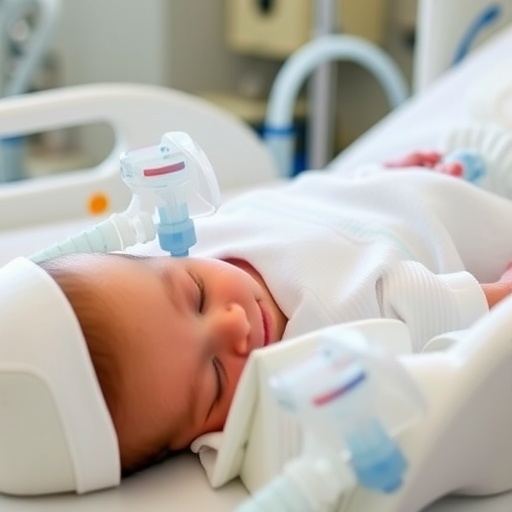
In the rapidly advancing field of neonatal respiratory support, the efficiency and safety of continuous positive airway pressure (CPAP) devices stand as a crucial determinant of outcomes for vulnerable newborns. A recent study published in Pediatric Research undertakes a comprehensive examination of the imposed work of breathing (WOB) across sixteen distinct neonatal CPAP systems, highlighting how varying mechanisms for CPAP generation impact respiratory effort. This investigation sheds light on subtle yet profound differences among devices, potentially guiding future clinical choices and technological innovation.
At the heart of neonatal respiratory care, CPAP devices maintain airway pressure to keep neonatal lungs inflated, helping premature and critically ill infants to breathe with greater ease. However, not all CPAP devices are created equal. This study focuses specifically on the “imposed work of breathing,” a parameter reflecting the additional mechanical effort an infant must expend due to the resistance and mechanical load imposed by the device itself. A device that excessively increases WOB could inadvertently stress fragile lungs, undermining patient comfort and clinical efficacy.
The research dissects sixteen commercial neonatal CPAP devices, evaluating their performance through a rigorous comparative framework. These devices employ different methods to generate CPAP, including variable expiratory resistors, bubble CPAP systems, flow generators, and more. Each method creates airflow and maintains pressure through distinct mechanical principles, influencing the resulting imposed WOB on the infant.
A key technical insight emerges from the observation that devices relying on higher resistance elements to maintain pressure inherently elevate the infant’s respiratory effort. Conversely, systems that ensure smoother airflow delivery and reduce turbulent resistance correspondingly decrease the imposed WOB. This nuanced interplay between CPAP generation mechanisms and imposed load underscores the importance of engineering design optimization tailored to neonatal physiology.
One of the standout findings is the disparity in pressure stability achieved by different CPAP modalities. Bubble CPAP systems, for example, produce fluctuating pressures through underwater bubbling, which can serve to stimulate lung recruitment but may inadvertently introduce variable WOB demands. In contrast, flow generator-based CPAP devices tend to provide more consistent pressure, potentially lessening imposed WOB but requiring precise calibration to avoid excessive pressure.
The study utilized simulated neonatal breathing patterns paired with advanced measurement tools to quantify imposed WOB across devices. This methodological approach bolsters the reliability of findings by approximating clinical scenarios without risking patient welfare. Such bench testing, while not a substitute for clinical trials, provides critical comparative data to inform device selection and future design improvements.
Importantly, the investigation highlights that not all CPAP devices marketed for neonatal use adequately consider the imposed WOB in their design specifications. Devices with substantial imposed WOB can exacerbate respiratory fatigue, delay weaning from respiratory support, and even contribute to lung injury in fragile neonatal tissues. These findings call for heightened standards and evaluations in the regulatory approval process for neonatal respiratory devices.
Clinicians must therefore weigh the benefits of each CPAP system beyond nominal pressure delivery, incorporating evaluations of imposed respiratory effort into their decision-making processes. By understanding the mechanical nuances revealed in this study, healthcare providers can individualize respiratory support strategies that minimize iatrogenic complications and improve neonatal outcomes.
The study also opens avenues for future research focusing on improved CPAP mechanisms that combine low imposed WOB with effective lung recruitment and oxygenation. Innovations might include adaptive flow control systems, optimized nasal interface designs to reduce leak and resistance, and enhanced bubble chamber dynamics to stabilize pressure fluctuations.
Moreover, this research drives home the importance of multidisciplinary collaboration across biomedical engineering, neonatology, and respiratory therapy fields. The intricate balance between mechanical design and physiological impact demands integrated expertise to develop devices that are both technologically advanced and clinically empathetic.
This comprehensive analysis of neonatal CPAP devices thus represents a pivotal advancement in pediatric respiratory care technology. By illuminating the mechanics of imposed work of breathing, the study fosters an evidence-based approach to selecting and refining respiratory support tools, ultimately enhancing the quality of life for the most vulnerable patients.
As neonatal intensive care units worldwide continue to evolve, the translation of these findings into clinical protocols and device manufacturing standards will be key to improving survival rates and reducing chronic lung disease incidence among preterm infants.
In sum, this research invites both manufacturers and clinicians to reconsider how neonatal CPAP devices are designed and utilized. A commitment to reducing imposed WOB not only protects infants from additional respiratory burden but also paves the way for a new era of precision respiratory support centered on physiological harmony.
Future iterations of neonatal CPAP systems may well integrate real-time feedback mechanisms that monitor imposed WOB, adjusting parameters dynamically to suit the infant’s instantaneous respiratory capacity, thus embodying a truly patient-centric approach fostered by this foundational research.
Ultimately, the work by Sterzik and colleagues crystallizes a crucial dimension of neonatal respiratory support that has often been overlooked—how the mechanics of device design translate into measurable respiratory workload, with tangible implications for care standards and infant health trajectories worldwide.
Subject of Research: Imposed work of breathing in neonatal CPAP devices and its dependence on different CPAP generation mechanisms.
Article Title: Correction: Imposed work of breathing of 16 neonatal CPAP-devices using different mechanisms of CPAP generation.
Article References:
Sterzik, H., Arand, J., Schwarz, C.E. et al. Correction: Imposed work of breathing of 16 neonatal CPAP-devices using different mechanisms of CPAP generation. Pediatr Res (2025). https://doi.org/10.1038/s41390-025-04640-7
Image Credits: AI Generated


