

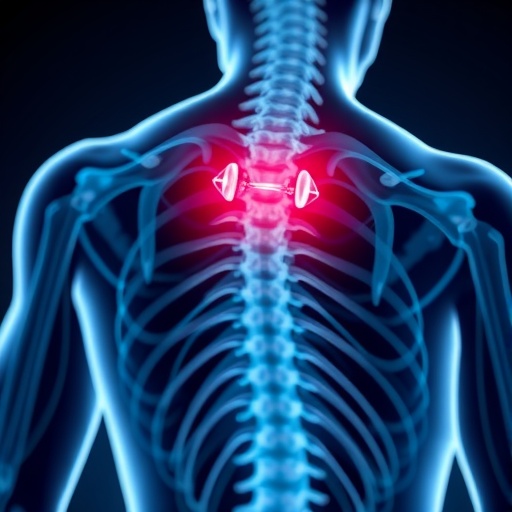
In a groundbreaking development in medical technology, researchers have identified a potential game-changer in pain management following surgical procedures. Opioid misuse remains a persistent challenge, leading to a pressing need for innovative, drug-free alternatives to conventional pharmaceutical pain control methods. Traditional non-pharmacological solutions often utilize rigid stimulators, which link internal and external components of the body. These rigid systems not only pose additional challenges, such as nerve burden but also necessitate subsequent interventions for removal. This limits their widespread utility in clinical settings, where patient safety and comfort are paramount.
In response to this need, a team of researchers has introduced a revolutionary bioresorbable triboelectric nerve cuff. This novel device operates using ultrasound waves to deliver targeted pain control, representing a significant leap in pain management technologies. Unlike their rigid predecessors, the bioresorbable nerve cuff is designed for integration within the body, eliminating the need for removal after it has served its purpose. It provides a compelling solution that allows for effective pain modulation while minimizing patient intervention and discomfort.
The innovative nerve cuff incorporates principles of triboelectricity, where polymers with opposite triboelectric properties are enveloped around targeted nerves. The real magic begins when the cuff is activated via ultrasound stimulation, causing these polymers to vibrate. As they vibrate, they generate an alternating triboelectric field that runs parallel to the nerve fibers. This unique functionality allows for precise modulation of nerve signals associated with pain, providing patients with immediate relief.
Researchers conducted rigorous in vivo testing in both rat and porcine models to evaluate the cuff’s effectiveness and biocompatibility. These preclinical studies are crucial as they simulate real-life scenarios where postoperative pain management is essential. The results surprised many in the scientific community. Despite being fully implanted, the neurostimulator demonstrated no detectable effects on the animal models’ gait, a significant consideration when evaluating the overall impact of potential pain management devices. This not only underscores the cuff’s safety but also highlights its potential to integrate seamlessly with physiological functions without hindering mobility.
Significantly, animals subjected to the triboelectric nerve cuff experienced immediate relief from pain signals. The device appears to facilitate effective pain management without the adverse effects commonly associated with traditional pharmacological approaches. As the implant is designed to fully resorb over time, the research emphasizes that its application throughout the healing process does not induce any negative responses in the nerve tissue or surrounding muscles.
This research is pivotal in addressing the opioid crisis, as opioid misuse and addiction remain significant public health concerns. The innovative design of a wireless and bioresorbable nerve block system potentially aligns with global efforts aimed at reducing reliance on opioid medications. By providing a drug-free approach to pain management, the triboelectric nerve cuff presents a viable option that can significantly contribute to better patient outcomes after surgical interventions.
Nerve block systems that are implantable offer a promising alternative to traditional pain management methods. The ultrasound-activated triboelectric system stands apart due to its unique ability to deliver pain relief without the complexities associated with physical and chemical stimulators. The innovative device’s biocompatibility ensures that the surrounding tissues remain unaffected, showcasing a transformative approach towards postoperative care.
Additionally, the device is rooted within a broader context of ongoing studies emphasizing the necessity of advancing medical interventions that keep pace with societal changes. The integration of electronics and bio-engineering into traditional medical devices offers an exciting frontier in pain management. How healthcare professionals adapt to these advancements will likely influence the landscape of surgical recovery in the years to come.
The implications of this technology extend beyond mere pain alleviation; this research also opens up avenues for future developments in nerve and muscle interfaces. The customization of triboelectric systems could lead to advances in personalized therapies for a variety of pain conditions. If sustained interest in the triboelectric cuff evolves, it could lay the groundwork for an entire class of devices aimed at treating chronic pain without the burdens of pharmacological side effects.
As the narrative of opioid dependence unfolds, the scientific community is called to action to pursue and endorse innovations like the triboelectric nerve cuff device. The ongoing studies will likely catalyze further investigations into similar bioresorbable technologies that could bolster the development of safer, more effective pain management strategies across various medical disciplines.
The research might find applications in other surgical contexts, expanding its relevance across the range of medical specialties. Given the device’s design, adaptations could also be explored for chronic pain management scenarios outside of the surgical context, presenting even more versatile solutions in pain care and rehabilitation therapies.
In summary, the development of a wireless and bioresorbable triboelectric nerve block system represents a significant breakthrough in the field of pain management. With its non-invasive mechanism, immediate efficacy, and potential to alleviate the burdens associated with opioid use, this innovative technology may herald a new era in postoperative care. Continued research and development will be critical in analyzing its long-term effectiveness and practicality in diverse clinical contexts.
This work serves as an inspiring testament to the potential of interdisciplinary approaches in medicine, marrying engineering prowess with biological understanding to create products that could revolutionize how patients experience pain relief in the future. As we explore these exciting technological frontiers, the ultimate goal remains clear: to enhance patient care and improve quality of life for individuals recovering from surgery and other painful conditions.
Subject of Research: A bioresorbable triboelectric nerve cuff for postoperative pain control.
Article Title: Wireless and bioresorbable triboelectric nerve block system for postoperative pain control.
Article References:
Kim, YJ., Kim, SH., Park, BJ. et al. Wireless and bioresorbable triboelectric nerve block system for postoperative pain control.
Nat. Biomed. Eng (2026). https://doi.org/10.1038/s41551-025-01579-2
Image Credits: AI Generated
DOI: https://doi.org/10.1038/s41551-025-01579-2
Keywords: Postoperative pain control, triboelectric nerve cuff, bioresorbable technology, opioid alternatives, ultrasound stimulation.


