

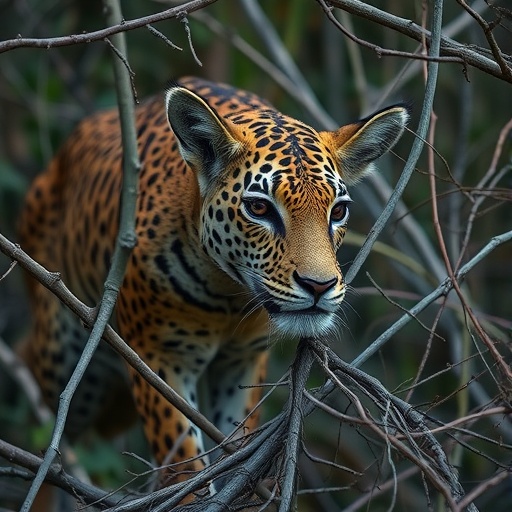
In recent years, the burgeoning field of artificial intelligence (AI) has revolutionized wildlife identification and ecological monitoring, promising unprecedented accuracy and scale. However, new research emerging from the University of Exeter calls into question the assumed versatility of AI models when deployed beyond their original training environments. This ignites a critical discourse around what researchers are now terming a “transferability crisis” in AI applications for biological sciences — a storm warning for ecologists, conservationists, and technologists alike.
The prevailing marketing narratives surrounding AI-driven imaging systems often promote an image of seamless adaptability. These narratives suggest that AI models trained on certain sets of images or data can effortlessly generalize to novel ecosystems and environmental contexts, mimicking, if not surpassing, human observational flexibility. Yet, Dr. Thomas O’Shea-Wheller and his colleagues underscore that this assumption overlooks a fundamental limitation inherent to many deep learning models: their confined operational boundaries artificially imposed by training datasets.
AI models, especially those utilizing deep learning, depend heavily on the quality, diversity, and representativeness of the data they are trained with. When an AI is trained to identify species based on curated datasets—commonly comprised of clear, standardized, stock images—the model’s proficiency in recognizing those species in highly controlled or similar conditions can be exemplary. However, this performance sharply deteriorates when the model is confronted with images from less controlled, natural settings. Variations in lighting, background, species behavior, and image angles in the wild create data distributions that differ significantly from training examples, undermining reliable identification.
Profoundly, this transferability crisis highlights the pitfalls of overreliance on benchmark performance metrics routinely presented as gold standards in AI evaluation. These benchmarks, often constructed from arbitrary or convenience-driven image categories, afford an overly optimistic view of AI model robustness. Models may report near-human level accuracy during testing phases, only to falter unpredictably once deployed in authentic field conditions. This diagnostic gap risks engendering false confidence in AI systems, leading practitioners to dismiss the necessity for rigorous, context-specific validation.
Katie Murray from Exeter’s Centre for Ecology and Conservation elaborates on this predicament: AI models often exude unwarranted confidence in their predictions, even as they process unfamiliar or unrepresented inputs. This is particularly disconcerting in wildlife identification, where erroneous positive identifications might not simply be an academic nuisance but could tangibly misdirect conservation efforts or biodiversity assessments.
The core challenge here is not an inherent flaw in AI technology, but rather the misapplication or misinterpretation of its capabilities. O’Shea-Wheller argues that AI bears immense potential when its limitations are transparently acknowledged and addressed through recalibrated evaluation strategies and real-world testing paradigms. For instance, integrating models with adaptable learning mechanisms that can update based on new environmental data might help bridge transferability gaps.
The stakes grow even higher when the implications extend into high-risk fields like medical diagnostics, where similar AI-based systems are deployed. Erroneous classifications or failures in new operational contexts could lead to misdiagnosis or inappropriate interventions. This intensifies the call for developmental vigilance and operational scrutiny, ensuring that AI tools are not simply bench-tested but validated under conditions mirroring their intended practical use.
The researchers exhort the scientific and technological communities to adopt an attitude of caution when interpreting AI performance metrics. They advocate for the broader incorporation of adaptive, field-specific model validation frameworks that can quickly assess model degradation and recalibrate systems dynamically. Such adaptive approaches might include controlled pilot deployments, cross-ecosystem testing, or synthetic data augmentation designed to mimic environmental variability.
Moreover, this transferability discourse deepens our understanding of AI’s inherent dependency on the notion of distributional similarity—when the data used in deployment diverges from that used in training, model efficacy is compromised. This challenge is compounded in biological and ecological settings by the vast heterogeneity of organism appearances, behaviors, and habitats, which are intrinsically difficult to capture comprehensively in training datasets.
Dr. O’Shea-Wheller’s insights resound as a clarion call to the AI community not to rest on laurels fostered by benchmark test results. Instead, research and application must prioritize real-world robustness over laboratory elegance. Indeed, the most reliable measure of an AI model’s utility may well be its demonstrated performance within the specific context of application, rather than on contrived datasets that bear limited resemblance to natural environments.
Ultimately, the study published in PLOS Biology encapsulates a sobering examination of AI’s limits and potentials. It challenges the scientific community to advance beyond superficial performance indicators towards a nuanced comprehension of AI system behavior across varied and unpredictable real-world landscapes. This recalibration is vital for harnessing AI safely and effectively, both in wildlife conservation initiatives and broader biological research.
Failure to heed these warnings risks not only the erosion of trust in AI-driven methodologies but could also culminate in tangible harm—misguided conservation practices, wasted resources, and overlooked species declines. As AI continues to permeate diverse scientific domains, ensuring that its applications are contextually validated and accurately interpreted will define the difference between transformative impact and inadvertent setback.
By bringing to light the transferability crisis, Dr. O’Shea-Wheller, Katie Murray, and their team invite a paradigm shift: from complacency with benchmark achievements to active engagement with the complexities of ecological and biomedical realities. This shift is crucial for advancing AI from a promising research novelty to a reliable, actionable tool grounded in real-world ecology and medicine.
Subject of Research: Not applicable
Article Title: Deep learning in biology faces a transferability crisis
News Publication Date: 3-Mar-2026
Web References: http://dx.doi.org/10.1371/journal.pbio.3003656
Keywords
Artificial intelligence, Wildlife, Deep learning, Transferability crisis, Ecology, Species identification, Model generalizability, AI performance metrics, Biological monitoring, Conservation technology


