

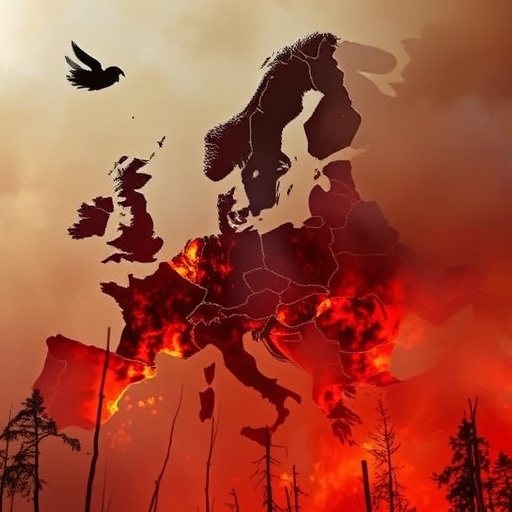
Wildfires have long been a subject of scientific inquiry, and their increasing prevalence has prompted urgent discussions regarding their causes, impacts, and management strategies. The latest research conducted by Miller, Touma, and Brunner, published in the journal Commun Earth Environ, adds vital insights that enhance our understanding of how and why the preconditions for wildfires vary across different regions and times within Europe.
The authors of this comprehensive study delve into the interconnected factors that predispose certain areas to wildfires. They argue that both natural and anthropogenic elements contribute to the formation of these dangerous conditions. By analyzing various ecological, climatic, and human influences, the researchers are able to compile a nuanced picture of wildfire dynamics across the continent.
One of the striking aspects of the research is its geographical focus. Europe is characterized by a diverse range of ecosystems, climates, and land uses, each of which plays a critical role in wildfire occurrences. For instance, Mediterranean regions often contend with dry summers and increased tourist activities, leading to conditions ripe for fires. The researchers highlight that understanding local climatic phenomena—like heatwaves or drought conditions—can illuminate why some areas are more susceptible to wildfires than others.
Additionally, the study underscores the temporal variations in wildfire risks. Climate change is accelerating shifts in weather patterns and altering the frequency of extreme weather events. As temperatures rise and rainfall becomes more erratic, certain regions may experience prolonged dry spells that heighten the likelihood of wildfires. The findings emphasize the need for dynamic approaches to monitoring and managing wildfire risks, rather than static models based on historical data alone.
The role of land management practices is equally significant. Historically, forestry and agriculture have shaped the landscapes of Europe. As a result, the way humans interact with the land directly impacts fire behavior. Practices such as fire suppression, land clearing for agricultural development, and even reforestation efforts can have counterintuitive effects on wildfire likelihood. The research advocates for a multi-faceted understanding of land use and its repercussions on fire regimes, stressing that sustainable land management is crucial for reducing wildfire risks.
Interestingly, the study also examines socio-economic factors that can exacerbate wildfire conditions. Urban development in vulnerable areas, combined with increased human activities like camping or hiking, poses additional threats. The convergence of wildland-urban interfaces complicates the situation further, as residents may be ill-prepared for the realities of living near a fire-prone landscape. Addressing these socio-economic dimensions is pivotal for a comprehensive wildfire management strategy.
Moreover, the research calls attention to biodiversity concerns associated with wildfire outbreaks. While some ecosystems are adapted to survive fire, which can even be beneficial in certain contexts, the loss of habitats and changes in species composition due to severe fire events can have lasting negative effects. The authors stress the importance of biodiversity conservation in fire-prone areas, advocating for strategies that integrate ecological considerations into urban planning and wildfire management.
Another vital angle of the study centers on community awareness and education related to wildfire risks. Through their findings, the researchers advocate for increased public understanding of fire behavior and the conditions that lead to wildfires. By fostering a culture of preparedness, communities can better respond to fire threats and mitigate their impacts. It is not just the responsibility of scientists and policymakers; empowering individuals with knowledge about wildfire risks is equally essential.
Miller, Touma, and Brunner’s findings are crucial for policymakers in Europe and beyond. As governments grapple with climate adaptation strategies, integrating wildfire risk assessment into broader environmental planning is critical. Their research underscores the urgency of adopting adaptable policies that account for shifting fire dynamics caused by climate change. Failure to act on these insights could lead to increased devastation, economic losses, and disruption of ecosystems.
The urgency of the study is underscored by the fact that wildfires are expected to escalate in severity and frequency across Europe in the years to come. The researchers urge a proactive stance, emphasizing that understanding the compounding preconditions of wildfires presents an opportunity for informed intervention. This research serves not only as a call to action but also as a foundational resource for developing strategies aimed at proactive wildfire management.
To fully engage with this pressing issue, a multi-disciplinary approach involving climatologists, ecologists, urban planners, and sociologists is necessary. The insights offered by Miller, Touma, and Brunner provide a template for future research collaborations, drawing together expertise to address the complexities of wildfire management in increasingly variable environments.
The implications of their research are far-reaching, fundamentally altering how we perceive and respond to wildfire threats. As wildfires become more prevalent due to climate change, the importance of interdisciplinary research and public education cannot be overstated. This study serves as an essential contribution to the literature on climate and fire ecology, creating pathways for further inquiry and action.
Ultimately, the research highlights the urgent need for adaptive strategies in wildfire management, linking ecological integrity with socio-economic resilience. The findings encourage us to rethink our relationship with fire. The data presented by Miller, Touma, and Brunner serves as a wake-up call, one that demands a concerted effort from all stakeholders involved in environmental governance to safeguard the landscapes of Europe for future generations.
In conclusion, wildfires present a complex challenge influenced by a myriad of factors that interconnect over time and space. By embracing the diversity of these preconditions, stakeholders can begin to formulate effective responses to the increasing threat of wildfires, ultimately contributing to the environmental sustainability of the European continent.
Subject of Research: The compounding preconditions of wildfires in Europe
Article Title: Compounding preconditions of wildfires vary in time and space within Europe.
Article References:
Miller, J., Touma, D. & Brunner, M.I. Compounding preconditions of wildfires vary in time and space within Europe.
Commun Earth Environ 6, 1005 (2025). https://doi.org/10.1038/s43247-025-02955-1
Image Credits: AI Generated
DOI: https://doi.org/10.1038/s43247-025-02955-1
Keywords: Wildfires, climate change, biodiversity, land management, public awareness, European ecosystems.


