

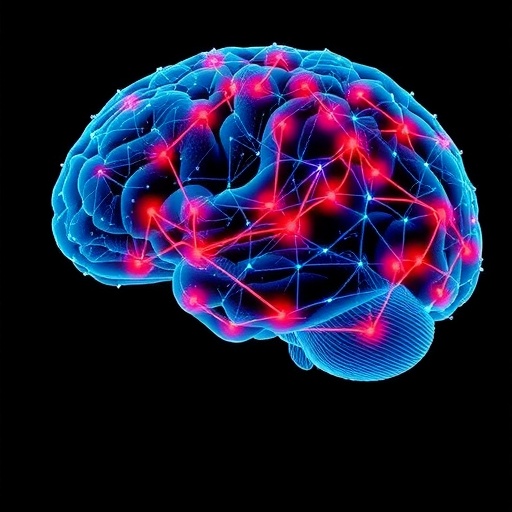
In a groundbreaking advance poised to redefine early diagnosis and intervention strategies in psychiatry, a team of researchers led by K.S. Ambrosen has unveiled compelling evidence that whole-brain functional connectivity patterns can accurately predict individuals’ risk of developing psychosis and their subsequent level of functioning. This study, published in the prestigious journal Schizophrenia in 2026, marks a transformative step towards leveraging neural network dynamics as biomarkers for ultra-high risk psychosis, opening new pathways for precision medicine in mental health disorders.
Until recently, early identification of individuals at risk for psychosis relied heavily on clinical interviews and subjective assessments, which often led to delayed diagnosis and treatment. The promise of neuroimaging to provide objective, biological signatures of impending psychotic episodes has long been a scientific aspiration. Ambrosen and colleagues have now demonstrated that measuring the brain’s functional connectivity—a map of synchronized activity across disparate brain regions—provides a robust predictive tool for distinguishing individuals who are in an ultra-high risk (UHR) state from healthy controls.
The study employed resting-state functional magnetic resonance imaging (rs-fMRI) to capture spontaneous brain activity in participants. Resting-state connectivity taps into intrinsic neural network interactions, offering insights into how different regions communicate when the brain is not engaged in any specific task. By analyzing these connectivity profiles on a whole-brain scale, the researchers circumvented the limitations of focusing on isolated brain areas. Instead, they embraced the complexity of neural circuits whose dysregulation is believed to underlie psychosis.
Advanced machine learning algorithms were harnessed to decode the complex connectivity matrices generated from rs-fMRI data. These computational models sifted through the high-dimensional neural data to identify patterns that uniquely characterize the UHR group. The result was a classification framework capable of distinguishing UHR individuals with remarkable accuracy. Such predictive modeling is particularly notable given the heterogeneous nature of psychosis risk, which encompasses a spectrum of cognitive, perceptual, and emotional symptoms.
Moreover, the connectivity patterns were not only predictive of psychosis risk status but also correlated with participants’ level of functioning. Functional outcome measures, often neglected in biomarker research, are crucial clinical endpoints, reflecting an individual’s ability to maintain social relationships, employment, and daily living skills. The finding that whole-brain connectivity could anticipate functional status provides dual clinical utility—early identification and prognostication of functional decline.
The neural circuits implicated in this study span canonical networks involved in cognitive control, sensory processing, and default mode functioning. Disruptions in these networks have been recurrent themes in psychosis research but rarely integrated comprehensively. The current work’s whole-brain approach underscores that it is the dysregulation of network integration and segregation—how brain regions cohere and segregate dynamically—that constitutes the neural fingerprint of psychosis vulnerability.
This study employed rigorous inclusion criteria to define the UHR population, incorporating attenuated psychotic symptoms, brief intermittent psychotic episodes, and a significant functional decline coupled with genetic risk. The meticulous characterization strengthens the translational potential of the findings by ensuring that connectivity signatures are not confounded by diagnostic heterogeneity. Longitudinal follow-up within the cohort further enabled validation of connectivity features in predicting transition to full-blown psychosis and preemptive intervention planning.
One of the unique contributions of the research is the integration of functional connectivity with clinical assessments and neuropsychological testing. This multi-modal approach revealed that certain connectivity disruptions corresponded to specific symptom clusters, such as perceptual abnormalities and executive dysfunction. Such specificity suggests that targeted modulation of network activity, through neuromodulation or cognitive rehabilitation, could tailor therapeutic strategies according to individual connectivity profiles.
From a methodological standpoint, the study leveraged novel analytic frameworks including graph theoretical measures and network control theory to elucidate the topological properties of neural networks in UHR individuals. These frameworks move beyond simple correlational analyses, enabling inference about network resilience, information flow efficiency, and their perturbations in psychosis. Such biophysical interpretations deepen our understanding of the neural underpinnings of psychiatric phenomena.
Notably, the research team addressed challenges related to inter-individual variability by applying normalization and dimensionality reduction techniques to ensure that comparable connectivity features were analyzed across subjects. This approach enhances the reproducibility and generalizability of the findings, critical for the potential deployment of such biomarkers in clinical practice. The study also discusses the implications of scanner differences and head motion artifacts, underscoring the importance of rigorous preprocessing pipelines in neuroimaging studies.
The implications of this research extend beyond psychosis to inform the broader domain of psychiatric neuroscience, where heterogeneity and symptom overlap often blur diagnostic boundaries. Functional connectivity as a transdiagnostic biomarker may enable phenotypic refinement and individualized predictions across mental disorders characterized by network dysfunctions, such as mood disorders and autism spectrum conditions. Therefore, the impact of this study resonates well into future psychiatric research paradigms.
Clinically, the findings suggest that non-invasive neuroimaging could be integrated into routine screening protocols for individuals presenting with subthreshold psychotic symptoms. Early detection facilitated by brain connectivity signatures may prompt timely interventions including psychotherapy, pharmacological treatment, or neuromodulation, potentially altering the disease trajectory. This aligns with the growing emphasis on preventive psychiatry and personalized treatment models, which aim to mitigate the debilitating sequelae of psychosis.
Furthermore, the research opens intriguing avenues for the development of novel therapeutics targeting network connectivity alterations. Pharmacological agents and brain stimulation techniques designed to restore network balance and enhance functional integration may emerge as precision tools to boost cognition and functional capacity in at-risk populations. Understanding the mechanistic pathways that lead from network dysfunction to clinical manifestations remains a priority to translate neuroimaging findings into treatment breakthroughs.
As with all pioneering investigations, the authors acknowledge limitations including sample size constraints and the need for replication in diverse populations to account for genetic, demographic, and environmental heterogeneity. Future studies incorporating multimodal imaging, such as combining structural MRI and diffusion tensor imaging with functional data, may enrich the predictive models. Additionally, expanding longitudinal cohorts will clarify the temporal evolution of connectivity changes relative to symptom onset and remission.
This landmark study by Ambrosen, Kristensen, Glenthøj, and colleagues sets a compelling precedent for integrating functional neuroimaging biomarkers with computational modeling to transform psychiatric diagnostics. The demonstrated ability to predict ultra-high risk for psychosis and levels of functioning using whole-brain connectivity patterns may herald a new era where mental illnesses are understood and treated through the lens of dynamic brain network architecture rather than symptom-based categories.
In conclusion, the convergence of advanced neuroimaging, machine learning, and clinical psychiatry exemplified in this research offers a transformative vision for the future of mental health care. By decoding the brain’s connectivity fingerprints, clinicians may soon possess powerful tools for early identification, personalized intervention, and improved functional outcomes for individuals teetering on the brink of psychosis. This shift toward a biological framework rooted in whole-brain dynamics signals an exciting frontier at the vanguard of neuropsychiatric research.
Subject of Research: Prediction of ultra-high risk for psychosis and functional outcomes using whole-brain functional connectivity
Article Title: Whole-brain functional connectivity predicts ultra-high risk for psychosis status and level of functioning
Article References:
Ambrosen, K.S., Kristensen, T.D., Glenthøj, L.B. et al. Whole-brain functional connectivity predicts ultra-high risk for psychosis status and level of functioning. Schizophrenia (2026). https://doi.org/10.1038/s41537-025-00685-z
Image Credits: AI Generated


