

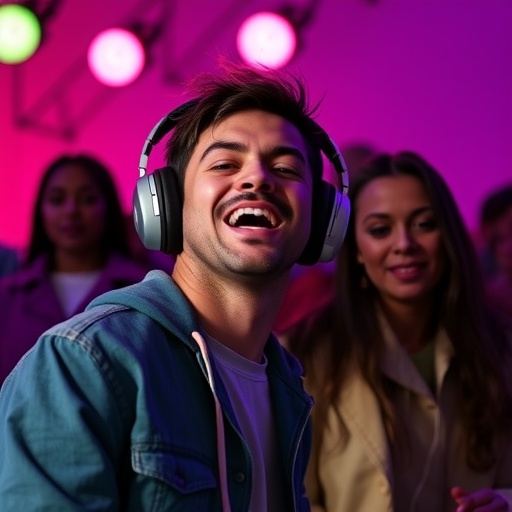
In an era defined by digital innovation and algorithm-driven content, the music industry finds itself at a fascinating crossroads with platforms like TikTok and Spotify reshaping how hits are made and consumed. Unlike traditional media such as radio or MTV, these platforms harness vast troves of user interaction data, translating clicks, shares, and subscriptions into powerful determinants of musical success. A recent groundbreaking study conducted by scholars at the University of California, Davis, alongside collaborators from Renmin University of China, Chinese University of Hong Kong, and Tsinghua University, delves deep into this phenomenon, contrasting how TikTok and Spotify’s distinct business models influence not only which songs top the charts but also the very nature of the music artists create.
TikTok, the forerunner in user-generated short video content with around 1.6 billion monthly active users, thrives on the cultural momentum of clips and remixes. Here, music functions as a dynamic backdrop, inviting creative reinterpretation rather than passive listening. This environment cultivates an affinity for dance-centric tracks, often linked to viral “dance challenges,” where users choreograph specific moves to selected songs. Such trends amplify user engagement, creating a feedback loop wherein the algorithm boosts songs that spur creative content generation, reinforcing their dominance on TikTok’s Top 100 charts.
Spotify, with a user base of approximately 675 million, operates as a primary music distribution channel emphasizing full-length albums and comprehensive metadata, including detailed lyrics. This focus supports listeners’ traditional consumption patterns, whereby individuals engage deeply with entire songs, often favoring genres like pop and hip-hop/rap/trap that resonate broadly with mainstream audiences. The study’s observational analysis of 2020-2022 data reveals that Spotify’s hits are heavily skewed toward relationship-themed lyrics, signaling a nuanced listener preference that reflects cultural narratives consistent with the platform’s longer-form listening experience.
Quantitative findings from the study illuminate stark contrasts between the platforms. TikTok’s two-year Top 100 chart data comprised 321 unique songs, while Spotify’s charts contained an expansive 1,707 tracks. Notably, only 68 songs overlapped during the study period, underscoring divergent hit-making mechanisms. Additionally, songs experienced greater longevity on TikTok’s charts, suggesting a more stable lifecycle underpinned by an ecosystem of repetitive engagement through user-generated videos. In contrast, Spotify’s rapid entry and exit suggest more volatile audience attention spans driven by streaming metrics and playlist rotations.
Underlying these trends are complex algorithmic architectures. TikTok’s recommendation engine prioritizes video completion rates, user engagement signals, and content novelty, permitting rapid viral ascents of tracks that might otherwise remain niche. The platform’s design encourages active participation over passive consumption, which fosters a social context around music, catalyzing the creation of derivative works and proliferating trend cycles. Meanwhile, Spotify’s personalized playlists and curated content leverage metadata-intensive streaming behaviors, optimizing for prolonged listening sessions and subscriber retention, which manifest in a preference for polished, narrative-driven compositions.
The study’s authors emphasize the bidirectional influence between platform algorithms and artistic production. Musicians navigating TikTok’s landscape adapt by crafting hook-laden, rhythmically infectious snippets conducive to visual accompaniment and viral dance trends. On Spotify, artists may prioritize lyrical depth and narrative coherence to captivate audiences committed to longer auditory experiences. This dynamic signals a redefinition of creativity itself, where digital platform logics shape aesthetic choices and production strategies.
Moreover, the research suggests profound implications for the music industry’s power dynamics. Spotify’s dominance by major record labels, as evinced in the higher prevalence of label-backed hits, contrasts with TikTok’s comparatively democratized ecosystem, where independent artists can achieve prominence through organic viral success. This democratization offers a new avenue for creative innovation yet also imposes pressures to conform to algorithmic tastes, potentially constraining artistic diversity in subtle ways.
From a cultural communication perspective, the platforms also influence thematic content. TikTok’s favoring of dance and energetic genres aligns with its social and performative context, whereas Spotify’s aversion to politically charged songs suggests audience preference sensitivities and possible content moderation impacts. These patterns highlight how data-driven curation not only reflects but also shapes cultural dialogues within digital music spaces.
Ultimately, the study foregrounds the transformative role of digital platforms as cultural gatekeepers. By generating and disseminating daily Top 100 hit song charts, TikTok and Spotify make explicit declarations about musical visibility and dominance, which reverberate through the creative ecosystem. The findings contribute critical insights into how algorithmic mediation reconfigures artistic production, audience reception, and the very fabric of popular music in the 21st century.
Reflecting on these insights, UC Davis professor Cuihua (Cindy) Shen articulates the study’s core thesis: “Our research suggests Spotify operates primarily as a distribution conduit for fully realized compositions, whereas TikTok functions as a vibrant space for the creative re-imagination and viral proliferation of musical snippets.” This duality encapsulates the evolving landscape of music consumption where fragmentation and synthesis coexist, each platform cultivating distinctive auditory cultures shaped by unique technological affordances and user interactions.
As digital platforms continue to embed themselves in the daily rhythms of billions worldwide, understanding their influence becomes imperative for artists, industry stakeholders, and cultural theorists alike. This study not only advances academic discourse but also offers practical frameworks for navigating and optimizing music engagement in an increasingly algorithmic age, where the choreography of hits transcends melody and lyrics to encompass data-driven dynamics and participatory creativity.
Subject of Research: People
Article Title: Not available
News Publication Date: March 9, 2026
Web References:
DOI 10.1080/1369118X.2025.2539297
References:
University of California, Davis study published February 27, 2026, in Information, Communication & Society journal.
Image Credits: Not provided.
Keywords: Social sciences, digital platforms, music industry, TikTok, Spotify, algorithmic influence, user-generated content, hit songs, cultural communication


