

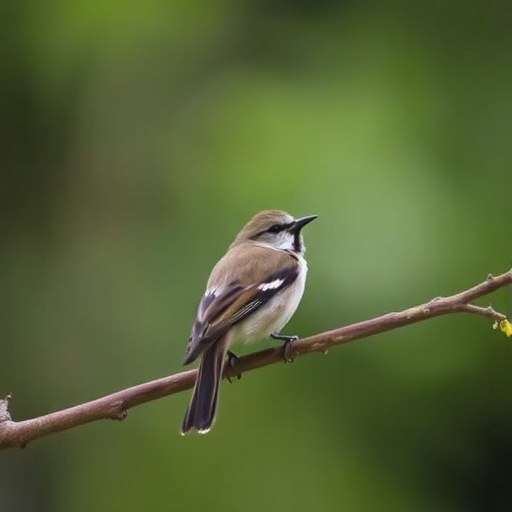
In a groundbreaking study published by a team of researchers led by Arct et al. (2025), significant insights have emerged regarding the impact of weather conditions on avian breeding performance. Utilizing extensive data gathered over a long-term observational period, this study elucidates the intricate interplay between climate variables and the reproductive success of various bird species. Such findings are not merely academic; they resonate with pressing environmental concerns amid rapid climate change, highlighting how shifts in weather patterns may shape avian populations in both immediate and long-term contexts.
The research draws upon comprehensive methodologies to analyze historical breeding data alongside contemporaneous weather records. By examining species-specific responses to varying temperatures, precipitation levels, and extreme weather events, the authors provide a nuanced understanding of how environmental factors influence breeding success. The implications of these findings reach far beyond ornithological interest, as they reflect broader ecological dynamics that could be indicative of future changes in biodiversity.
One notable aspect of the study is its focus on the timing of breeding. The researchers found that fluctuations in temperature often correlate with the timing of egg-laying. Warmer temperatures appear to prompt earlier breeding in many species; however, this shift can have detrimental effects if food availability does not align with these new breeding schedules. Ultimately, a mismatch between reproductive timing and resource availability can lead to decreased chick survival rates, showcasing the fragility of these ecological relationships.
Equally concerning is the impact of extreme weather events, such as droughts or heavy rainfall, which the study highlights as critical factors influencing avian breeding outcomes. These climatic extremes can not only reduce the availability of suitable nesting sites but also compromise the safety and health of the birds themselves. For instance, heavy rainfall can lead to flooding of habitats, while drought can limit food sources, thereby instigating a cascading effect on the reproductive success of birds.
The research team employed advanced statistical models to analyze the interactions between climate variables and breeding success across different bird species. This model-driven approach enabled the scientists to discern complex patterns and associations that would otherwise remain obscured. By integrating data on several environmental factors, the team effectively illustrated that no single determinant dictates breeding performance; rather, it is the cumulative effect of multiple variables that shapes these outcomes.
Additionally, the authors conducted a comparative analysis among various species to identify which birds are most vulnerable to climatic extremes. Their findings indicate that species with specific habitat requirements or those situated at geographical margins exhibit heightened sensitivity to changing weather patterns. As such, conservation efforts may need to prioritize protecting these susceptible populations and their habitats to ensure their ongoing survival amidst increasing climatic uncertainty.
Given the pressing realities of climate change, the implications of this research extend to conservation strategies and policymaking. The ability to predict how weather variations impact avian breeding performance could prove essential for wildlife management and conservation initiatives, especially as global temperatures continue to rise. The authors advocate for the development of adaptive management strategies that take into account the projected climate trends which may affect local avian populations.
Furthermore, the findings distribute a message of urgency regarding our ecological responsibilities. As human activity continues to enhance the greenhouse effect, the subsequent alterations in weather patterns could pose severe risks not just to birds but to entire ecosystems. The study thus calls for increased public awareness and action to mitigate climate change, emphasizing that informed policies can support biodiversity preservation.
The integration of long-term ecological data with contemporary weather observations provides a model of research that can be applied to other taxa as well. Like birds, many animals exhibit reproductive behaviors that can be similarly influenced by climatic variations. This research methodology might inspire broader ecological studies that seek to uncover the impacts of climate on other at-risk species, presenting an opportunity for interdisciplinary collaboration in understanding and addressing these complex challenges.
With the potential for significant public interest, this research raises awareness about the interconnectedness of climate issues and biodiversity conservation. The compelling evidence presented by Arct et al. underlines the importance of empirical research in defining the scope of gray areas between climate change and its ecological ramifications. Through continued investigation and discourse on these topics, there lies the possibility of fostering sustainable practices and fostering resilience in our natural environments.
As we chart a course through the challenges posed by climate change, studies like this serve as a clarion call to action. Scientists and conservationists alike must push for an agenda that prioritizes ecological health while advocating for actionable climate policies. The research on avian breeding and weather dynamics not only enhances our scientific understanding but also evokes a moral imperative to safeguard the planet and its inhabitants against the inevitable impacts of climate change.
In conclusion, the long-term study conducted by Arct et al. spotlights vital correlations between weather conditions and bird reproductive success amid a changing climate. It lays significant groundwork for future research and conservation efforts aimed at understanding and mitigating the effects of climate change on avian species. The findings reverberate through ecological discourse, inviting individuals, communities, and policy makers to consider their roles in fostering shared stewardship of our world and its vibrant avifauna.
Subject of Research: The impact of weather conditions on avian breeding performance.
Article Title: The impact of weather conditions on avian breeding performance: insights from a long-term study.
Article References:
Arct, A., Martyka, R., Miler, K. et al. The impact of weather conditions on avian breeding performance: insights from a long-term study.
Front Zool 22, 23 (2025). https://doi.org/10.1186/s12983-025-00569-z
Image Credits: AI Generated
DOI: https://doi.org/10.1186/s12983-025-00569-z
Keywords: Avian breeding, weather impact, climate change, ecological dynamics, conservation strategies.


