

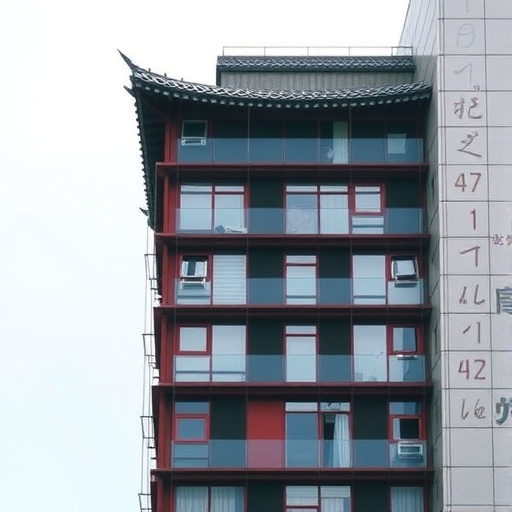
Amidst the dynamic urban fabric of Seoul, a groundbreaking study has emerged, casting light on the intricate relationship between architecture and human perception. This research, led by a team of scholars including C. Valentine, H. Mitcheltree, and I. Hosking, delves into the visual stress patterns evident in architectural façades across various historic time periods. In an era where the aesthetic merit of built environments is scrutinized through both psychological and physiological lenses, this study contributes vitally to our understanding of how human responses to architectural design can affect mental well-being and urban livability.
The foundation of this research rests on the analysis of different architectural styles that have shaped Seoul’s skyline. The city boasts a rich tapestry of historical influences, from traditional Korean Hanok houses to modernist skyscrapers that pierce the clouds. By examining these structures, the researchers sought to measure the visual stress elicited by various façades, identifying how they influence emotional and psychological responses in observers. Prior studies have noted that certain architectural designs can provoke feelings of anxiety, disorientation, or even calmness, revealing a nuanced interplay between structure and sensation.
Utilizing advanced methodologies, the researchers implemented a multi-faceted approach combining visual psychophysics with qualitative assessments. The utilization of eye-tracking technology allowed for precise measurements of how viewers perceived historical buildings as opposed to their contemporary counterparts. This innovative angle provided quantitative data to supplement the emotional and cognitive responses elicited by different architectural elements. Participants were exposed to images of façades ranging widely in styles, and their reactions—both physiological and emotional—were meticulously recorded and analyzed.
The findings revealed nuanced patterns of visual stress closely tied to specific architectural features. For instance, traditional Korean designs often showcased harmonized proportions and natural materials, which correlated positively with reduced visual stress among observers. In stark contrast, the harsher lines and stark contrasts of modernist designs frequently induced higher levels of discomfort and disorientation. This vital information suggests that re-evaluating the design elements integrated into modern architecture could significantly impact societal well-being.
Importantly, the study contextualizes its findings within the broader implications for urban development. As cities expand and evolve, the demand for striking, avant-garde designs often overshadows the need for sensitivity to human perception. Consequently, urban planners and architects must grapple with the dual goals of aesthetic innovation and psychological comfort. This research illuminates a critical nexus: the aesthetic qualities of architecture are not merely functional or decorative; they resonate on a deeper, more primal level with human emotional states.
Equally significant is the historical dimension of the study. By contrasting visual stress patterns over time, the researchers crafted a narrative that speaks to Seoul’s architectural evolution. As cities grapple with rapid modernization, the vestiges of past designs become battlegrounds of aesthetic appreciation and communal identity. The research suggests a reverence for historical styles may rekindle a sense of belonging and cultural pride, offering psychological sustenance in an otherwise fast-paced urban environment.
Moreover, the research implies a burgeoning responsibility for architects and urban designers to foster environments that prioritize human health and wellness. As mental health continues to occupy a central role in public discourse, integrating principles of architectural psychology into design frameworks is not merely advisable; it is essential. The data drawn from this study underscores an urgent call to action for professionals in the field to embrace design philosophies that resonate favorably with user experiences.
In this vein, the study beckons a broader conversation about sustainability in urban design. As climate change manifests more aggressively, cities face pressures not only to create energy-efficient buildings but also to nurture environments that support the psychological well-being of their inhabitants. Incorporating elements that reduce visual stress could potentially lead to healthier cities, improving residents’ overall quality of life and fostering cohesive communities.
As the discourse about urban environments advances, such insightful research serves as an illuminating guide. It not only enriches the existing literature on architecture and human interaction but also offers a template for future investigations. By laying the groundwork for subsequent studies, the team behind this research has positioned itself as a leading voice in architectural psychology, aiming to bridge gaps between cognitive science, design, and urbanism.
In an increasingly globalized world, the findings from this study are globally applicable, resonating with urban planners and architects far beyond Seoul. As cities worldwide wrestle with the implications of rapid urbanization, these insights may revolutionize the approach to architectural design, ensuring that aesthetic consideration includes the psychological impact on citizens. Human experience must remain at the forefront as we contemplate the shape of our cities in the next century.
As urban societies continue to weave complex narratives through their built environments, the quest for balance between beauty, functionality, and emotional resonance beckons. This study not only shines a light on Seoul’s architectural history but also invokes a global reflection on the designs that shape our emotional landscapes. Consequently, the findings advocate for an integrative approach towards urban development that encompasses not just the physical but also the psychological realms, ultimately enhancing the lived experiences of urban dwellers.
In conclusion, the research conducted by Valentine, Mitcheltree, Hosking, and their associates is pivotal in redefining our understanding of architecture’s impact on human senses. As they reveal the intricate links between visual stimuli and psychological state, they lay the groundwork for more mindful urban development. As we move forward, their work challenges us to extend our understanding of beauty and functionality in architecture, merging design with the well-being of all who inhabit these spaces, thus fostering a future that is as aesthetically pleasing as it is psychologically nourishing.
Subject of Research: Visual stress patterns in architectural façades in Seoul across different historic time periods
Article Title: Measuring visual stress patterns in architectural façades in Seoul across different historic time periods
Article References:
Valentine, C., Mitcheltree, H., Hosking, I. et al. Measuring visual stress patterns in architectural façades in Seoul across different historic time periods.
Discov Cities 3, 14 (2026). https://doi.org/10.1007/s44327-025-00167-y
Image Credits: AI Generated
DOI: https://doi.org/10.1007/s44327-025-00167-y
Keywords: Architectural psychology, visual stress, urban design, historical architecture, human perception, Seoul architecture.


