

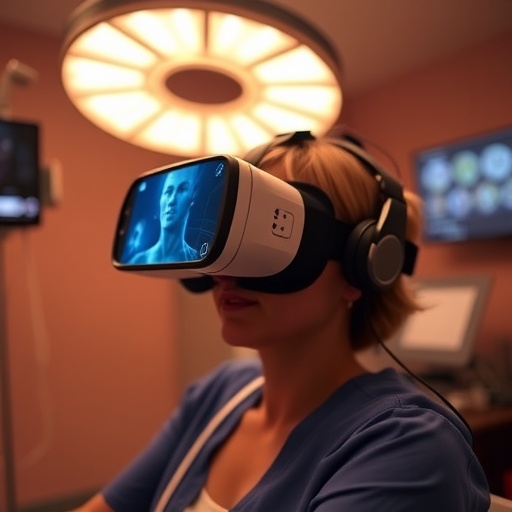
The advent of virtual reality (VR) technology in medical settings is poised to revolutionize patient education and informed consent processes. A pioneering study presented at the European Association of Urology Congress in London (EAU26) demonstrates how immersive VR experiences can significantly enhance patients’ comprehension of medical procedures while simultaneously alleviating pre-procedural anxiety. This innovative approach could reshape how clinicians communicate complex medical information, ultimately enabling patients to make more informed decisions about their healthcare.
Typically, patients receive detailed informational leaflets before consenting to medical interventions. These documents outline the procedure, its risks, and potential benefits. However, the language used in such leaflets often includes complex medical jargon and concepts that exceed the average reading level of many adults. In England, for example, approximately 60% of adults face difficulty understanding complex medical information. This literacy gap impedes patients’ ability to grasp the full scope of treatments, posing ethical challenges around truly informed consent and potentially increasing patient distress and uncertainty.
In response to these challenges, researchers at University Hospital Southampton explored the application of VR as a pedagogical tool integrated into the consent process for shockwave lithotripsy—a common non-invasive technique to treat kidney stones. This procedure utilizes high-intensity sound waves directed at kidney stones to fragment them into smaller pieces that can be naturally excreted. During the VR session, patients are virtually transported into an operating theater, where a meticulously designed 3D simulation presents a detailed step-by-step visualization of the lithotripsy procedure.
The VR experience is highly interactive, allowing patients to explore various perspectives within the virtual operating room. Patients can move around the space freely to examine anatomical structures and surgical instruments, gaining a three-dimensional understanding of the patient’s anatomy and the treatment methodology. Crucially, the simulation visually emphasizes key procedural risks and benefits, enabling patients to contextualize these factors in a way that traditional leaflets cannot replicate.
To assess the impact of VR on patient understanding and anxiety, the study employed pre- and post-experience questionnaires capturing subjective knowledge and emotional states. The findings revealed a compelling enhancement in patients’ comprehension of the shockwave lithotripsy process following their VR exposure. Participants reported feeling more informed and confident about what to expect. Significantly, the VR intervention also produced a measurable decrease in anxiety, with the most pronounced effects observed among older adults aged 65 and above. The reduction in pre-operative apprehension was consistent across genders, underscoring the broad applicability of the VR modality.
The study cohort comprised 150 participants aged between 22 and 80 years, all of whom were undergoing evaluation prior to lithotripsy at University Hospital Southampton. The trial was led by consultant urological surgeons Bhaskar Somani and Amelia Pietropaolo and supported by Surgassists’ director Phoebe Reynolds, who developed the VR technology. Their collaboration represents a synthesis of clinical expertise and cutting-edge medical technology design aimed at patient-centered care innovation.
Understanding the interplay between anxiety, knowledge, and pain perception, the researchers are eager to investigate further whether VR-enabled consent can contribute to improved pain tolerance during procedures. Anxiety is known to amplify pain sensation, and by reducing apprehension before treatment, VR may indirectly enhance patients’ procedural comfort. Future clinical trials will be directed toward validating these hypotheses, potentially expanding VR’s utility beyond education into analgesic adjuncts.
Solomon Bracey, a medical student at the University of Southampton and presenter of the findings at EAU26, emphasized the critical mismatch that currently exists between the complexity of medical information provided to patients and their ability to comprehend it. He highlighted VR’s capacity to augment learning and retention by leveraging immersive, multisensory experiences, thus supporting patients in making genuinely informed healthcare decisions.
Matthew Bultitude, a consultant urological surgeon affiliated with Guy’s and St Thomas’ NHS Foundation Trust and member of the EAU Scientific Congress Office, remarked on the transformative potential of VR in enhancing patient experience during the consent journey. He also stressed that VR should complement rather than replace direct clinician-patient dialogues, ensuring that patients can engage in nuanced discussions and clarify any doubts after building a foundational understanding through VR.
The successful application of VR to the consent process underscores a broader paradigm shift towards integrating digital tools into clinical workflows. By harnessing immersive technologies, healthcare providers can democratize access to complex knowledge, tailoring communication strategies to diverse literacy levels and learning preferences. This shift bears promise for improving healthcare equity by leveling the informational playing field.
Moreover, the adaptability of VR experiences allows potential customization for numerous medical procedures and specialties beyond urology. Interactive, patient-centered visualizations could become integral in preoperative education protocols across surgical disciplines, chronic disease management, and diagnostic pathways, fostering enhanced patient autonomy and satisfaction.
This research sets the stage for an exciting era where VR not only educates but actively engages patients in their own care journeys. As technology continues to evolve, integrating physiological data and real-time feedback could further personalize VR experiences, amplifying their therapeutic value. Ultimately, such innovations herald a future where informed consent transcends documents and verbal explanations to become a deeply immersive, patient-empowering experience.
Subject of Research: People
Article Title: Not provided
News Publication Date: Friday, 13 March 2026
Web References: Not provided
References: Not provided
Image Credits: Phoebe Reynolds Surgassists
Keywords: Informed consent, Virtual reality, Urology, Surgical procedures, Medical treatments, Kidney, Anxiety, Clinical studies, Clinical trials


