

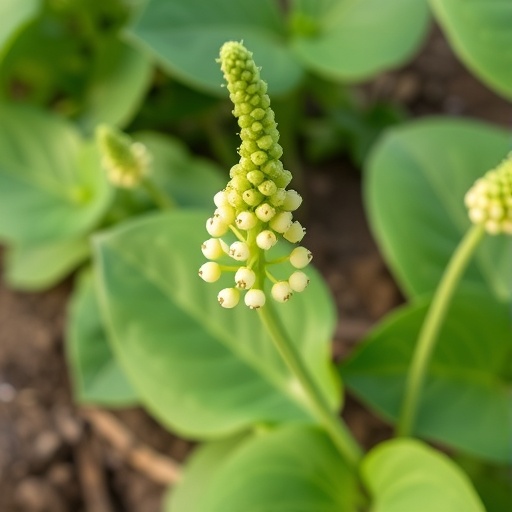
In a remarkable study elucidating the genetic foundations of salt resistance, researchers have achieved a significant milestone through the genome-wide identification and evolutionary analysis of the CLC gene family in Vigna radiata L., commonly known as mung bean. This research holds profound implications for enhancing agricultural resilience, particularly in the context of increasing soil salinity due to climate change and unsustainable farming practices. Mung bean is an essential legume crop valued for its high nutritional content and economic importance, making it a prime candidate for such genetic investigations.
The CLC gene family, known for encoding chloride channels, plays critical roles in various physiological processes in plants, particularly in the modulation of ion transport and homeostasis. This study not only identified the CLC gene family members in the mung bean genome but also provides a detailed analysis of their expression patterns under salt stress conditions. The ability of plants to acclimatize and thrive in saline environments is largely attributed to their efficient ion transport mechanisms, necessitating a closer examination of CLC genes and their functionalities.
The researchers employed advanced genomic techniques to conduct a comprehensive identification of CLC genes within Vigna radiata. By utilizing bioinformatics tools, they characterized the role of these genes and traced their evolutionary history, shedding light on how they have adapted to different environmental challenges. The results revealed a diverse set of CLC genes, each contributing uniquely to the plant’s ability to cope with osmotic stress caused by salt.
Through meticulous expression analysis, the study highlighted that certain CLC genes are significantly upregulated in response to salt stress. This indicates that these genes are not only present but actively engaged in the physiological response to saline conditions. Understanding the expression dynamics of CLC genes under various stress conditions is crucial for developing salt-resistant crop varieties. The findings suggest that enhancing the expression of specific CLC genes could potentially improve plant resilience against saline environments.
Moreover, the evolutionary analysis conducted in this study provided insights into the phylogenetic relationships among CLC gene family members across different species. By comparing the CLC gene sequences from Vigna radiata with those of other legumes and non-legume species, researchers were able to establish a clearer evolutionary trajectory. Such information is invaluable for understanding the adaptation mechanisms plants have evolved in response to environmental stresses, and it may guide future genetic engineering efforts.
The implications of these findings extend beyond the genetic realm, touching upon agricultural practices and food security. With the increasing global threat of soil salinity due to climate change, the integration of salt-resistant traits through molecular techniques could revolutionize crop production. Farmers struggling with saline soils may soon have access to improved mung bean varieties that promise better yields and sustainability.
Furthermore, the research opens up avenues for future studies to explore the interactions between CLC genes and other regulatory networks contributing to salt tolerance. The complexities of plant responses to a multifaceted stress environment necessitate an integrative approach to unraveling the interplay of various genetic factors. Identifying key regulatory pathways could pave the way for breeding programs aimed at enhancing stress resilience in a broader range of crops.
The study’s findings have garnered attention in the scientific community, as they underpin the increasing need for innovative solutions to combat the adverse effects of climate change on agriculture. As researchers delve deeper into the genomic landscapes of various crops, the importance of CLC genes and their contributions to plant stress tolerance will likely take center stage in agricultural biotechnology.
In conclusion, this extensive analysis of the CLC gene family in Vigna radiata not only enhances our understanding of genetic mechanisms involved in salt resistance but also sets the foundation for future endeavors aimed at improving crop resilience. The fusion of genetic research with practical agricultural applications underscores the relevance of such studies in addressing global food security challenges.
As we continue to face imminent environmental changes, the quest for plant resilience through genetic research will remain a priority. The insights garnered from this research could lead to breakthroughs that ensure sustainable agricultural practices, essential for feeding a growing global population in the face of adversity.
In summary, the nexus of genetic understanding and practical application in this study is a testament to the escalating importance of plant genomics in advancing agricultural science. As we forge ahead, supporting research initiatives focusing on crop adaptation mechanisms is imperative for safeguarding our agricultural futures.
Ultimately, the commitment to harnessing scientific knowledge for agricultural advancement will define our ability to respond to pressing environmental challenges. This study represents a crucial step in that direction, illuminating the path towards resilience through genetic innovation in crop science.
Subject of Research: CLC gene family and its role in salt resistance in Vigna radiata.
Article Title: Genome-wide identification, expression and evolutionary analysis of the CLC gene family in Vigna radiata L. reveals its roles in salt resistance.
Article References:
Talakayala, A., Divya, D., Kirti, P.B. et al. Genome-wide identification, expression and evolutionary analysis of the CLC gene family in Vigna radiata L. reveals its roles in salt resistance.
BMC Genomics (2025). https://doi.org/10.1186/s12864-025-12377-0
Image Credits: AI Generated
DOI: 10.1186/s12864-025-12377-0
Keywords: CLC gene family, Vigna radiata, salt resistance, genome-wide analysis, expression patterns, evolutionary analysis, climate change, crop resilience.


