

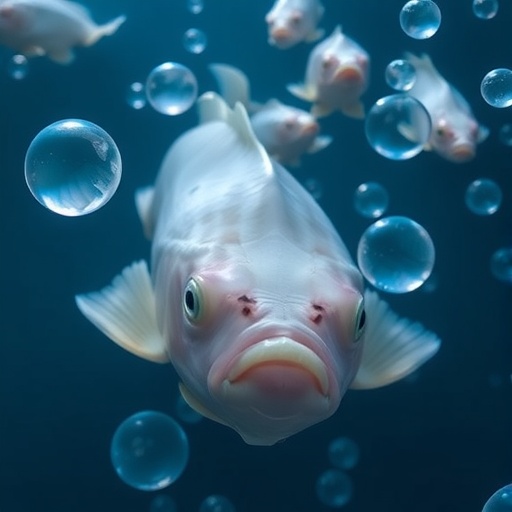
In an unprecedented exploration of the valorization of fish scale waste, a team of researchers led by Matiyal et al. has unveiled a groundbreaking methodology to extract high-value biomaterials from fish. Their study, published in the journal Waste Biomass Valorization, meticulously compares the efficiency of acid and pepsin solubilization methods for isolating Type I collagen from three different species of carp. This innovative research not only addresses environmental concerns surrounding fish scale disposal but also opens doors to potential applications in various industries, including biomedicine, cosmetics, and food technology.
The investigation highlights the alarming scale of food waste, specifically the byproducts generated from fish processing. Recent statistics indicate that millions of tons of fish waste are produced globally each year, with fish scales constituting a significant portion. Traditionally discarded as a waste product, these scales are now recognized as a viable source of collagen, a protein with numerous applications, thanks to Matiyal and her colleagues’ pioneering work. By utilizing waste materials, this research aligns with the principles of sustainability and circular economy, offering a pathway for the reuse of fisheries byproducts.
Matiyal and her team undertook a comprehensive study focusing on three specific carp species: the common carp (Cyprinus carpio), the grass carp (Ctenopharyngodon idella), and the silver carp (Hypophthalmichthys molitrix). These species were selected due to their prevalence in fish farming and their potential to produce substantial amounts of scales as a byproduct. The researchers implemented both acid and pepsin solubilization methods to extract Type I collagen, assessing the yield and quality of the collagen obtained from each species.
The acid solubilization method employed involved a systematic process wherein the scales were treated with specific concentrations of acid, which effectively denatured the collagen fibers and liberated the soluble collagen. This method, while effective, required careful optimization to ensure that the structural integrity of the collagen was maintained, as excessive exposure to acids could result in degradation.
Conversely, the pepsin solubilization method capitalizes on the enzymatic action of pepsin, a proteolytic enzyme that facilitates the breakdown of protein structures. This approach has garnered attention for its ability to yield higher-quality collagen with desirable properties for biotechnological applications. The researchers meticulously compared the performances of both methods, concluding that, depending on the species, one method might outshine the other in terms of yield and functional attributes of the collagen produced.
Among the results, it was noted that the common carp exhibited the highest collagen yield when subjected to the acid solubilization method, whereas the silver carp showed significantly favorable outcomes with pepsin. Such findings illuminate the varied properties of collagen sourced from different fish species, emphasizing the importance of considering species-specific characteristics when developing extraction methodologies.
The implications of this research extend far beyond mere waste management. Collagen is a critical biomaterial utilized in a myriad of applications ranging from wound healing and tissue engineering to cosmetic formulations and even food products. The potential to produce high-quality collagen from fish scales could reduce the reliance on mammalian sources of collagen, which often raises ethical and sustainability concerns.
Moreover, the study opens the door for further innovations in fish scale valorization. Given that fish scales are rich in collagen, their utility could be expanded into biomaterials for medical devices, packaging, and even biodegradable plastics. The research underscores the need for a paradigm shift in how we perceive waste materials, particularly from the fisheries sector, advocating for a more innovative approach to harness their latent value.
The team’s findings resonate with the global movement towards sustainability and resource efficiency. As the world grapples with the challenges of food waste and environmental degradation, initiatives like this highlight the critical role of scientific research in uncovering unconventional solutions. By promoting the idea that waste can be transformed into valuable bioproducts, the study encourages further exploration into the valorization of other underutilized byproducts from different sectors.
In conclusion, the work by Matiyal et al. serves as a pivotal step toward optimizing fish scale waste management while simultaneously addressing the growing demand for sustainable biomaterials. The meticulous comparative analysis offers valuable insights into the best methodologies for collagen extraction, ultimately paving the way for an innovative future where waste transforms into wealth.
This research is not merely an academic exercise; it has real-world ramifications that could reshape industries and lead to more sustainable practices in bioproduct development and waste management. The potential for scaling this research into commercial applications is vast, driving interest from entrepreneurs and businesses looking to incorporate sustainability into their operational frameworks.
By leveraging the principles of circular economy, this study could inspire similar research across other food waste sectors, encouraging a more holistic approach to how we handle byproducts in various industries. As the research community and industry stakeholders continue to collaborate, the effective valorization of fish scales may very well transition from a niche endeavor to a key player in the realm of sustainable biomaterials.
In summary, the insights and methodologies developed from this study may soon find application across multiple sectors, amplifying its impact and relevance in a world increasingly focused on sustainability and responsible resource management.
Subject of Research: Valorization of fish scale waste for collagen extraction.
Article Title: Fish Scale Waste Valorization for High-Value Biomaterial: Comparative Analysis of Type I Collagen from Three Carp Species by Acid and Pepsin Solubilization Methods.
Article References:
Matiyal, B., Dalal, R., Jamal, A. et al. Fish Scale Waste Valorization for High-Value Biomaterial: Comparative Analysis of Type I Collagen from Three Carp Species by Acid and Pepsin Solubilization Methods.
Waste Biomass Valor (2025). https://doi.org/10.1007/s12649-025-03416-8
Image Credits: AI Generated
DOI: https://doi.org/10.1007/s12649-025-03416-8
Keywords: fish scale waste, collagen extraction, sustainability, biomaterials, circular economy.


