

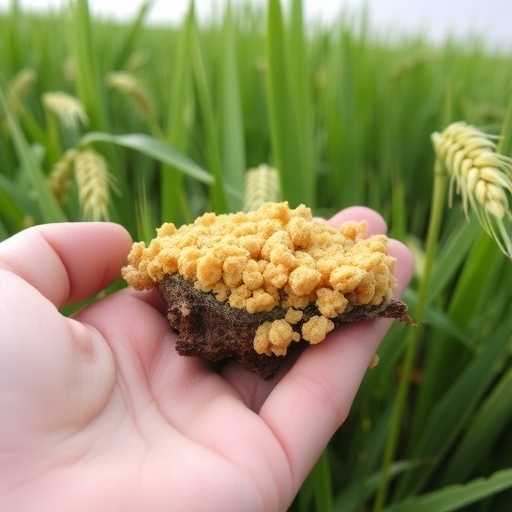
In the ever-evolving field of agricultural science, the focus on sustainable practices has garnered much attention in recent years. Among these, soil health management is paramount, particularly given the increasing threats posed by soil-borne pathogens in crops such as wheat. With the rising costs and environmental concerns related to synthetic pesticides, researchers are now turning to biological control agents that promise effective alternatives. A recent study by Meel and Saharan sheds light on the role of phenazine-producing rhizobacteria in combating these pathogenic threats, paving the way for more sustainable agricultural practices.
In their research, Meel and Saharan delve into the unique properties of phenazine, a bioactive compound produced by certain soil bacteria, which has shown to exhibit strong antimicrobial activity. The study thoroughly characterizes these bacteria, examining their potential to not only suppress pathogens but also to enhance plant health. This dual functionality boosts the resilience of wheat crops, making them better equipped to withstand various stressors. Such findings underscore the importance of microorganisms in maintaining soil health and promoting sustainable agriculture.
The methodology employed in this study is equally fascinating. Meel and Saharan utilized Thin Layer Chromatography (TLC) and High-Performance Liquid Chromatography (HPLC) to analyze and validate the phenazine compounds produced by the rhizobacteria. TLC allows for the qualitative assessment of these compounds, while HPLC provides quantitative data that can be critical for evaluating their effectiveness. This meticulous approach illustrates the rigorous scientific standards employed in their investigation, ensuring the reliability of their findings.
The study revealed that the phenazine-producing rhizobacteria can significantly mitigate the incidence of soil-borne pathogens, such as Fusarium and Rhizoctonia. These pathogens are notorious for causing severe damage to wheat crops, leading to substantial economic losses for farmers. By using the identified rhizobacteria as a biological control strategy, the reliance on chemical pesticides can be significantly reduced, aligning with global efforts towards sustainable agriculture. This shift not only benefits the environment but also contributes to food security amidst a growing population.
Furthermore, the implications of this research extend beyond merely protecting wheat. The principles established through this study can be applied to other crops vulnerable to similar pathogens, offering a versatile framework for developing sustainable management practices across diverse agricultural landscapes. The adaptability of these phenomena is crucial in an age where climate variability is making agriculture increasingly unpredictable.
As the study establishes the efficacy of these phenazine-producing rhizobacteria, it raises an essential point regarding the need to utilize native microbial diversity for agricultural benefits. Many farmers inadvertently disrupt these beneficial microorganisms through conventional farming practices that emphasize chemical inputs. This research advocates for a paradigm shift, encouraging practices that promote the growth of beneficial microbes in the soil.
In addition to biological control, the study highlights the importance of comprehensive soil health management. Healthy soils are rich in microbial diversity, and fostering this biodiversity can create a resilient ecosystem that naturally supports plant health. As we re-evaluate our relationship with the soil, leveraging its innate power through biological means could become a cornerstone of future agricultural practices.
Economic considerations also play a pivotal role in adopting such sustainable practices. The initial investment in nurturing beneficial rhizobacteria and shifting farming practices may seem daunting. However, the long-term benefits, including reduced pesticide costs and higher yield resilience, can lead to substantial economic savings for farmers. By aligning economic incentives with sustainable methodologies, agriculture can move towards a more equitable model that benefits all stakeholders.
The burgeoning field of microbiome research also opens exciting avenues for future studies. Understanding the complex interactions between phenazine-producing rhizobacteria and plant ecosystems can help refine these sustainable practices. As science continues to uncover the depths of microbial communication and cooperation in soil, agriculturists can benefit from innovative solutions that enhance crop performance and resilience.
Additionally, the societal implications of validating and championing sustainable agriculture cannot be overlooked. With growing awareness of climate change and its impacts on food systems, adopting practices that prioritize ecological balance is imperative. The findings of Meel and Saharan not only contribute to scientific knowledge but also resonate with broader movements advocating for conscious consumption and responsible production.
In summary, the research conducted by Meel and Saharan represents a significant step forward in agricultural science. By highlighting the role of phenazine-producing rhizobacteria, this study not only contributes valuable insights into soil health management but also reaffirms the potential of microbiological approaches in sustainable farming. The potential to combat pathogens while bolstering crop resilience could revolutionize agricultural paradigms, urging a transition towards more environmentally friendly and economically viable practices.
As we stand on the brink of agricultural transformation, the integration of these microbial strategies may well provide the key to sustainable agricultural futures. With continued research and commitment, we can envision a world where crops thrive without the heavy reliance on chemical inputs, fostering an agricultural landscape that is as resilient and diverse as the ecosystems it engages with.
In essence, this research illuminates a pathway forward—a journey that intertwines scientific discovery with a commitment to sustainability, echoing the urgent call for innovation in the face of climate change and food insecurity. The future of wheat production—and potentially many other crops—may very well depend on the insights gleaned from the microscopic world beneath our feet.
Subject of Research: Characterization and analytical validation of phenazine producing rhizobacteria for sustainable control of soil borne pathogens in wheat.
Article Title: Characterization and analytical validation of phenazine producing rhizobacteria for sustainable control of soil borne pathogens in wheat using TLC and HPLC based approaches.
Article References:
Meel, S., Saharan, B.S. Characterization and analytical validation of phenazine producing rhizobacteria for sustainable control of soil borne pathogens in wheat using TLC and HPLC based approaches.
Discov. Plants 3, 17 (2026). https://doi.org/10.1007/s44372-026-00479-2
Image Credits: AI Generated
DOI: https://doi.org/10.1007/s44372-026-00479-2
Keywords: soil health, phenazine, rhizobacteria, sustainable agriculture, biological control, wheat, microbial diversity, climate change, food security, agricultural practices.


