

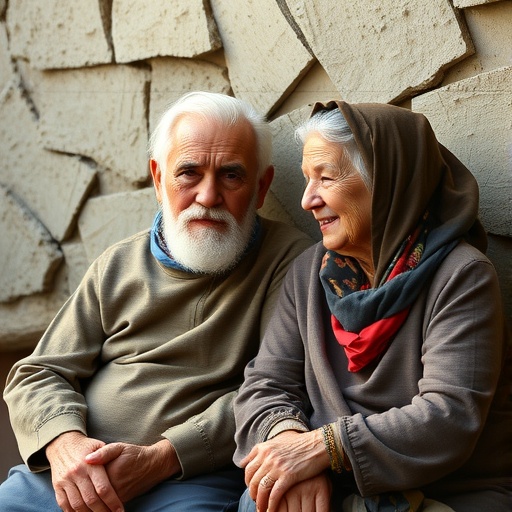
In a groundbreaking advancement in the field of gerontological psychology, a recent study spearheaded by Maryam Yousefi Afrashteh unveils the development and validation of a novel assessment tool designed to quantify everyday ageism among older adults in Iran. This pioneering research, published in BMC Psychology, offers a meticulous psychometric evaluation of the Everyday Ageism Scale tailored specifically for the Iranian elderly population, addressing cultural nuances and contextual factors unique to this demographic. As global populations age dramatically, understanding and quantifying the subtle, pervasive experiences of ageism has become paramount for developing interventions aimed at enhancing well-being and social integration among seniors.
Everyday ageism, defined as the routine, often normalized discriminatory behaviors and attitudes encountered by older adults, has historically been overlooked in many cultural contexts, particularly within Middle Eastern societies. The meticulous validation process undertaken by Yousefi Afrashteh’s research rigorously examines the scale’s reliability and validity through a comprehensive quantitative study involving a representative sample of Iranian older adults. This approach not only bridges a significant gap in the literature where culturally sensitive measures are scarce but also offers insights into the psychosocial dimensions of aging in a non-Western context. Such validation is critical; without culturally adapted tools, assessments can yield misleading conclusions, hampering efforts to combat ageism and its detrimental effects.
The study leverages advanced statistical methodologies, including exploratory and confirmatory factor analyses, to dissect the underlying dimensions of everyday ageism as experienced by participants. The multifaceted nature of the scale captures subtle forms of bias, ranging from social exclusion and dismissiveness to more overt expressions of discrimination in daily interactions. This fine-grained analysis demonstrates the scale’s robustness, confirming that it adequately represents the latent constructs it purports to measure. Importantly, the research delves into measurement invariance across gender and educational subgroups, reinforcing the tool’s applicability across diverse segments of the Iranian elderly population.
Moreover, Yousefi Afrashteh’s work elucidates the psychological impact of everyday ageism on older adults, correlating experiences of discrimination with mental health indicators such as depression, anxiety, and overall life satisfaction. The research reveals nuanced patterns in how these everyday encounters with age-based bias can compound to erode psychological resilience, highlighting the critical need for public health initiatives that recognize and address ageism as a social determinant of health. Beyond mere validation, the study’s implications resonate deeply within clinical practice, policy development, and community programming aimed at fostering age-inclusive environments.
In parallel, the research methodology integrates culturally sensitive translation procedures that ensure semantic equivalence of the ageism scale from its original language into Persian. This meticulous process involved forward and backward translation by bilingual experts and pilot testing within small focus groups before large-scale administration. Such rigorous cross-cultural adaptation safeguards the scale’s linguistic and conceptual integrity, a cornerstone for valid data collection in cross-national psychological research. This attention to detail underscores the importance of respecting cultural context when applying psychological instruments developed in different cultural milieus.
One of the notable strengths of this study lies in its sample design, encompassing a broad age range of older adults living in diverse urban and rural settings across Iran. This breadth allows for a more generalizable understanding of how everyday ageism manifests in varying social and environmental contexts within the country. The inclusion of participants with different socioeconomic statuses, educational levels, and family structures contributes to a more inclusive portrayal of the elderly experience, ensuring that the validated scale will be useful for researchers and practitioners addressing ageism in multifaceted ways.
The Everyday Ageism Scale validated by this research moves beyond the simplistic notion of overt discrimination, acknowledging that ageism frequently operates through subtle mechanisms such as microaggressions, patronizing language, and implicit biases that may escape awareness both by perpetrators and victims. By capturing these covert expressions, the instrument enables a richer exploration of the psychological and social processes that sustain ageism in everyday life. Consequently, this scale provides a powerful tool for future research aiming to identify risk and protective factors associated with age-based prejudice, as well as evaluating the effectiveness of interventions designed to mitigate its effects.
Furthermore, this study contributes to a growing recognition of the intersectionality of ageism with other social identities such as gender, education, and socioeconomic status. The findings suggest that experiences of everyday ageism do not occur in isolation but are interwoven with broader patterns of social inequality and marginalization. Analyzing these intersections allows for a more comprehensive understanding of the lived realities of older adults, which is indispensable for crafting nuanced, equitable policies and programs. This approach aligns with contemporary movements toward intersectional frameworks in social science research.
Another critical dimension explored in the research is the potential for everyday ageism to influence older adults’ engagement with health services and social support networks. Negative experiences of bias can deter older adults from seeking timely medical care or participating in community activities, exacerbating isolation and health disparities. The validated scale thus serves as a diagnostic tool that can inform healthcare providers and social workers about the prevalence and intensity of ageist encounters, enabling targeted efforts to create more welcoming and respectful environments for seniors. This application underscores the translational value of the research from psychometric validation to real-world impact.
The broader significance of validating the Everyday Ageism Scale in the Iranian context lies in its potential to catalyze cross-cultural comparisons and global dialogues about ageism. Given the demographic shifts occurring worldwide and the universal challenge of combating age-based discrimination, culturally appropriate measurement tools are vital for aggregating data internationally and benchmarking progress. By establishing a reliable and valid metric in Iran, this research contributes to assembling a global mosaic of ageism experiences, each shaped by unique sociocultural factors but connected through common challenges posed by aging populations.
The extensive psychometric evaluation conducted signals a robust forward stride in methodologies employed to study social prejudices among the elderly. Beyond confirmatory factor analysis, the researchers employed internal consistency metrics like Cronbach’s alpha and composite reliability indices, verifying the scale’s stability and coherence. The rigorous statistical validation conforms to best practices in psychometrics, fostering confidence in the scale’s deployment among researchers, clinicians, and policymakers. Ultimately, such methodological rigor is indispensable for advancing evidence-based approaches targeting ageism reduction.
Importantly, the Everyday Ageism Scale’s validation also opens avenues for longitudinal research exploring how ageism might evolve over time, particularly as societies transition through phases of rapid demographic aging and cultural transformation. By providing a stable baseline measure, future studies can track trends in ageism prevalence and intensity, correlating these with policy changes, public awareness campaigns, or shifts in social attitudes. Such temporal insights will be critical for evaluating societal progress toward more age-inclusive norms.
From a sociological standpoint, this research urges a reevaluation of societal narratives around aging in Iran, pushing back against entrenched stereotypes and cultural scripts that implicitly condone ageist behaviors. The validated scale empowers researchers to quantify and challenge these narratives empirically, potentially influencing mass media, educational programming, and public discourse. Changes in narrative can reshape societal attitudes, reducing stigma and fostering a culture of respect and inclusion for older generations.
In conclusion, Yousefi Afrashteh’s meticulous validation of the Everyday Ageism Scale in Iranian older adults represents a landmark contribution to the gerontological field and social psychology. By combining cultural sensitivity with rigorous scientific methodology, this study furnishes a critical instrument to illuminate and combat the often invisible but harmful phenomenon of everyday ageism. As the global population continues to age, such tools and the knowledge they generate will be indispensable in crafting societies that dignify and empower older adults, enhancing their mental health, social participation, and overall quality of life.
Subject of Research: Validation of a culturally sensitive measurement tool for everyday ageism among Iranian older adults.
Article Title: Validation of the everyday ageism scale in Iranian older adults.
Article References:
Yousefi Afrashteh, M. Validation of the everyday ageism scale in Iranian older adults. BMC Psychol 13, 1323 (2025). https://doi.org/10.1186/s40359-025-03660-6
Image Credits: AI Generated


