

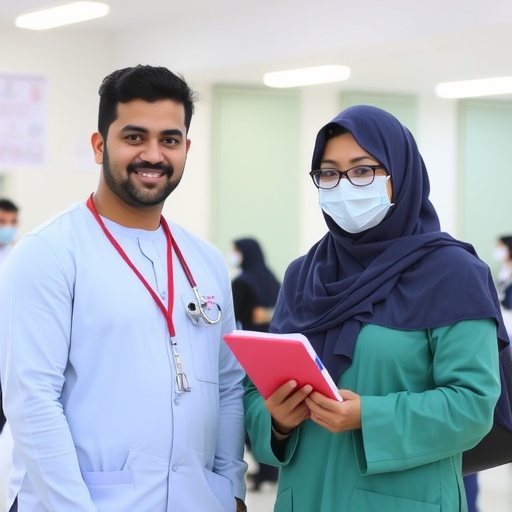
In recent years, the significance of patient-centered care in medical education has gained tremendous traction, particularly in regions like the Middle East, where healthcare systems are evolving. A groundbreaking study conducted by a team of researchers in Bahrain has taken a pivotal step forward by rigorously assessing the level of patient-centeredness among medical students. This study, titled “Assessing patient-centeredness among medical students in Bahrain: the Arabic translation and validation of the Patient-Practitioner Orientation Scale (PPOS),” explores the intricacies of patient care through the lens of culturally nuanced tools.
The research team, comprising Mohamed K.G., Almarabheh A., and Haiba A.M., recognized the necessity of evaluating healthcare education through the framework of cultural context. With Bahraini medical students at the focus, their goal was to understand how well the principles of patient-centered care were being integrated into their educational experience. The cornerstone of their investigation was the Patient-Practitioner Orientation Scale (PPOS), a validated tool designed to assess patient-centeredness and facilitate understanding of how patients view their interaction with healthcare providers.
To achieve the objectives of their study, the researchers embarked on an extensive validation process aimed at ensuring the Arabic translation of the PPOS accurately reflected the original scale’s dimensions. This involved a meticulous procedure of cross-cultural adaptation, critical for achieving reliability and validity in the local context. Validating the PPOS in Arabic was not simply a matter of translation; it necessitated careful consideration of cultural nuances that influence communication patterns between patients and practitioners in Bahrain.
The study employed a quantitative approach, gathering data from a significant sample of Bahraini medical students. By utilizing the validated Arabic version of the PPOS, the researchers gathered insights into the students’ perceptions of patient care. These perceptions were captured through a series of structured questionnaires, allowing for robust statistical analysis. The results yielded crucial insights regarding the level of patient-centeredness among the students, shedding light on their understanding and application of patient-oriented practices.
A striking finding from the study was the correlation between the students’ educational background and their overall orientation towards patient-centered care. Those exposed to a curriculum emphasizing empathy, communication skills, and patient engagement exhibited higher scores on the PPOS scale. This observation underscores the necessity for medical schools in Bahrain to enhance their curricula with components that foster a deeper understanding of patient-centered care methodologies.
Moreover, the researchers went further to identify potential demographic factors influencing patient-centeredness scores. Factors such as gender, age, and year of study provided intriguing insights into how students from varying backgrounds approached patient interactions. For instance, female students exhibited a greater inclination towards patient-centered practices compared to their male counterparts, suggesting the need for gender-sensitive approaches in medical education.
The implications of this study are profound, leading the way for educational leaders to rethink how medical training is delivered. The results call for a paradigm shift where patient-centeredness is not merely an abstract ideal but integral to the fabric of medical education. This aligns with global healthcare trends that emphasize the importance of placing patients at the center of their own care.
In addition, the researchers proposed a series of recommendations based on the findings. These include developing workshops specifically targeting communication skills, increasing exposure to real-world patient interactions early in the medical curriculum, and fostering an environment where empathy in healthcare practices can flourish. Such initiatives could potentially bridge the existing gaps between theoretical knowledge and practical application, ensuring future practitioners are well-equipped to provide compassionate and personalized care.
This research not only contributes significantly to the field of medical education but also emphasizes the growing importance of culturally sensitive healthcare approaches. As Bahrain continues to develop its healthcare system, equipping medical students with the skills to navigate diverse patient interactions will undoubtedly result in higher satisfaction rates and better health outcomes across the board.
The Jordanian and Bahraini healthcare landscapes present unique challenges and opportunities, as many Arab countries grapple with issues of access, quality, and patient engagement. Collaborative studies and exchanges of knowledge among regional medical institutions could further enhance the caliber of education provided to medical students. By sharing insights derived from such studies, a collective progress in patient-centered care can be achieved, addressing regional healthcare disparities.
Final recommendations include the establishment of continuous feedback mechanisms from patients and healthcare practitioners alike. This feedback can aid in dynamic curricular adjustments, empowering educators to refine their teaching methods and ultimately generate healthcare professionals who are not only technically adept but also skilled in the art of compassionate care.
In conclusion, the study conducted by Mohamed K.G., Almarabheh A., and Haiba A.M. marks a significant milestone in advancing patient-centered education in Bahrain. By validating the Arabic translation of the PPOS, they have opened the door for future research aimed at enhancing medical training across the Arab world, ensuring that future healthcare providers can deliver care that resonates with the cultural values and expectations of their patients. As the global healthcare landscape evolves, studies like these are vital for establishing robust foundations for future medical practices.
Subject of Research: Patient-centeredness among medical students in Bahrain
Article Title: Assessing patient-centeredness among medical students in Bahrain: the Arabic translation and validation of the Patient-Practitioner Orientation Scale (PPOS)
Article References: Mohamed, K.G., Almarabheh, A., Haiba, A.M. et al. Assessing patient-centeredness among medical students in Bahrain: the Arabic translation and validation of the Patient-Practitioner Orientation Scale (PPOS). BMC Med Educ 25, 1737 (2025). https://doi.org/10.1186/s12909-025-08304-2
Image Credits: AI Generated
DOI: https://doi.org/10.1186/s12909-025-08304-2
Keywords: Patient-centered care, medical education, Bahrain, cultural sensitivity, PPOS, patient engagement, healthcare outcomes.


