

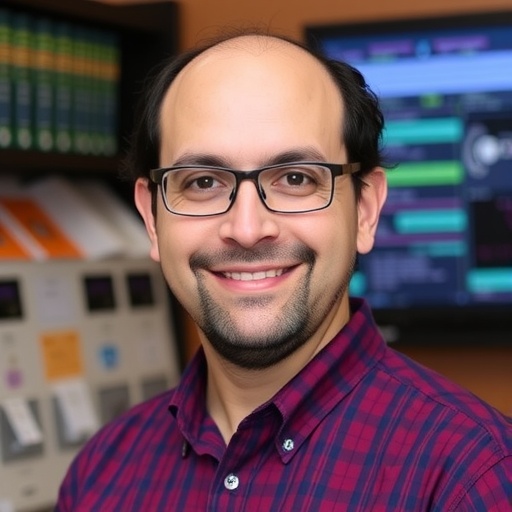
Dennis Lal, a globally renowned genomic scientist and innovator in health informatics, has recently joined The University of Texas at Arlington (UTA) as a professor and the executive director of the newly established Center for Innovation in Health Informatics (CIHI). In his groundbreaking role, Lal is set to spearhead initiatives that integrate health care-scale informatics, precision health, and clinical artificial intelligence (AI) technologies, fundamentally transforming the way health data is leveraged for clinical and research advancements.
Currently an executive scientist at Cook Children’s Pediatric Precision Health Program, Lal’s appointment at UTA strengthens vibrant research collaborations between these institutions, fostering a unique synergy that bridges clinical practice and cutting-edge data science. His vision encompasses building an end-to-end precision health ecosystem, where genomics, informatics, and direct patient care converge at an unprecedented scale. This approach promises not only to enhance discovery but more importantly, revolutionize patient outcomes.
Lal, who has previously served as director of the Center for Neurogenetics at UTHealth Houston, describes himself as an “unconventional” researcher. Rather than adhering strictly to traditional study designs, he embraces creative, flexible methodologies aimed at tackling the multifaceted challenges emerging from today’s data-rich research environment. His primary scientific mission is to shorten or even end the “diagnostic odyssey”—the often years-long journey families endure while seeking accurate genetic diagnoses.
His pioneering work has substantially advanced understanding of brain disorders through extensive genomic research, focusing especially on epilepsy and related neurodevelopmental conditions. Utilizing sophisticated genomic technologies, Lal has driven initiatives that translate molecular and genetic discoveries directly into clinical care frameworks. He established nationally recognized specialty clinics devoted to precision medicine for rare genetic epilepsies, providing tailored diagnostic and therapeutic strategies grounded in cutting-edge genomics.
One particularly transformative development led by Lal was the creation of the first nationwide telemedicine program devoted to precision genetic counseling in epilepsy care. This initiative dramatically improves access to expert genomic interpretation, overcoming geographic and socioeconomic barriers. By deploying telehealth platforms linked with advanced genomic analytics, patients regardless of location can receive state-of-the-art counseling and clinical insights.
Throughout his illustrious career, Lal has actively contributed to major genomics consortia, collaborating with multidisciplinary teams globally to map complex genetic architectures. His expertise has also been sought by foundations dedicated to families affected by rare epilepsies, offering strategic guidance shaped by his comprehensive understanding of genomics and clinical application, ensuring that research translates into tangible patient benefits.
The scientific scope of Lal’s research is notably broad, encompassing identification of epilepsy-associated genes, characterization of copy-number variations linked to neurological disorders, and examination of somatic mutations within human brain tissues. Additionally, his work advances understanding of polygenic risk factors that influence susceptibility and disease progression, reflecting an embracing of complex genetic models beyond monogenic paradigms.
To support clinical and research communities, Lal and his team have developed a suite of computational tools and online resources designed to enhance variant interpretation and support clinical decision-making. These digital assets utilize machine learning and bioinformatics to evaluate the pathogenicity of genetic variants, thereby optimizing how genomic data informs patient management and therapeutic choices.
At UTA’s Center for Innovation in Health Informatics, Lal takes the helm following Marion Ball, a venerated figure in health informatics whose legacy includes both pioneering scholarship and recognition such as the Marion Ball Leadership Award by the International Medical Informatics Association. Lal’s leadership is anticipated to propel CIHI into new domains, emphasizing the seamless integration of enabling technologies into healthcare delivery, research, and education.
Marion Ball herself expressed enthusiastic confidence in Lal’s capacity, highlighting that CIHI’s solid foundation is poised for expansion under his guidance. The focus will remain on harnessing technological innovations to meet practical health care demands, simultaneously educating the next generation of informatics professionals while conducting transformative research that converts complex health data into actionable knowledge.
Since commencing his role on January 26, Lal has initiated programs aimed at furthering precision health by aligning computational ingenuity with clinical imperatives. His vision aligns perfectly with the ongoing digital transformation sweeping across healthcare systems, where big data, genomics, and AI converge to personalize medicine at a population scale.
Lal’s appointment underscores a broader paradigm shift in medical research and health care, where interdisciplinarity, technology integration, and patient-centric models become dominant drivers of innovation. His approach heralds an era where genomic insights no longer remain isolated in research journals but actively shape personalized interventions, accelerating diagnosis, guiding therapy, and ultimately improving quality of life for patients with complex neurological disorders.
In summary, Dennis Lal’s leadership at UTA’s Center for Innovation in Health Informatics marks a seminal moment for health informatics and genomic medicine. His creative, data-driven strategies promise to dismantle barriers in rare disease diagnosis and treatment, rendering previously elusive conditions more understandable and manageable. As he forges advances at the intersection of informatics, genomics, and clinical care, Lal is poised to redefine patient-centered health innovation in the 21st century.
Subject of Research: Genomic medicine, health informatics, precision health, and clinical AI initiatives for neurological disorders, particularly epilepsy.
Article Title: Dennis Lal to Lead UT Arlington’s Center for Innovation in Health Informatics, Advancing Precision Health and Clinical AI
News Publication Date: January 26, 2024
Web References: https://mediasvc.eurekalert.org/Api/v1/Multimedia/e91151e9-dba9-4cf2-b37b-6bc574315a50/Rendition/low-res/Content/Public
Image Credits: UT Arlington
Keywords
Epilepsy, Information science, Data sets, Data storage, Informatics, Genomics, Genome mapping, Pediatrics, Health and medicine


