

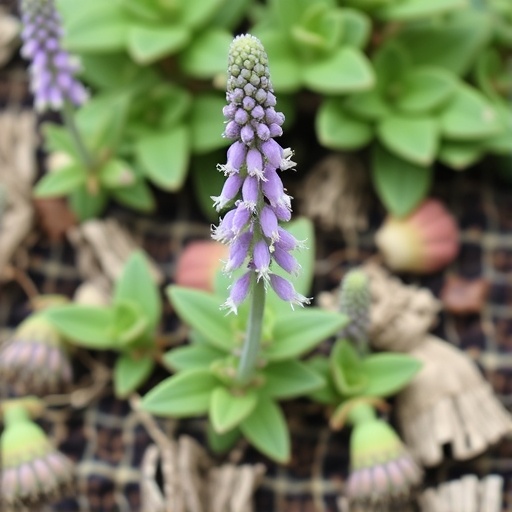
In the heart of the rapidly urbanizing Mexico Valley lies a remarkable wild plant, Gnaphalium lavandulifolium, which has recently gained attention for its potential role in biomonitoring environmental heavy metals. This hardy plant, known for its resilience, is not merely an aesthetic addition to the landscape; it is now being viewed as a crucial component in the ongoing struggle against pollution. Researchers have posited that this species can serve as a sentinel for assessing the heavy metal contamination levels within urban ecosystems, marking a significant advancement in environmental monitoring and risk assessment.
Heavy metals, such as lead, cadmium, and mercury, are a pressing concern in urban areas due to industrial discharges, vehicular emissions, and improper waste management. As these metals accumulate in the environment, they pose serious health risks to both human and ecological systems. The ability to monitor their levels is thus vital, and that’s where Gnaphalium lavandulifolium comes into play. This plant has shown a unique capacity to absorb and concentrate heavy metals from the soil, making it an ideal candidate for use in phytoremediation efforts.
The researchers behind this study, including Cortés‑Eslava and Gómez‑Arroyo, have documented their findings in detail. Their work emphasizes the plant’s ecological significance in urban settings, specifically within the metropolitan area of Mexico Valley, where pollution levels are alarmingly high. Their ongoing research focuses on the mechanisms by which Gnaphalium lavandulifolium interacts with heavy metals, aiming to elucidate how this plant can not only survive but thrive in contaminated environments.
Through meticulous field studies, the researchers collected samples of the plant from various locations within Mexico Valley. These samples were then tested for heavy metal concentrations. What they found was astonishing: the wild plant displayed an impressive ability to accumulate heavy metals, far exceeding the levels found in the surrounding soil. Such findings suggest that this plant could indeed serve as a reliable bioindicator of soil pollution, providing critical data for policymakers and environmentalists alike.
Furthermore, the implications of using Gnaphalium lavandulifolium extend beyond mere monitoring. The plant could also be part of a larger strategy for restoring contaminated lands. By deploying this species in areas heavily impacted by pollution, there is potential for a natural remediation process to unfold. The plant could absorb pollutants, effectively purging the soil of harmful substances while contributing to the local biodiversity.
This study holds ground-breaking potential in enhancing the understanding of urban ecological health. By utilizing native plant species like Gnaphalium lavandulifolium, researchers can gain a better understanding of the environmental challenges faced in metropolitan areas. It presents a low-cost and sustainable solution to pollution monitoring, which could be adopted in similar urban settings around the globe.
Moreover, the potential for public engagement in this research is substantial. Communities could participate in monitoring efforts, fostering a collective responsibility towards environmental stewardship. Workshops could be organized around the importance of native plants in urban ecosystems, utilizing the findings from this study to educate citizens about their role in safeguarding ecological health.
In the wake of these findings, it is imperative to underscore the urgency of addressing heavy metal pollution in urban areas. The resilience of Gnaphalium lavandulifolium provides a glimmer of hope in a challenging scenario, prompting further research into other native plants with similar capabilities. This emerging focus on indigenous flora not only aids in pollution detection and removal but also supports biodiversity and ecosystem stability.
As cities continue to expand and face increasing environmental pressures, the role of plants like Gnaphalium lavandulifolium could become even more significant. Their ability to bioaccumulate heavy metals warrants a shift in how urban planners and ecologists view plant life. Rather than merely green decorations, these plants can be perceived as vital components of a city’s infrastructure. They provide not just aesthetic value but functional benefits that enhance urban sustainability.
The findings highlighted in the research open up multiple avenues for further inquiry. Future studies could explore the potential of genetically modifying or selectively breeding this plant to enhance its capabilities in heavy metal absorption. Additionally, exploring the interaction between this plant and soil microorganisms could yield insights into biogeochemical cycles and further enhance phytoremediation strategies.
Ultimately, the research surrounding Gnaphalium lavandulifolium is a reminder of the intricate link between humans and nature. As urban environments grow increasingly polluted, turning to the natural world for solutions may prove to be one of our most powerful tools in combating environmental degradation. This paradigm shift could revolutionize urban ecology and pave the way for innovative strategies that harmonize urban living with ecological health.
In conclusion, the potential of Gnaphalium lavandulifolium as a sentinel in biomonitoring sets a significant precedent for future environmental efforts. The research led by Cortés‑Eslava and his colleagues emphasizes the need for a multi-disciplinary approach to pollution management—one that brings together ecology, community engagement, and innovative science. The age of urban synergy may very well be upon us, with nature leading the charge towards a sustainable future.
Subject of Research: Use of Gnaphalium lavandulifolium for biomonitoring heavy metals in urban areas.
Article Title: Correction to: The wild plant Gnaphalium lavandulifolium as a sentinel for biomonitoring the effects of environmental heavy metals in the metropolitan area of México Valley.
Article References: Cortés‑Eslava, J., Gómez‑Arroyo, S., Cortés, P.A.M. et al. Correction to: The wild plant Gnaphalium lavandulifolium as a sentinel for biomonitoring the effects of environmental heavy metals in the metropolitan area of México Valley. Environ Monit Assess 198, 32 (2026). https://doi.org/10.1007/s10661-025-14859-w
Image Credits: AI Generated
DOI:
Keywords: Heavy metals, biomonitoring, urban ecology, Gnaphalium lavandulifolium, phytoremediation.


